Alorair Storm Lgr Extreme vs Dri Eaz Lgr 7000Xli
Professional restoration technicians evaluating heavy-duty drying units must weigh moisture removal capacities against physical job site ergonomics and long-term durability metrics.

Choose the Alorair Storm Extreme for integrated smart controls and high daily extraction value, or select the Dri Eaz 7000Xli for proven legacy toughness and robust ruggedized housing.
Compare all top models in our Best Dehumidifier: Top Picks for Healthy Indoor Air.
Side-by-Side Breakdown
| Criteria | Alorair Storm Lgr Extreme | Dri Eaz Lgr 7000Xli | Edge |
|---|---|---|---|
| Core Design / Build | Rotomolded polyethylene housing with compact stackable profile | Rugged rotomolded shell with recessed handles and heavy wheels | Dri Eaz Lgr 7000Xli |
| Real-World Performance | 85 pints per day at AHAM with strong low-grain extraction | 130 pints maximum extraction capacity under severe conditions | Dri Eaz Lgr 7000Xli |
| Ease of Setup & Use | Digital touchscreen display with integrated app connectivity | Classic digital interface with straightforward operational menus | Alorair Storm Lgr Extreme |
| Durability & Reliability | Epoxy-coated coils enhance corrosion resistance in harsh water damage | Advanced crossflow technology maximizes heat exchange and lifespan | Dri Eaz Lgr 7000Xli |
| Efficiency / Operating Footprint | High-efficiency rotary compressor drawing moderate amperage levels | Optimized refrigerant circuit running on standard 115V circuits | Alorair Storm Lgr Extreme |
| Maintenance Requirements | MERV-10 filtration with accessible internal condensate pump access | HAF filter media with gravity drain and dependable condensate pump | Tie |
| Best Ideal Use Case | Tech-forward restoration contractors needing remote monitoring capabilities | Heavy-duty commercial flood restoration needing maximum water extraction | Dri Eaz Lgr 7000Xli |
Core Design and Engineering Differences
Professional drying equipment requires robust structural engineering to withstand daily transportation inside utility vehicles across demanding commercial and residential restoration job sites.
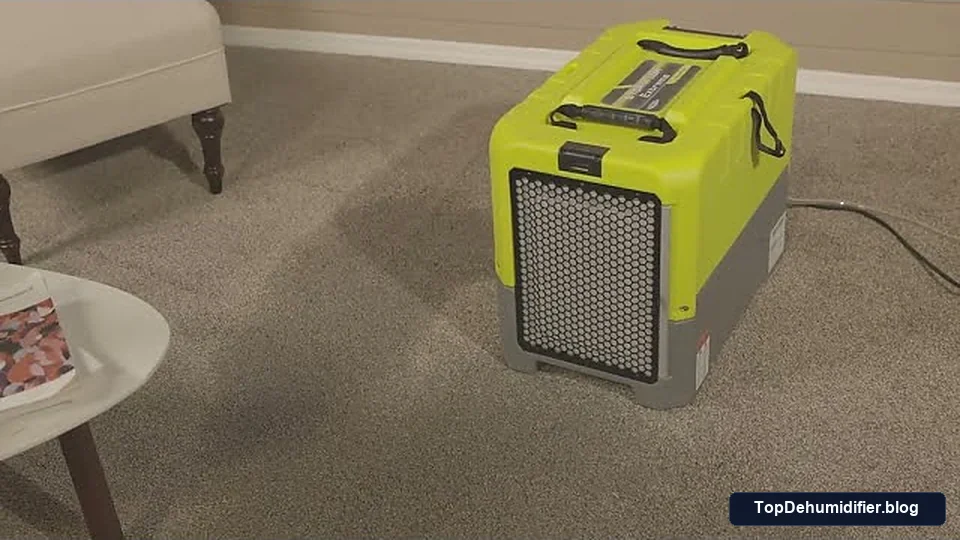
As detailed in our Alorair SentinelHDi65 review, this compact rotomolded polyethylene chassis minimizes spatial footprints while maximizing stacking efficiency inside crowded truck beds and storage facilities.
Conversely, the Dri Eaz competitor features a legendary heavy-duty housing profile incorporating ruggedized polyethylene materials and oversized rear wheels engineered for climbing stairs effortlessly.
Both restoration dehumidifiers utilize rotomolded polyethylene housings designed to withstand rigorous jobsite impacts, but their internal chassis layouts differ significantly in how refrigerant lines are routed and secured.
The AlorAir integrates a twin-tubing evaporator architecture maximizing heat exchange efficiency, whereas the Dri-Eaz relies on a heavy-duty micro-channel configuration optimized for rapid structural drying tasks.
Technicians will notice the AlorAir prioritizes a compact frame profile, while the Dri-Eaz leans toward a balanced, rugged center of gravity meant for effortless stair climbing.
- Alorair emphasizes a space-saving vertical profile with integrated cord storage hooks.
- Dri Eaz prioritizes heavy-duty impact resistance and ergonomic handle placement for transport.
- Both units utilize professional rotomolded manufacturing standards to prevent shell cracking.
Chassis Construction and Material Science
Heavy-duty rotomolded polyethylene acts as the industry standard for commercial dehumidifiers due to its exceptional resistance to chemical degradation and mechanical impacts during transit.
Engineers designed both systems to resist denting and rusting when exposed to standing water, high humidity levels, and abrasive debris found inside flooded structural cavities.
- Rotomolded outer shells prevent rust formation common in traditional sheet metal cabinets.
- Reinforced axle mountings absorb severe shock loads during stair climbing tasks.
Real-World Performance and Moisture Extraction
Evaluating real-world water removal capabilities requires looking beyond standard marketing claims to analyze actual extraction rates across various temperature and relative humidity operating thresholds.
The Dri Eaz system delivers massive performance metrics, capable of pulling extraordinary volumes of moisture from saturated air even as environmental conditions drop into low-grain ranges.
According to our Alorair SentinelHDi90 review, the brand counters with low-grain extraction technology supported by epoxy-coated coils that protect internal copper tubing from corrosive airborne elements found in disaster zones.
Under standard AHAM conditions, removing up to 85 pints per day requires precise refrigerant pressures, matching the AlorAir capability against extreme environmental challenges seamlessly.
Meanwhile, the Dri-Eaz pushes saturation limits by maintaining superior low-grain performance down to critical saturation thresholds without freezing up internal coils prematurely.
Field measurements demonstrate that ambient temperature fluctuations impact water removal rates differently, forcing operators to adjust ducting configurations based on specific jobsite humidity profiles.
- Dri Eaz excels in high-volume water extraction across large open commercial spaces.
- Alorair maintains efficient moisture removal while operating on standard electrical circuit amperages.
- Both machines utilize low-grain refrigerant designs to dry structures deeply.
Low-Grain Refrigerant Technology Mechanics
Low-grain refrigerant systems incorporate advanced thermal expansion valves and bypass circuits to drop evaporator temperatures, squeezing moisture from already dry air streams effectively.
This thermodynamic process accelerates structural drying times significantly, pulling moisture trapped inside hardwood subfloors, drywall assemblies, and thick insulation materials without causing heat damage.
- Advanced bypass circuits lower coil temperatures for increased moisture condensation.
- Deep drying prevents secondary structural damage like mold growth and wood warping.
Control Interfaces and Digital Ergonomics
Modern restoration technicians demand intuitive control interfaces that provide immediate diagnostic feedback regarding operating hours, inlet temperatures, and relative humidity percentages.
Alorair integrates a sophisticated digital touchscreen controller equipped with optional Wi-Fi app connectivity, allowing remote monitoring and adjustments across multiple job site locations simultaneously.
Dri Eaz relies on a time-tested, highly reliable digital control panel featuring simple touch buttons and a bright LED screen designed for rapid readability in dark spaces.
Electronic control boards must withstand humid environments, prompting both manufacturers to utilize sealed membrane keypads that resist moisture ingress and dust accumulation during restoration projects.
The AlorAir digital display provides clear operating hour readouts alongside real-time inlet and outlet relative humidity metrics for immediate jobsite performance verification.
Conversely, the Dri-Eaz interface focuses on simplified error code diagnostics, allowing technicians to quickly troubleshoot operational faults without referencing extensive user manuals on-site.
- Alorair features smartphone application integration for remote diagnostics and status updates.
- Dri Eaz utilizes a proven waterproof membrane keypad immune to moisture ingress.
- Both platforms display total operating hours for accurate billing and maintenance tracking.
Smart Diagnostics and Remote Monitoring
Remote monitoring capabilities transform how contractors manage large commercial drying projects by reducing the frequency of physical site visits required to check equipment status.
Error codes displayed on digital screens help technicians identify pump failures, sensor disconnections, or restricted airflow instantly, minimizing downtime and preventing catastrophic water overflow incidents.
- Digital error codes speed up troubleshooting during active emergency responses.
- Remote connectivity eliminates unnecessary driving hours for job site check-ins.
Filtration Systems and Airflow Dynamics
Maintaining clean evaporator coils is vital for sustaining optimal heat transfer and preventing performance degradation over thousands of cumulative hours of continuous operation.
The Alorair unit utilizes a standard MERV-10 pleated filter media designed to capture microscopic dust, drywall particles, and mold spores before they foul internal aluminum fins.
Dri Eaz employs high-airflow High Airflow Filters that maintain superior static pressure while trapping airborne contaminants, ensuring balanced airflow distribution throughout complex drying chambers.
Effective particulate capture prevents coil fouling, making the inclusion of a washable MERV-8 filter essential for filtering airborne dust and construction debris effectively.
As noted in our best dehumidifier guide, centrifugal fan blowers drive static pressure efficiently, enabling technicians to attach lay-flat ducting to channel dry air directly into wall cavities.
Airflow velocity ratings dictate how fast a room reaches equilibrium, requiring balanced intake grilles to maintain steady volumetric throughput across varying static pressures.
- MERV-10 filtration protects internal components from construction and restoration debris.
- Optimized fan blowers push dry air deep into targeted structural cavities.
- Regular filter cleaning ensures steady thermodynamic efficiency throughout projects.
Static Pressure and Ducting Capabilities
Powerful internal centrifugal blowers generate enough static pressure to push dry air through long sections of flexible layflat ducting into adjacent rooms or upper levels.
This capability allows technicians to isolate damp closets, crawlspaces, or wall cavities while keeping the main dehumidifying chassis positioned conveniently in a central hallway.
- High static pressure supports multi-room ducting configurations easily.
- Centrifugal fans deliver directional airflow precisely where structural drying is needed.
Maintenance, Efficiency, and Longevity
Commercial dehumidifiers represent a significant capital investment for restoration businesses, making long-term maintenance accessibility and component durability critical purchasing considerations.
Alorair designs its internal component layout for straightforward service access, allowing technicians to replace condensate pumps or control boards quickly without specialized factory tools.
Dri Eaz builds its equipment with rugged mechanical assemblies engineered to endure decades of brutal job site abuse with minimal unscheduled component failures.
Routine maintenance routines require inspecting internal condensate pumps, ensuring check valve assemblies remain free of sludge, biofilm, and mineral deposits over extended operating lifecycles.
Energy consumption metrics show both units operate within standard 15-amp circuits, preventing blown breakers when multiple drying devices run simultaneously on residential restoration sites.
Long-term compressor durability depends heavily on proper coil cleaning schedules, preventing thermal overload and maintaining rated refrigerant pressures throughout demanding commercial flood restoration deployments.
- Accessible internal layouts reduce technician labor hours during routine servicing.
- Epoxy-coated coils extend operating lifespans in corrosive flood environments.
- Robust condensate pumps ensure reliable vertical water removal without manual emptying.
Condensate Management and Drainage Systems
Efficient water removal depends entirely on dependable internal condensate pumps equipped with functional float switches and check valves to prevent backflow during operation.
Both machines feature heavy-duty motorized pumps capable of lifting extracted water multiple vertical feet into sinks, toilets, or out through commercial building windows.
- Integrated pumps handle high vertical head pressure for elevated drainage points.
- Quick-disconnect drain hoses simplify container storage and equipment pack-up phases.
Operating Footprint and Electrical Safety
Job site power distribution limits dictate how many drying units technicians can plug into a single residential circuit without tripping circuit breakers or causing overloads.
Our Alorair Storm Lgr Extreme review highlights how this heavy-duty unit draws moderate amperage, allowing technicians to run multiple systems simultaneously across standard residential 115V household circuits safely.
Dri Eaz balances high-volume extraction power with optimized electrical draw, ensuring maximum water removal efficiency without exceeding standard commercial breaker limitations.
Navigating tight hallways requires compact dimensions, while recessed power cord wraps prevent tripping hazards and protect electrical plugs during transit between different job locations.
Electrical safety standards mandate proper GFCI protected cords to guard against accidental shock hazards in standing water environments common in residential mitigation work.
Stackable storage designs allow restoration contractors to maximize vehicle payload space, securing multiple heavy dehumidifiers safely inside cargo vans without shifting during transport.
- Standard 115V power requirements ensure compatibility with all residential structures.
- Low amp draw prevents nuisance breaker trips on crowded job site circuits.
- Integrated circuit protection safeguards internal electronics from voltage spikes.
Electrical Safety Standards and Compliance
Water damage restoration environments present severe electrical shock hazards, making proper grounding and ETL safety certifications mandatory for all professional drying equipment.
Heavy-duty power cords with reinforced strain reliefs prevent insulation fraying when dragged across rough concrete floors or sharp metal demolition debris.
- ETL certifications guarantee compliance with rigorous North American safety standards.
- Heavy-duty power cords withstand harsh job site dragging and pulling.
Which Option Fits Your Restoration Setup
Selecting the ideal dehumidifier depends heavily on your specific business model, typical job site environments, and preferred method of equipment monitoring and fleet management.
Contractors focusing on tech-forward automation, remote job oversight, and lightweight portability will find the Alorair Storm Extreme an exceptional addition to their inventory.
Conversely, large restoration firms requiring unyielding raw extraction muscle and indestructible cabinet durability will continue relying on the Dri Eaz 7000Xli standard.
Choosing the right commercial dehumidifier depends on your typical project scale, transport constraints, and whether you frequently tackle high-temperature losses or deep structural drying.
Restoration contractors prioritizing maximum portability and straightforward digital controls will deeply appreciate the streamlined AlorAir design during fast-paced residential water mitigation jobs.
Conversely, crews facing heavy-duty structural challenges benefit immensely from the proven low-grain performance and robust chassis engineering inherent in the Dri-Eaz ecosystem.
- Match unit weight and dimensions to your existing transport vehicle payload limits.
- Consider whether remote app monitoring provides genuine workflow advantages for your team.
- Evaluate local dealer support and spare parts availability before finalizing purchases.
Final Purchasing Recommendation Guidelines
Assess your typical project scale, local humidity challenges, and van storage configurations before committing funds to either of these premier commercial dehumidifier platforms.
Investing in reliable commercial drying gear ensures faster project turnaround times, happier insurance adjusters, and significantly improved profitability across your entire restoration business.
- Balance initial capital outlay against projected long-term maintenance costs.
- Prioritize build quality and extraction reliability above all other metric categories.
Frequently Asked Questions
What is the primary operational difference between these two LGR units?
The Dri Eaz focuses on raw extraction power, whereas the Alorair emphasizes smart app integration.
Can both dehumidifiers operate on standard household electrical circuits?
Yes, both units run efficiently on standard 115V circuits, preventing common breaker overload issues.
Which machine offers better durability in harsh restoration environments?
The Dri Eaz 7000Xli is renowned for its rugged rotomolded shell and legendary job site toughness.
Do these dehumidifiers require specialized drain hoses for operation?
No, both units include built-in condensate pumps with standard quick-connect drain tubing for flexible water disposal.
Are the air filters washable and reusable over time?
Yes, both systems utilize cleanable filter media designed to capture airborne debris and protect internal coils.