Aprilaire E080 vs E100: Concise Verdict
Comparing two powerhouse whole-home dehumidifiers helps you select the exact moisture removal capacity for your specific square footage. This technical breakdown evaluates performance, sizing, and installation requirements.

Choose the Aprilaire E080 for tight basements and moderate square footage needing reliable extraction. Select the Aprilaire E100 when tackling sprawling layouts requiring maximum moisture removal per day.
Compare all top models in our Best Dehumidifier: Top Picks for Healthy Indoor Air.
Side-by-Side Breakdown
| Criteria | Aprilaire E080 | E100 | Edge |
|---|---|---|---|
| Core Design / Build | Compact vertical chassis for tight utility spaces | Larger cabinet engineered for massive volume | E080 |
| Real-World Performance | Extracts 80 pints of moisture daily | Removes 100 pints of moisture daily | E100 |
| Ease of Setup & Use | Simplified hanging or floor mounting options | Standard suspended or base installation setup | Tie |
| Durability & Reliability | Corrosion-resistant coils and heavy-duty frame | Commercial-grade components and robust casing | Tie |
| Efficiency / Operating Footprint | Consumes fewer amps under standard load | Higher energy draw for increased output | E080 |
| Maintenance Requirements | Annual MERV 11 filter replacements needed | Standard washable pre-filter and annual media change | Tie |
| Best Ideal Use Case | Homes up to 4,400 square feet | Properties spanning up to 5,200 square feet | E100 |
Extraction Capacity and Daily Output
Understanding daily moisture removal rates prevents chronic humidity issues in residential buildings. Both units utilize advanced refrigeration cycles to condense ambient vapor effectively from large living spaces.
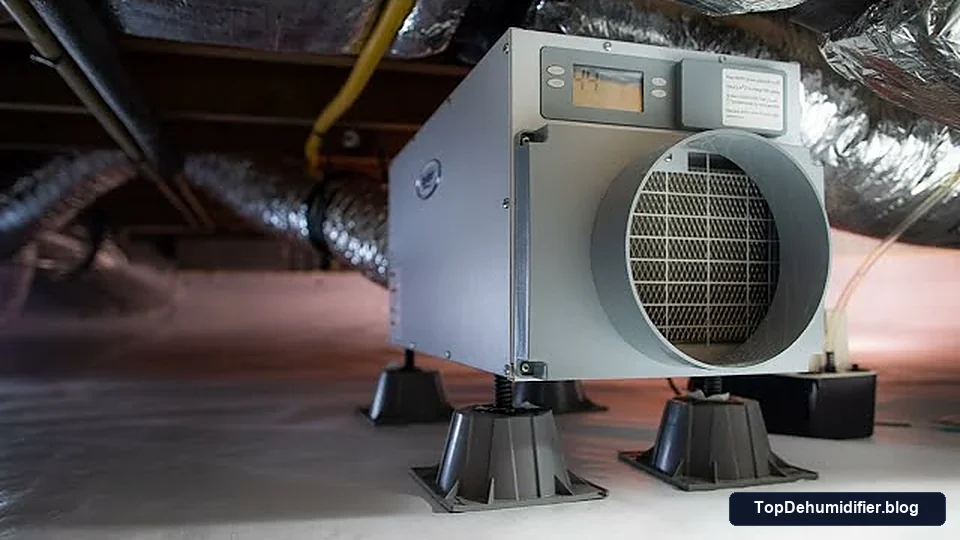
Selecting the correct capacity ensures your HVAC system maintains optimal indoor relative humidity without short-cycling during peak seasonal moisture loads in summer months.
Our Aprilaire E080 review details how the unit extracts 80 pints per day at standard AHAM conditions, offering robust moisture removal for medium basements.
Stepping up to the E100 yields 100 pints per day, providing essential extra capacity for larger residences. Both units utilize reliable rotary compressors designed for continuous whole-home humidity control operations.
- E080 extracts eighty pints per day under standard conditions
- E100 delivers one hundred pints of removal for heavy loads
- Both units maintain precise control via digital humidistats
Evaluating Daily Extraction Load
The E080 handles moderate crawlspaces and basements with ease, preventing mold growth effectively. Its compressor is optimized for steady, continuous operation without wasting electrical energy.
Stepping up to the E100 provides extra headroom for humid climates and sprawling multi-level floor plans. This model aggressively drops relative humidity during severe rainy seasons.
- Continuous drainage setup prevents manual tank emptying
- Automatic defrost cycles protect coils in cooler basements
Capacity Sizing for Square Footage
Calculating total home volume dictates whether an eighty-pint or hundred-pint chassis is required. Undersized units run constantly, while oversized systems fail to properly filter air.
Engineers recommend factoring in local climate data, ceiling height, and basement dampness when matching these specific dehumidifiers to residential structures.
- E080 targets medium residential layouts efficiently
- E100 manages expansive architectural footprints seamlessly
Physical Dimensions and Installation Footprint
As detailed within our Aprilaire E130 review, spatial constraints inside utility rooms often dictate which model you can successfully install. Careful measurement of clearance zones ensures smooth maintenance access.
Both appliances feature rugged steel construction designed for long-term basement or crawlspace placement. Their physical designs prioritize versatile hanging and floor-standing configurations.
Measuring compact proportions, the E080 fits easily into tight crawlspaces and low-clearance utility closets. Its horizontal configuration optimizes vertical overhead space while ensuring straightforward duct connection pathways.
The E100 shares a similar architectural footprint but requires slightly more clearance for service access. Proper positioning ensures unobstructed airflow and prevents vibration transfer into surrounding structural framing joists.
- Compact cabinet profiles fit standard utility closets
- Weight distribution requires sturdy mounting hardware if suspended
- Inlet and outlet collars accommodate standard ductwork
Chassis Size and Weight Comparisons
The E080 boasts a slightly lighter chassis, making overhead hanging procedures much simpler for single technicians. Its reduced footprint fits narrow mechanical alcoves effortlessly.
The E100 requires additional clearance and stronger joist support due to its heavier internal components. Professional installation is strongly recommended for suspended layouts.
- Verify doorway widths before moving units into position
- Allow clearance for side filter removal doors
Ducting Integration and Airflow
Proper duct integration allows whole-home dehumidifiers to circulate dry air throughout every room. Flexible or rigid ducting attaches securely to the intake and exhaust collars.
Balanced airflow prevents static pressure drops that can strain your primary furnace blower motor during simultaneous heating or cooling operations.
- Dedicated return drops pull moist air directly
- Supply integration distributes dry air evenly
Energy Efficiency and Electrical Requirements
Monitoring electrical consumption keeps monthly utility bills manageable during prolonged summer dehumidification cycles. Modern whole-home units achieve impressive energy factors through optimized compressors.
Reviewing local electrical codes ensures your chosen dehumidifier connects to a safe, dedicated circuit without overloading existing household panels.
Operating efficiently, the E080 draws approximately 2.8 amps on a standard 115V circuit, minimizing utility cost impacts. This low amperage draw simplifies dedicated circuit planning for residential mechanical rooms.
The E100 requires roughly 3.3 amps of electrical current, reflecting its enhanced moisture removal capacity. Both models comply with strict energy standards by utilizing advanced coil designs that reduce compressor run times.
- Both units operate on standard residential voltage lines
- Energy Star ratings confirm high operational efficiency
- Low amp draw prevents thermal overload trips
Amperage Draw and Power Consumption
The E080 draws fewer amps, making it ideal for older electrical panels with limited available capacity. It balances high extraction rates with frugal power consumption profiles.
The E100 requires slightly more electrical current to drive its larger compressor and fan motor. This higher draw corresponds directly to its increased daily moisture removal.
- Standard grounded outlets supply sufficient power
- Dedicated breakers eliminate nuisance electrical tripping
Operational Cost Projections
Running a whole-home system continuously is more cost-effective than using multiple portable units. Smart sensors cycle the compressor only when humidity levels exceed set thresholds.
Optimizing fan settings further reduces overall electrical waste during milder spring and autumn transition periods when moisture loads fluctuate wildly.
- Thermostat integration prevents unnecessary runtime
- Variable fan speeds optimize energy usage
Control Interfaces and Smart Integration
Modern digital controls simplify humidity management across complex residential heating and cooling systems. Clear LED displays provide instant status updates on ambient conditions.
Remote sensor compatibility lets homeowners monitor basement humidity from the comfort of their main living areas without visiting the utility room.
Onboard digital controls feature a clear interface for setting exact relative humidity targets. Technicians can easily configure external float switches through dedicated low-voltage wiring terminals located on the main control board.
Seamless integration with home automation systems is supported via standard 24V control wiring. This allows homeowners to monitor operational status and adjust moisture settings directly from compatible central thermostats.
- Onboard digital display shows real-time humidity
- External control wiring supports wall thermostats
- Error codes simplify routine troubleshooting tasks
Onboard Diagnostics and Settings
Setting precise target humidity percentages is straightforward using the intuitive button interface on both models. Diagnostic codes alert technicians to airflow blockages or sensor failures.
Memory retention features ensure your customized settings remain intact after temporary power outages or routine circuit breaker maintenance procedures.
- Clear indicator lights show active dehumidification
- Simple programming menus require minimal training
Thermostat Compatibility and Automation
Integrating these dehumidifiers with compatible communicating thermostats creates a centralized climate control hub. This setup coordinates air conditioning and dehumidification harmoniously.
Automated scheduling prevents excessive energy use while maintaining strict relative humidity targets throughout the entire building envelope.
- Low-voltage wiring connects directly to HVAC boards
- External float switch inputs enhance flood safety
Air Filtration and Indoor Air Quality
Whole-home dehumidifiers double as powerful air filtration systems, capturing dust and allergens continuously. MERV-rated media filters protect internal coils from lint and debris accumulation.
Maintaining clean filtration media preserves optimal airflow rates and prevents premature motor strain over years of continuous operation in dusty environments.
Standard MERV 11 filtration protects internal coils from dust accumulation while significantly improving ambient air quality. Replacing this pleated air filter annually maintains optimal airflow across the refrigeration evaporator coils.
Filtering circulating air continuously prevents mold spores and allergens from settling in damp subterranean environments. Both units accommodate standard filter sizes, making routine replacements straightforward for DIY homeowners.
- MERV 11 filtration captures microscopic airborne particles
- Easy-access filter doors require no hand tools
- Protected coils maintain maximum heat transfer efficiency
Filter Media Specifications
Both the E080 and E100 utilize high-efficiency pleated air filters to trap mold spores and dust mites. Replacing these media filters semi-annually ensures peak performance.
Clean filters prevent airflow restriction, which otherwise leads to frozen evaporator coils and reduced moisture extraction capacity during humid summer peaks.
- Standardized filter sizes simplify replacement stocking
- Deep pleat design maximizes particle retention surface
Protecting Internal Components
Corrosion-resistant refrigeration coils withstand harsh basement environments laden with moisture and chemical vapors. This robust engineering extends the lifespan of critical sealed system parts.
Quality internal drainage channels prevent stagnant water pooling inside the cabinet, eliminating potential mold breeding grounds within the unit itself.
- Epoxy-coated coils resist aggressive basement moisture
- Insulated cabinets minimize condensation on outer surfaces
Maintenance Requirements and Longevity
Routine upkeep keeps whole-home dehumidifiers operating at peak factory efficiency for over a decade. Simple annual checks prevent minor wear from turning into costly mechanical failures.
Clearing condensate drain lines and inspecting electrical connections prevents unexpected water leaks or system shutdowns during peak summer humidity events.
Preventive maintenance involves inspecting the condensate drain trap and flushing lines to prevent biological growth blockages. Utilizing a durable condensate pump ensures reliable water removal when gravity drainage is unavailable.
Heavy-duty construction materials and corrosion-resistant coated coils extend the operational lifespan of both models significantly. Routine coil inspections guarantee sustained heat transfer efficiency throughout years of demanding service.
- Inspect condensate traps every few months
- Replace air filters twice a year reliably
- Schedule professional tune-ups for sealed systems
Drainage Maintenance and P-Traps
Gravity drainage or external condensate pumps remove extracted water safely to nearby floor drains. Installing a proper P-trap prevents sewer gases from entering the dehumidifier cabinet.
Periodic flushing of drain hoses prevents algae buildup and stubborn clogs that can cause indoor flooding in finished basement spaces.
- Check pump operation regularly if installed
- Ensure drain tubing maintains a downward slope
Long-Term Reliability Factors
Investing in commercial-grade components ensures these appliances withstand years of continuous seasonal stress. Proper sizing prevents the short-cycling that wears out compressors prematurely.
Following strict manufacturer maintenance guidelines guarantees optimal performance, protecting your investment. You can also explore our best dehumidifier guide to compare alternative whole-home solutions for healthy indoor air quality year round.
- Sealed refrigeration loops require no recharging
- Sturdy sheet metal cabinets resist denting
Application Scaling and Whole-Home Fit
Selecting between the E080 and E100 depends heavily on your home's square footage and airtightness. Proper evaluation prevents buying excessive capacity or struggling with an underpowered unit.
Consulting HVAC professionals helps determine whether tight crawlspaces or leaky historic homes require specialized extraction power to maintain comfort.
Selecting between these models depends on total conditioned square footage and baseline air infiltration rates. The E080 suits homes up to 4,000 square feet under moderate tightness conditions.
As highlighted in our Aprilaire E100 review, larger layouts exceeding 5,000 square feet or high humidity loads demand superior output. Professional sizing calculations ensure proper matching.
- E080 fits medium homes up to four thousand square feet
- E100 handles large properties up to five thousand square feet
- Basement moisture levels dictate final model selection
Matching Capacity to Climate Zones
Humid coastal regions demand higher extraction capacity compared to arid inland environments. Selecting the E100 in damp climates prevents indoor humidity from creeping above safe thresholds.
Moderate climates allow the E080 to manage whole-home moisture effortlessly while minimizing electrical consumption throughout long summer seasons.
- Coastal homes benefit from extra extraction headroom
- Inland properties thrive with standard capacity units
Final Purchasing Considerations
Evaluate your home layout, ductwork availability, and local climate before making a final buying decision. Both models offer exceptional build quality and reliable performance.
Consulting an experienced mechanical contractor ensures proper installation, guaranteeing years of trouble-free humidity control and enhanced indoor air quality.
- Verify electrical panel capacity before purchase
- Plan condensate routing ahead of installation day
Frequently Asked Questions
What is the main difference between the Aprilaire E080 and E100?
The primary difference lies in their daily extraction capacity, with the E100 removing 100 pints daily compared to the E080 model's 80 pints.
Can I install these dehumidifiers without professional ductwork?
Yes, both units can operate standalone in open basements or crawlspaces using optional intake and discharge grilles for effective air circulation.
How often should I replace the air filters in these units?
You should inspect and replace the MERV 11 filter media every six months to maintain optimal airflow and protect internal coils.
Do these dehumidifiers require a dedicated condensate pump?
Gravity drainage works if a floor drain is nearby, but adding an external condensate pump is necessary when elevating discharge lines.
Which model is best suited for a 4,500 square foot home?
The Aprilaire E100 is better suited for homes approaching 5,000 square feet, providing adequate headroom for heavy moisture loads.