Desiccant vs Compressor Dehumidifier: Concise Verdict
Choosing the right moisture control system requires balancing operating temperatures against extraction volumes. Understanding underlying physical mechanics ensures optimal long-term structural protection.

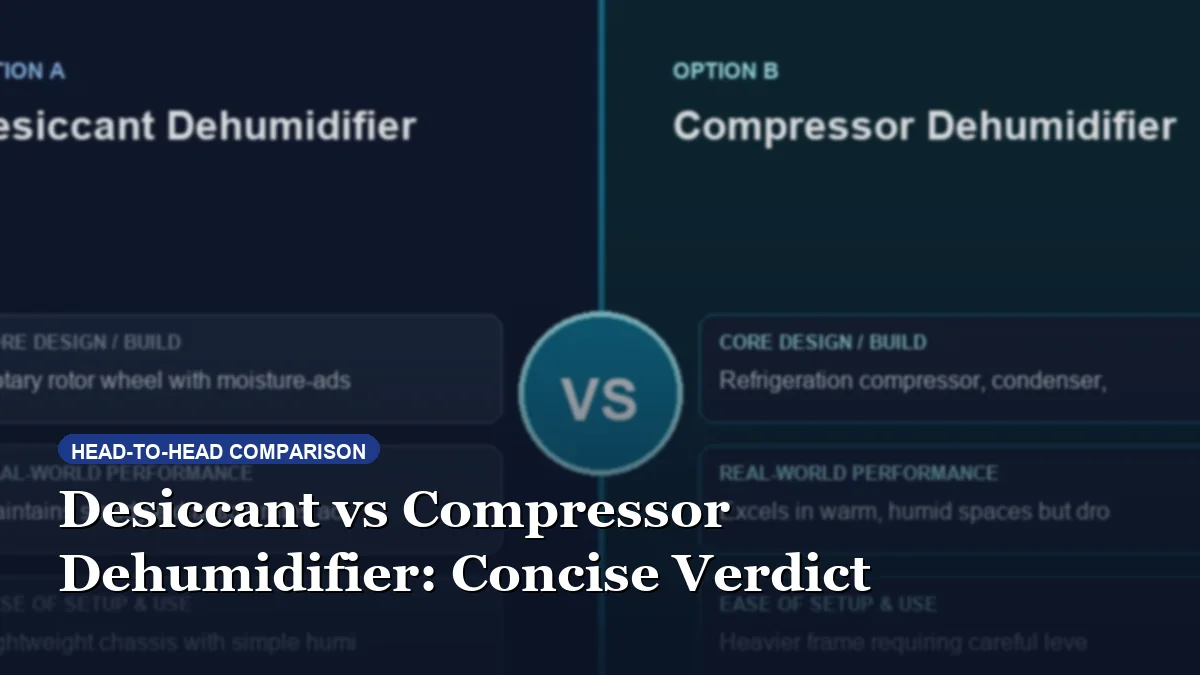
Select a desiccant dehumidifier for unheated basements, cold garages, or low-temperature spaces. Choose a compressor dehumidifier for warm, humid living areas requiring high daily water removal.
Compare all top models in our Best Dehumidifier: Top Picks for Healthy Indoor Air.
Side-by-Side Breakdown
| Criteria | Desiccant Dehumidifier | Compressor Dehumidifier | Edge |
|---|---|---|---|
| Core Design / Build | Rotary rotor wheel with moisture-adsorbing chemical media. | Refrigeration compressor, condenser, and evaporator coils. | Compressor |
| Real-World Performance | Maintains steady extraction rates across freezing ambient conditions. | Excels in warm, humid spaces but drops efficiency below 65F. | Split |
| Ease of Setup & Use | Lightweight chassis with simple humidistat controls. | Heavier frame requiring careful leveling for proper drainage. | Desiccant |
| Durability & Reliability | Fewer mechanical parts mean prolonged core longevity. | Compressor units feature sealed refrigerant loops prone to leaks. | Desiccant |
| Efficiency / Operating Footprint | Higher continuous wattage due to built-in electric heating elements. | Superior energy factor when operating in warm, humid environments. | Compressor |
| Maintenance Requirements | Minimal filter cleaning and routine chassis dust removal. | Regular coil cleaning, filter washes, and pump upkeep. | Desiccant |
| Best Ideal Use Case | Cold boats, unheated cabins, and winterized garages. | Standard residential basements, laundry rooms, and main living areas. | Split |
Fundamental Operating Mechanisms
Moisture extraction technology relies on two entirely distinct physical processes for pulling water vapor from indoor air. Comprehending these foundational engineering differences helps buyers match equipment to specific environmental challenges.
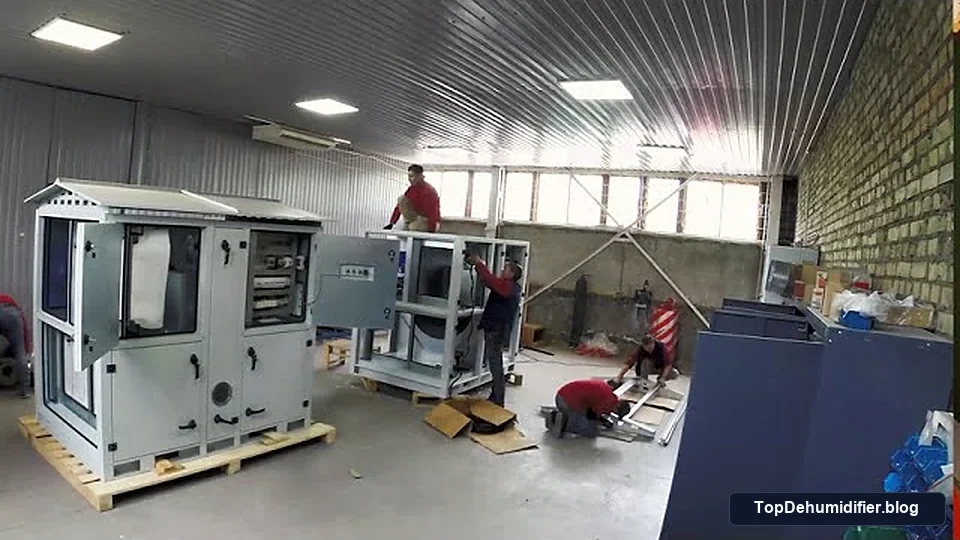
Desiccant systems utilize a rotating wheel packed with moisture-attracting materials like silica gel. This physical structure adsorbs water vapor directly onto its vast microscopic surface area without condensing liquid inside the machine.
Conversely, compressor units function like standard household refrigerators by utilizing a closed refrigerant loop. Warm indoor air passes over freezing evaporator coils, forcing moisture to condense into liquid water droplets.
Compressor dehumidifiers rely on a traditional refrigeration cycle utilizing a compressor, condenser coil, and evaporator coil to condense ambient moisture out of the air stream efficiently.
The warm, humid air passes over cold evaporator coils, inducing rapid condensation where water droplets drip directly into an internal collection bucket or continuous drainage hose.
Conversely, desiccant models deploy a rotating wheel impregnated with silica gel to adsorb moisture directly. Choosing the best desiccant dehumidifier for a garage ensures reliable cold-weather drying without cold condenser surfaces.
- Desiccant wheels capture vapor via chemical attraction and physical adsorption.
- Compressor systems rely on dew-point temperature drops across cold metal coils.
- Both designs target relative humidity reduction but use contrasting thermodynamic cycles.
The Science of Absorption and Adsorption
Adsorption involves moisture molecules adhering to the outer surface of a solid material without altering its chemical structure. Desiccant rotors maximize this microscopic contact zone to trap water efficiently.
Absorption physically or chemically incorporates water molecules into the internal matrix of the substance. Rotary desiccant wheels primarily leverage physical adsorption to maintain continuous moisture transfer.
- Surface area maximization drives high adsorption efficiency in desiccant media.
- Physical trapping avoids permanent chemical breakdown of the internal rotor matrix.
Thermodynamic Efficiency and Capacity
Evaluating water removal capacity requires examining how ambient temperatures directly impact overall machine efficiency. Environmental baselines dictate whether a refrigerant cycle or a thermal wheel delivers superior performance.
Compressor units boast massive daily extraction volumes when operating in warm and humid environments. However, their water removal ratings drop significantly as room temperatures approach freezing thresholds.
Desiccant dehumidifiers maintain stable extraction rates regardless of how cold the surrounding air becomes. While their raw daily volume is lower, their consistency in cold spaces remains unmatched.
Compressor units demonstrate superior latent heat removal in standard warm environments, extracting high volumes of water per kilowatt hour consumed compared to alternative mechanical drying technologies.
Desiccant systems maintain a steady extraction rate independent of ambient temperature drops, though their thermal regeneration heaters demand continuous electrical input for the reactivation sector.
Evaluating energy efficiency ratios requires analyzing the specific operating dew point, because compressor efficiency plummets rapidly when relative humidity drops below critical threshold levels.
- Compressor capacity peaks in warm, moist residential living spaces.
- Desiccant output remains steady even in unheated winter environments.
- Energy conversion factors favor compressors in standard room conditions.
Performance Envelopes Across Temperatures
Refrigerant coils require ambient temperatures above 65 degrees Fahrenheit to prevent destructive frost accumulation. Cold operating conditions force these units into frequent defrost cycles.
Thermal desiccant wheels bypass freezing limitations entirely using internal reactivation heaters. Reviewing our low temperature dehumidifier picks highlights units providing reliable operation in unheated storage facilities and cold garages.
- Frost buildup halts compressor operation in unheated winter spaces.
- Internal heaters keep desiccant wheels fully functional in extreme cold.
Temperature Sensitivity and Environmental Fit
Environmental constraints dictate the practical boundaries of both dehumidifier styles in residential settings. Selecting the incorrect technology for a specific room guarantees frustrating performance failures.
Basements that remain chilly throughout the year will quickly overwhelm standard compressor coils. The resulting frost forces the unit to shut down repeatedly, leaving the space damp.
Placing a desiccant model in a warm laundry room creates unnecessary electrical heat loads. Examining features in our Ivation 13 pint desiccant review shows how internal heaters elevate ambient space temperatures.
Refrigerant based compressor units experience severe performance degradation in unheated spaces, often suffering from coil frosting when ambient room temperatures drop below sixty degrees Fahrenheit.
Desiccant dehumidifiers excel in cold environments like basements, garages, and unheated cabins, functioning reliably down to freezing temperatures without requiring complex automatic defrost cycle interventions.
Selecting the optimal dehumidifier machine mandates matching your local climate profile, ensuring the chosen technology aligns with seasonal temperature fluctuations and baseline moisture load expectations.
- Cold subterranean rooms demand desiccant technology to prevent coil freezing.
- Warm, humid living levels benefit from compressor cooling efficiency.
- Matching climate profiles prevents premature equipment burnout and high bills.
Thermal Output and Room Climate Impact
Compressor systems slightly warm discharged air due to standard condenser coil thermodynamics. This minor temperature increase rarely causes discomfort in large residential living areas.
Desiccant machines exhaust noticeably warmer air because of their internal reactivation heating elements. This feature proves advantageous in cold spaces but unwelcome during summer heatwaves.
- Reactivation heaters cause noticeable air warming in desiccant units.
- Compressor exhaust maintains a more neutral thermal footprint.
Structural Ergonomics and Physical Footprint
Physical dimensions and unit weight significantly influence everyday usability, portability, and installation flexibility. Modern homeowners demand equipment that integrates seamlessly into existing spatial constraints.
Compressor units tend to be heavy and bulky due to their internal heavy-duty motors and sealed copper tubing. Integrated caster wheels are usually required to move these heavy appliances safely.
Desiccant dehumidifiers feature significantly lighter structural frames because they omit heavy compressors. This lightweight advantage makes them exceptionally easy to carry between floors or cabins.
Compressor dehumidifiers feature heavy internal rotary compressors and bulky water reservoirs, resulting in a substantial physical weight that requires sturdy caster wheels for safe room mobility.
Desiccant unit designs eliminate heavy compressors and utilize lightweight honeycomb matrix wheels, drastically reducing total appliance mass while allowing for convenient portable carrying handles.
Maintenance access points differ significantly, with compressor models requiring sealed refrigerant circuit checks while desiccant designs focus on easy air filter cleaning and heater access.
- Compressor units feature heavy sealed motors requiring sturdy caster wheels.
- Desiccant models offer lightweight portability for multi-level dwellings.
- Compact chassis designs fit easily into tight crawlspaces and boat cabins.
Drainage Mechanics and Water Collection
Water management options differ considerably across both unit types. Reading how desiccant dehumidifiers work clarifies why collection buckets and continuous gravity drainage ports handle condensate removal differently.
Compressor units often require internal condensate pumps to lift water to elevated windows. Desiccant models frequently evaporate minor moisture or discharge directly via gravity lines.
- Gravity drainage ports are standard on both equipment classes.
- High-lift condensate pumps are more common in heavy compressor builds.
Long-Term Reliability and Maintenance Protocols
Routine upkeep preserves equipment lifespan and ensures consistent moisture extraction season after season. Neglecting basic maintenance schedules degrades mechanical efficiency rapidly.
Compressor systems demand regular air filter washes and annual coil inspections to prevent dust buildup. Sealed refrigerant loops also carry a minor risk of eventual gas leaks.
Desiccant units require very few mechanical interventions beyond simple dust filter maintenance. Their lack of high-pressure refrigerant lines translates to exceptional long-term reliability.
Mechanical compressor systems feature hermetically sealed components that offer exceptional longevity if the internal refrigeration lines remain completely undamaged throughout years of continuous domestic operation.
Desiccant rotors face gradual chemical degradation over prolonged exposure to airborne pollutants and household dust, eventually requiring professional regeneration or rotor replacement to maintain peak performance.
Routine maintenance for both categories mandates regular air filter washing every two weeks to prevent dust accumulation from choking internal airflow channels and reducing efficiency.
- Air filters require monthly cleaning in both equipment categories.
- Compressor coils demand careful cleaning to maintain heat exchange efficiency.
- Desiccant rotors feature minimal moving parts for extended lifespan.
Wear Factors and Component Longevity
Mechanical vibration in compressor motors can eventually loosen internal wiring connections over years of continuous operation. Sealed compressors represent the single most expensive potential failure point.
Rotary desiccant wheels experience gradual material settling over many years of heavy service. However, overall component failure rates remain remarkably low compared to refrigerant systems.
- Vibration wear impacts long-term compressor motor stability.
- Rotor degradation occurs slowly over extended operational lifespans.
Specialized Industrial and Residential Applications
Different physical spaces demand specialized moisture control approaches to protect valuable assets and structural integrity. Industrial warehouses and residential homes have contrasting requirements.
Residential basements and bedrooms rely on compressors to maintain comfortable living humidity levels. These spaces benefit from high-volume water extraction without excessive heating.
Boats, RVs, and unheated winter cabins require desiccant systems to stop mold growth during freezing months. Their ability to operate in unconditioned spaces protects stored valuables effectively.
Residential living spaces typically utilize compressor dehumidifiers due to their high water removal capacity and lower electricity consumption in standard ambient indoor living room temperatures.
Industrial storage vaults, boat houses, and pharmaceutical packaging facilities rely heavily on desiccant technology to maintain extremely low dew points and absolute indoor humidity control.
Understanding specific environmental demands ensures you deploy the correct drying apparatus, avoiding costly operational failures caused by mismatched equipment specifications in highly demanding industrial settings.
- Residential living areas prioritize compressor efficiency and quiet operation.
- Unheated marine and automotive spaces require frost-proof desiccant units.
- Industrial archives utilize specialized desiccant setups for precise humidity targets.
Market Reliance on Effective Desiccants
Commercial sectors rely heavily on adsorption technology to safeguard sensitive pharmaceuticals and electronics. Controlling absolute humidity prevents moisture damage during sensitive manufacturing processes.
Industrial dry rooms utilize large-scale desiccant wheels to maintain ultra-low dew points. This specialized reliance underscores the robust physical engineering behind adsorption methods.
- Pharmaceutical manufacturing requires precise humidity control via desiccant media.
- Electronics storage depends on dry-room adsorption standards.
Energy Consumption Profiles and Operating Costs
Electrical efficiency remains a critical purchasing factor for homeowners running dehumidifiers throughout damp seasons. Power consumption varies widely based on internal mechanical design.
Compressor dehumidifiers consume moderate electrical wattage while extracting large volumes of water in warm spaces. Their energy factor makes them cost-effective for standard residential basements.
Desiccant units draw continuous electrical current because their internal heating elements must constantly regenerate the rotor. This higher wattage increases operating expenses in mild climates.
Compressor units draw moderate electrical current primarily to power the sealed compressor motor and circulation fan, maximizing energy efficiency during warm summer weather operating cycles.
Desiccant machines incorporate a high draw electrical heating element that drives up wattage consumption significantly during the reactivation phase of the internal drying rotor wheel.
Calculating extended utility expenses requires balancing higher upfront desiccant energy draw against compressor inefficiency in cold rooms where heating costs compound total climate control operating budgets.
- Compressors offer superior water removal per watt in warm conditions.
- Desiccant heaters drive up continuous electrical operating expenses.
- Climate selection dictates overall power efficiency for both device types.
Evaluating Total Operating Footprint
Calculating long-term operating costs requires factoring in both electricity usage and replacement frequency. Choosing the correct appliance for your specific climate minimizes wasted energy.
Running a compressor in freezing rooms wastes electricity because frost halts extraction entirely. Matching the machine to the environment ensures optimal energy utilization.
- Unmatched climates cause excessive power waste and mechanical strain.
- Proper sizing optimizes utility bills across damp seasonal transitions.
Frequently Asked Questions
Which dehumidifier type works best in a cold basement?
A desiccant dehumidifier is ideal for cold spaces because it avoids coil freezing. It maintains consistent extraction rates where standard compressors fail completely.
Do desiccant dehumidifiers raise room temperature?
Yes, internal reactivation heaters discharge noticeably warmer air during operation. This thermal output helps heat cold rooms but can feel uncomfortable during summer.
Are compressor dehumidifiers more energy efficient?
They offer superior electrical efficiency when operating in warm, humid residential areas. Their refrigerant cycle extracts more water per watt than thermal wheels.
Which unit requires less overall maintenance?
A desiccant dehumidifier demands minimal upkeep due to fewer moving parts. Regular air filter cleaning is typically the only required maintenance task.
Can I use a desiccant model in an unheated RV?
They perform exceptionally well in unheated winter vehicles and marine cabins. Their resistance to freezing temperatures prevents mold growth in storage.