Desiccant vs Compressor Dehumidifier Running Costs
Navigating utility expenses requires understanding thermal extraction mechanics. We evaluate energy efficiency, seasonal wattage draw, and real-world running costs.

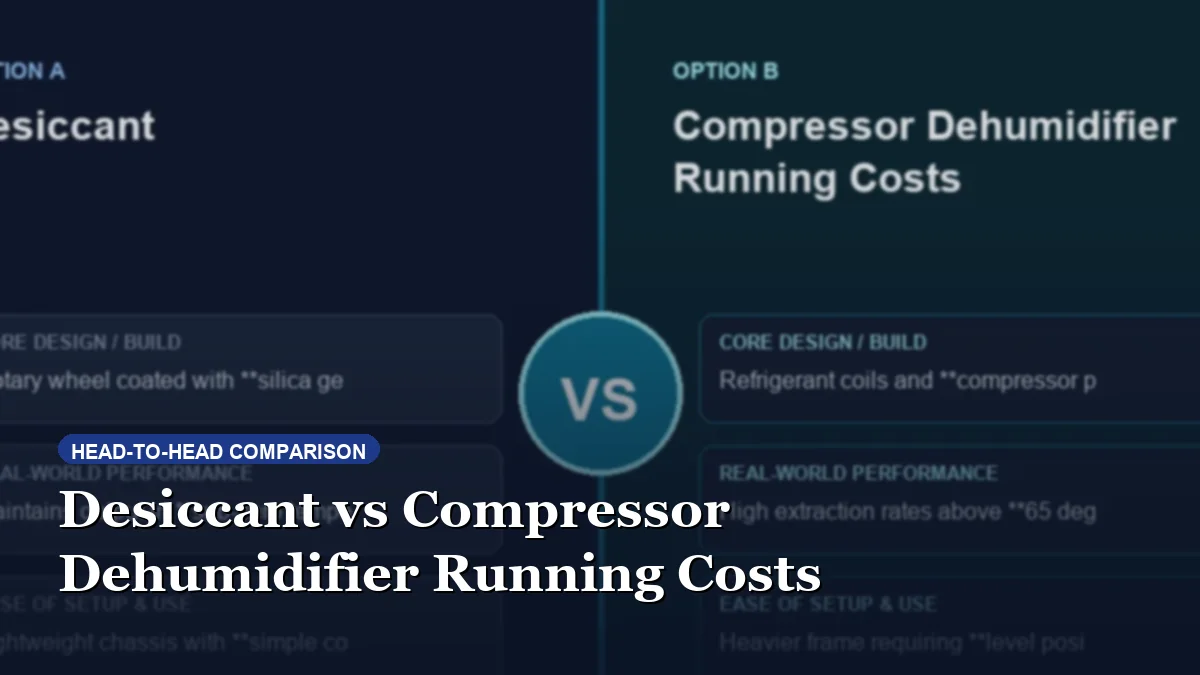
Choose desiccant units for unheated winter spaces despite higher wattage draws. Select compressor models for energy-efficient moisture removal in warm, humid basements.
Compare all top models in our Best Dehumidifier: Top Picks for Healthy Indoor Air.
Side-by-Side Breakdown
| Criteria | Desiccant | Compressor Dehumidifier Running Costs | Edge |
|---|---|---|---|
| Core Design / Build | Rotary wheel coated with silica gel. | Refrigerant coils and compressor pump. | Compressor |
| Real-World Performance | Maintains output in sub-zero temperatures. | High extraction rates above 65 degrees. | Desiccant |
| Ease of Setup & Use | Lightweight chassis with simple controls. | Heavier frame requiring level positioning. | Desiccant |
| Durability & Reliability | Fewer mechanical parts, motor-driven wheel. | Sealed refrigerant system, compressor longevity. | Compressor |
| Efficiency / Operating Footprint | Higher constant wattage, thermal heating element. | Variable wattage based on ambient humidity. | Compressor |
| Maintenance Requirements | Basic air filter cleaning, low upkeep. | Coil cleaning and drain line checks. | Desiccant |
| Best Ideal Use Case | Unheated garages and cold winter cabins. | Standard basements and main living areas. | Compressor |
Fundamental Operating Mechanics
Understanding how moisture extraction works helps clarify long-term energy consumption. Desiccant systems rely on chemical absorption using a rotating wheel filled with highly porous active materials.
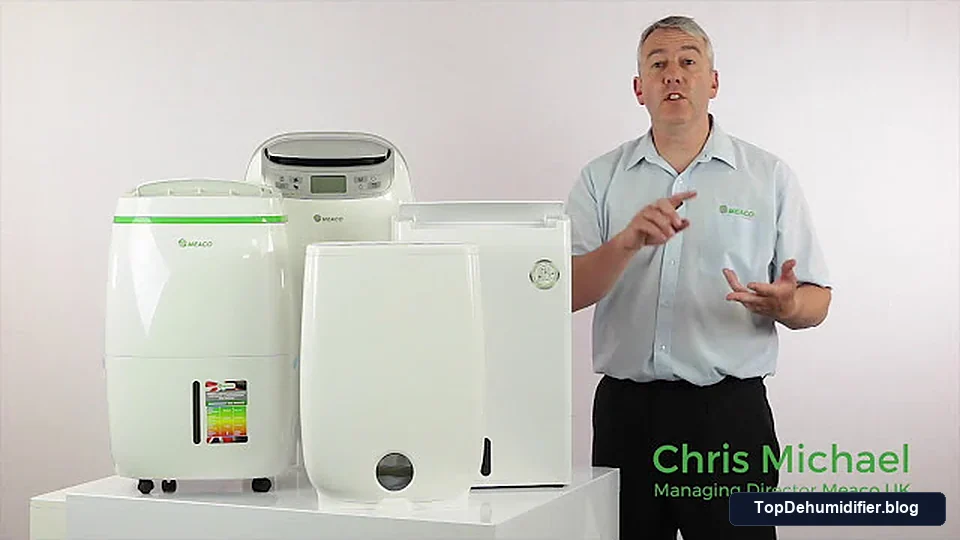
Compressor units utilize a traditional refrigeration cycle to condense airborne moisture. Warm air passes over chilled evaporator coils, forcing water vapor to transition into liquid condensate efficiently.
Compressor units rely on standard vapor-compression refrigeration cycles. A motorized compressor pressurizes refrigerant gas, forcing it through condenser coils to rapidly chill surfaces and condense ambient moisture.
As humid air passes over the freezing cold evaporator coils, water vapor instantly turns to liquid. This condensate drips securely downward into an internal collection bucket or continuous drainage hose.
Conversely, desiccant models bypass mechanical refrigeration entirely. Learn more in our desiccant dehumidifier mechanics guide utilizing a porous rotor wheel to capture moisture directly from ambient air.
An internal heating element continuously regenerates this desiccant wheel. As the wheel rotates, thermal reactivation drives trapped moisture outward, venting it safely through a dedicated exhaust stream to outside environments.
Understanding these distinct physical operations explains their baseline energy requirements. Compressors consume electricity primarily running heavy mechanical pumps, whereas desiccants allocate significant electrical power directly to resistance heating elements.
Physical size and weight also reflect these core mechanical differences. Refrigeration loops require heavy copper tubing and enclosed compressors, making standard compressor units notably heavier than lightweight desiccant models.
Airflow pathways diverge significantly between the two system types. Compressors pull air using traditional centrifugal fans, while desiccant systems utilize specialized axial fans to push air across complex matrix channels.
Selecting the correct machine requires balancing these fundamental mechanics against your specific regional climate. Evaluating structural differences prevents unexpected energy spikes and ensures long-term operational efficiency across varying seasonal conditions.
- Desiccant wheels absorb moisture directly into chemical matrices.
- Compressors rely on dew point suppression via cold coils.
- Internal thermodynamics dictate total electricity demand profiles.
Adsorption Versus Condensation
Chemical adsorption does not require dew point creation to function effectively. This allows continuous moisture removal without risking internal coil freezing during harsh winter weather.
Condensation requires ambient temperatures above freezing to prevent ice buildup. When evaporator coils freeze, operating efficiency plummets and defrost cycles consume extra energy.
- Adsorption bypasses freezing coil limitations entirely.
- Condensation demands warm ambient air for optimal extraction.
Thermal Efficiency and Wattage Draw
Running costs depend heavily on instantaneous wattage demands and continuous duty cycles. Desiccant units draw steady electrical currents because they incorporate internal heating elements to regenerate wheels.
Compressor dehumidifiers exhibit variable power consumption based on ambient relative humidity levels. Once target humidity is reached, the compressor cycles off, conserving substantial electricity.
Wattage demands vary drastically between compressor and desiccant dehumidification systems. Standard compressor units typically draw between three hundred watts and seven hundred watts depending entirely on capacity.
Desiccant models generally operate at significantly higher baseline wattages during active cycles. Their internal heating elements often push power consumption past six hundred watts and sometimes exceed one thousand watts.
However, raw wattage measurements hide operational nuances. Read our guide on troubleshooting a dehumidifier running without water collection to see why compressors lose efficiency in cool spaces and waste valuable electrical energy.
Desiccant machines maintain constant moisture removal rates regardless of dropping room temperatures. This consistent performance prevents prolonged run times, occasionally offsetting their higher instantaneous power draw in specific environments.
Calculating exact running costs demands careful analysis of your local utility rates. Multiplying active operating wattage by daily runtime hours yields total kilowatt-hour consumption, establishing predictable monthly utility expenses.
Standby power consumption represents another minor factor in overall electrical efficiency. Modern electronic control boards draw minimal standby current, maintaining system responsiveness without significantly impacting your annual utility bills.
Thermal management inside the chassis dictates overall device longevity and energy waste. Efficient insulation keeps generated heat focused where needed, reducing internal thermal losses and optimizing total system efficiency.
Monitoring true power draw with a plug-in watt meter provides empirical data. Homeowners can accurately track actual energy usage instead of relying entirely on manufacturer specifications printed on rating labels.
- Desiccants maintain constant high wattage during operation.
- Compressor units benefit from intermittent duty cycle pauses.
- Thermal regeneration heaters drive up desiccant energy bills.
Evaluating Power Profiles
Analyzing wattage meters reveals distinct operational signatures for both technology types. Desiccant heaters continuously draw four hundred to eight hundred watts regardless of room conditions.
Compressor systems draw significant startup amperage but settle into lower running wattages. Modern inverter compressors further reduce overall electricity usage during extended extraction cycles.
- Steady heater draw defines desiccant energy usage patterns.
- Inverter technology optimizes compressor electrical efficiency.
Environmental Temperature Sensitivity
Ambient temperature remains the single most critical factor influencing machine efficiency. Compressor dehumidifiers lose significant extraction capacity when operating in unheated spaces below sixty degrees.
Desiccant systems excel in cold environments because their thermal regeneration process ignores ambient chill. Consequently, running costs per pint extracted shift dramatically depending on location.
Compressor dehumidifiers exhibit extreme sensitivity to ambient room temperatures. Their extraction efficiency plummets rapidly when surrounding air drops below sixty-five degrees Fahrenheit, severely limiting performance in unheated spaces.
Frost accumulation on evaporator coils presents a major operational hurdle for compressors. When temperatures approach freezing, ice forms quickly, forcing units into frequent defrost cycles that halt moisture extraction entirely.
Desiccant dehumidifiers completely ignore these cold-weather operational limitations. Review the best desiccant dehumidifier for garage options to see how adsorption performs exceptionally well in unheated basements and freezing spaces.
Cold intake air actually enhances desiccant extraction efficiency in many scenarios. Lower ambient temperatures make it easier for silica gel matrices to capture moisture, improving overall performance metrics during winter months.
Conversely, extreme summer heat can challenge desiccant system operating limits. High ambient intake temperatures reduce the regeneration effectiveness of the internal heater, decreasing net moisture removal capacity.
Compressors thrive in warm, humid residential living areas. Higher room temperatures increase vapor pressure, allowing refrigeration loops to condense moisture rapidly and achieve maximum water extraction with optimal efficiency.
Climate matching remains the most critical factor for minimizing long-term running costs. Installing the wrong technology for your specific regional temperature profile guarantees excessive runtime and inflated utility bills.
Assessing annual temperature fluctuations in your installation space prevents costly purchasing mistakes. Always evaluate worst-case seasonal conditions before selecting between compressor and desiccant equipment options.
- Compressor efficiency drops sharply in cold basement rooms.
- Desiccant performance remains stable across diverse thermal ranges.
- Climate placement dictates true operational cost-effectiveness.
Performance in Cold Spaces
Placing a compressor unit in a freezing crawlspace results in continuous frost accumulation. Defrost mechanisms engage frequently, wasting electricity while yielding minimal moisture extraction.
Desiccant units vent warm, dry air back into cold rooms. This added heat bonus slightly offsets running costs by raising local ambient temperatures.
- Cold crawlspaces render standard compressors largely ineffective.
- Desiccants provide useful sensible heat alongside dehumidification.
Mechanical Durability and Upkeep
Hardware longevity impacts long-term ownership expenses beyond monthly utility bills. Compressor units feature sealed refrigerant circuits containing specialized oils and heavy-duty rotary motors.
Desiccant models contain fewer high-pressure components but rely on continuous belt-driven wheels. Proper airflow maintenance prevents dust accumulation on delicate internal chemical matrices.
Mechanical complexity directly influences the long-term durability of dehumidification equipment. Compressor units feature sealed refrigerant circuits, heavy compressors, and complex capillary tubes that require professional HVAC servicing if leaks occur.
Moving parts inside compressors experience substantial vibration during normal daily operation. Securing internal mounts properly prevents premature bearing wear and reduces the likelihood of mechanical failure over years of use.
Desiccant dehumidifiers contain fewer heavy mechanical components, reducing overall vibration stress. However, their internal rotary desiccant wheels and drive belts require periodic inspection to ensure smooth, uninterrupted rotation.
Regular filter maintenance remains mandatory for both system varieties. Neglecting basic mesh air filters restricts airflow, forcing motors to work harder and accelerating component degradation across all internal assemblies.
Dust accumulation on desiccant wheels can permanently diminish moisture absorption capacity. Routine vacuuming and careful cleaning preserve the porous structure, maintaining optimal operating efficiency throughout the equipment lifecycle.
Drainage systems demand consistent cleaning to prevent biological growth and clogs. Whether using gravity hoses or internal condensate pumps, checking lines regularly avoids overflow hazards and water damage.
Storing units properly during off-seasons protects sensitive internal electronics from moisture damage. Keeping equipment in temperature-controlled spaces prevents corrosion on circuit boards and extends working lifespans significantly.
Evaluating maintenance requirements helps owners budget for total cost of ownership. While upfront purchase prices vary, ongoing upkeep demands consistent attention to safeguard your financial investment.
- Sealed refrigerant lines require specialized HVAC repair skills.
- Rotary desiccant wheels feature fewer catastrophic failure modes.
- Regular filter cleaning ensures sustained operational efficiency.
Component Lifespan Expectations
High-quality compressor units often last a decade with proper coil maintenance. However, refrigerant leaks render the entire appliance obsolete due to prohibitive repair expenses.
Desiccant dehumidifiers boast exceptional mechanical longevity under clean operating conditions. Replacing worn fan motors or drive belts remains straightforward for experienced technicians.
- Refrigerant leaks terminate standard compressor unit lifespans.
- Desiccant mechanical parts support straightforward field repairs.
Noise Profiles and Spatial Ergonomics
Acoustic performance dictates placement. Review troubleshooting running dehumidifier fans to understand compressor and motor noises. Compressor models produce a low-frequency hum accompanied by fan vibration.
Desiccant units eliminate compressor vibration entirely, leaving only high-velocity fan rush. This acoustic profile makes desiccant machines easier to live with in enclosed living quarters.
Acoustic performance heavily impacts user satisfaction and placement flexibility within living spaces. Compressor dehumidifiers generate noticeable humming noises primarily driven by the sealed motor-compressor assembly vibrating against the chassis.
Fan noise adds to the overall decibel output of compressor models. Selecting units with variable-speed fans allows users to lower noise levels during nighttime hours in residential bedrooms.
Desiccant dehumidifiers produce a distinct sound profile dominated by rushing air. Because they lack heavy compressors, they avoid low-frequency humming, substituting a smooth acoustic hiss from internal airflow channels.
However, internal reactivation heaters and high-speed fans can make desiccants sound remarkably loud. Their continuous high-pitched whirring often proves intrusive in quiet study spaces or small office environments.
Spatial ergonomics also involve managing physical dimensions and weight distribution. Compressor units are notoriously heavy and bulky, making them difficult to transport up stairs or move between different floors.
Desiccant models typically feature much lighter housings and compact footprints. This physical portability allows homeowners to reposition units easily into tight crawlspaces or cramped utility rooms.
Vibration isolation feet improve spatial ergonomics by damping structural noise transmission. Placing heavy equipment on rubber pads prevents annoying floor resonances and keeps overall sound emissions minimized.
Balancing acoustic tolerance with required extraction capacity ensures comfortable daily living. Assessing where the unit will operate helps match noise profiles to specific spatial requirements.
- Compressor vibration requires sturdy anti-vibration floor pads.
- Desiccant fans produce smooth white noise without rattling.
- Chassis weight influences portability across multi-level homes.
Weight and Portability Factors
Compressor assemblies add substantial dead weight to the appliance housing. Moving heavy compressor units between floors requires careful lifting to prevent internal damage.
Desiccant dehumidifiers utilize lightweight polymer casings and compact internal components. Their reduced mass simplifies relocation between damp closets and laundry rooms.
- Heavy compressors demand permanent placement strategies.
- Lightweight desiccant bodies enhance multi-room portability.
Seasonal Running Cost Projections
Calculating annual electricity expenditures requires mapping seasonal climate shifts. Summer months favor compressor efficiency when ambient temperatures and humidity levels remain consistently high.
Winter operations invert financial metrics as cold basements neutralize compressor extraction capabilities. Desiccant units become the cost-effective choice despite higher hourly wattage consumption.
Projecting annual utility expenses requires evaluating regional climate patterns alongside equipment mechanics. Summer running costs for compressor units typically spike due to high humidity and continuous daily operation.
During winter months, compressor efficiency collapses in cold spaces, causing costs to soar despite reduced actual moisture removal. This seasonal mismatch heavily penalizes compressor running costs in unheated zones.
Desiccant dehumidifiers demonstrate steadier operational expenses across shifting seasonal cycles. Their consistent extraction rates in cold weather prevent the wasted run times that plague refrigeration-based units.
Yet, the higher baseline wattage of desiccant heaters guarantees steep electricity bills during extended spring or autumn operations. Using them unnecessarily when ambient temperatures are warm wastes valuable financial resources.
Calculating total yearly expenditures involves multiplying seasonal runtime hours by local utility rates. Factoring in fluctuating kilowatt-hour pricing yields accurate budget forecasts for long-term equipment operation.
Smart controllers and humidistats help minimize unnecessary energy consumption throughout the year. Setting precise target humidity levels ensures units shut off automatically, preventing excessive power usage.
Comparing seasonal projections reveals that neither technology wins universally across all climates. Regional temperature profiles dictate which system delivers superior economic running costs year-round.
Making an informed purchasing decision requires analyzing your specific local environment. Proper matching of climate to technology optimizes efficiency and prevents unexpected spikes in monthly utility bills.
- Summer humidity maximizes compressor electrical efficiency.
- Winter chills make desiccant operation economically viable.
- Annual budgeting must account for regional weather patterns.
Utility Bill Impact Analysis
Running a high-wattage desiccant heater year-round will inflate monthly electricity bills. Savvy homeowners restrict desiccant usage strictly to cold seasons or unheated outbuildings.
Deploying compressor units in conditioned living spaces keeps daily operating costs minimal. Selecting the correct technology for your specific climate prevents unnecessary utility expenses.
- Year-round desiccant use increases monthly power expenses.
- Matched technology placement controls overall utility costs.
Frequently Asked Questions
Which dehumidifier type costs less to run monthly?
Compressor models generally cost less to run in warm spaces due to variable duty cycles. Desiccant units consume more electricity because their internal heating elements stay active.
Why do desiccant units use more electricity?
Desiccant dehumidifiers rely on thermal regeneration heaters to dry out their internal absorption wheels. This continuous heating process demands higher constant wattage during operation.
Can compressor dehumidifiers operate in cold basements?
Compressor units struggle significantly in cold environments because evaporator coils quickly accumulate frost. This freezing forces frequent defrost cycles that waste valuable electricity.
Do desiccant dehumidifiers warm up the room?
Yes, desiccant systems exhaust slightly warmed air back into the environment. This sensible heat output provides useful climate relief in unheated winter spaces.
How often should filters be cleaned to maintain efficiency?
Air filters require cleaning every two weeks to prevent dust restrictions. Maintaining clean airflow ensures optimal heat exchange and prevents premature motor burnout.