Dyson Humidifier vs Purifier: Technical Comparison Guide
Choose the Dyson humidifier for winter moisture control or the purifier for year-round allergen filtration. Understanding their mechanical differences ensures optimal indoor air quality management.

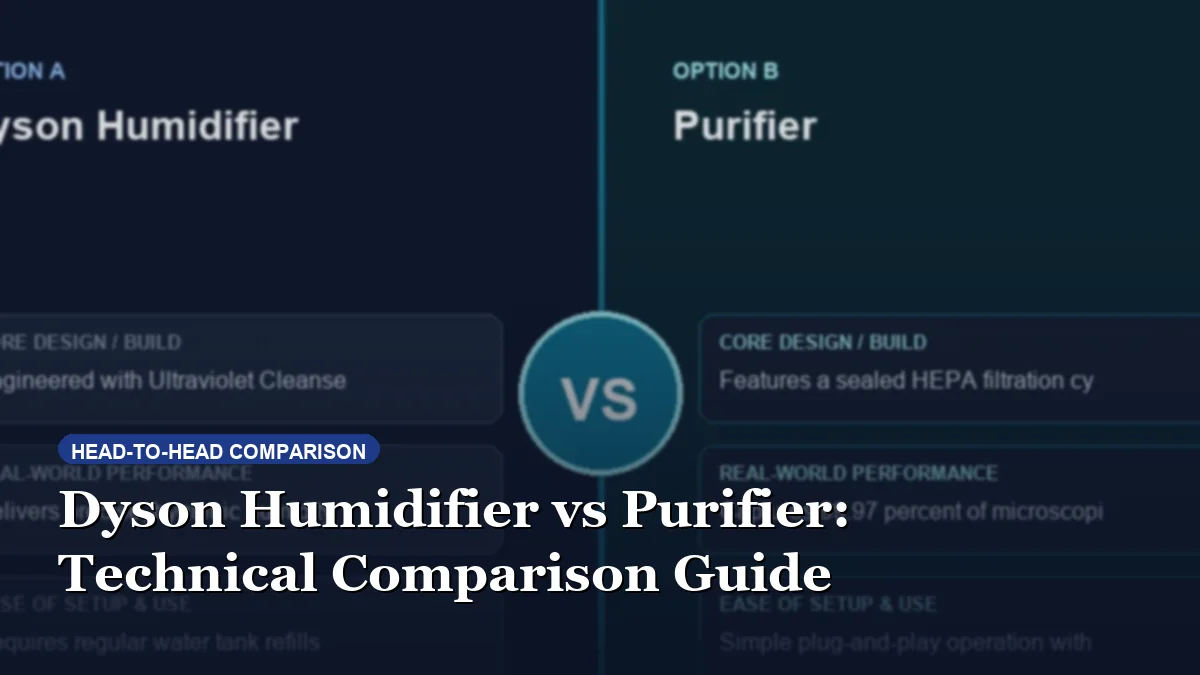
Pick the Dyson Humidifier if dry winter air causes respiratory irritation in your household spaces. Choose the Purifier if you battle persistent dust, pet dander, and seasonal pollen year-round.
Compare all top models in our Best Dehumidifier: Top Picks for Healthy Indoor Air.
Side-by-Side Breakdown
| Criteria | Dyson Humidifier | Purifier | Edge |
|---|---|---|---|
| Core Design / Build | Engineered with Ultraviolet Cleanse technology and a moisture distribution hoop. | Features a sealed HEPA filtration cylinder and Air Multiplier amplification loop. | Purifier |
| Real-World Performance | Delivers precise, hygienic humidity control across medium bedroom spaces. | Captures 99.97 percent of microscopic particles down to 0.3 microns reliably. | Purifier |
| Ease of Setup & Use | Requires regular water tank refills and periodic deep cleaning cycles. | Simple plug-and-play operation with automated sensor monitoring and app connectivity. | Purifier |
| Durability & Reliability | Built with high-grade engineering plastics resistant to mineral scale buildup. | Robust brushless motor designed for continuous multi-year operational cycles. | Purifier |
| Efficiency / Operating Footprint | Consumes moderate wattage to power UV-C emitters and piezoelectric transducers. | Energy-efficient variable-speed fan draws minimal power during standard operation. | Purifier |
| Maintenance Requirements | Demands monthly citric acid descaling and thorough water reservoir scrubbing. | Requires straightforward annual filter replacements without liquid descaling steps. | Purifier |
| Best Ideal Use Case | Dry winter bedrooms requiring clean, germ-free atomized moisture output. | Allergy sufferers needing comprehensive pollutant removal in living areas. | Purifier |
Engineering Heritage And Core Technologies
Dyson engineering is rooted in rigorous research projects spanning fluid dynamics and motor design. The company applies lessons learned from vacuum cleaners and high-speed Airblade hand dryers directly to home climate control appliances.
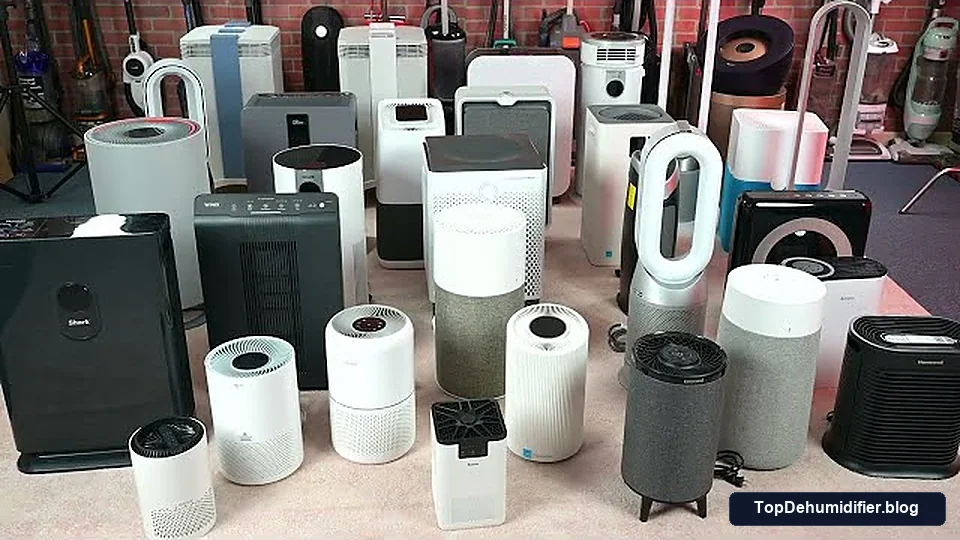
Early breakthroughs with bagless cyclones transformed how engineers approach airflow management. This foundational expertise eventually enabled the development of bladeless fans and sophisticated environmental conditioning units for modern residential spaces.
While historical engineering ventures also included contrarotator washing machines and advanced hair care products, climate control remains a primary focus. Today, both humidifiers and purifiers leverage this rich legacy of aerodynamic innovation.
Dyson engineering centers on aerodynamic airflow and high-velocity projection. Their motor designs utilize mixed-flow impellers to draw air efficiently through precision-engineered apertures without relying on conventional, visible spinning blades that gather dust.
Thermal-dynamic principles drive their humidification systems, integrating ultraviolet-C emitters to sanitize water prior to vapor generation. This ultraviolet disinfection cycle exposes every droplet to a specific wavelength, neutralizing bacteria before moisture enters living spaces.
Solid-state sensors continuously monitor ambient conditions, recalibrating fan speeds automatically. These internal microprocessors analyze particulate density and relative humidity, ensuring real-time adjustments match the exact physiological demands of your indoor climate envelope.
- Rooted in extensive fluid dynamics research projects
- Adapted aerodynamic principles from high-speed hand dryers
- Applies cyclonic separation insights to modern environmental controls
Evolution From Fans To Environmental Control
The launch of Air Multiplier fans revolutionized bladeless air movement technology globally. Engineers quickly realized these laminar flow properties could enhance both moisture distribution and particulate filtration efficiency.
Expanding beyond traditional engineering domains, the brand also explored unexpected categories like toothbrushes and medical care devices. This diverse research background directly informs the sophisticated electronics inside current climate appliances.
- Bladeless air multiplier loops optimize airflow projection
- Cross-industry research inspires unique appliance safety features
Dyson Humidification Mechanics Versus Air Purification
When evaluating damp lower levels, reviewing our best basement dehumidifier and air purifier picks clarifies how advanced moisture extraction and particulate scrubbing systems operate indoors.
The humidification unit utilizes ultraviolet light to sterilize water before a piezoelectric transducer creates microscopic mist. This ensures that moisture released into the room remains free from harmful waterborne bacteria.
Conversely, the standalone purifier draws ambient air through a dense network of physical barriers. It traps gaseous pollutants and fine particulates without altering the relative humidity levels of the room.
Dedicated purifiers focus entirely on particulate capture and gaseous pollutant reduction. Their sealed housings force air through dense filter media, whereas humidification units incorporate evaporative mesh matrices designed to introduce moisture safely into the room.
Combining both functions requires complex fluid dynamics to prevent moisture from degrading the delicate filter media. Engineers isolate the water reservoir away from the HEPA filtration chamber, ensuring optimal air cleanliness without filter saturation issues.
Operating a combined machine demands careful balancing of airflow channels. When humidification engages, internal baffles adjust airflow trajectories to maximize moisture dispersion rates across larger square footage zones without creating localized condensation hazards.
- Humidifiers add sanitized moisture via piezoelectric transducers
- Purifiers trap particulate matter through multi-stage physical filters
- Operating modes require distinct internal sensor calibrations
Moisture Injection Versus Particulate Capture
Adding moisture alters room humidity metrics, which helps alleviate dry skin and respiratory discomfort during winter. Sensors continuously measure ambient temperature to adjust evaporation rates automatically.
Purification technology concentrates on capturing microscopic allergens, pollen, and volatile organic compounds. The primary objective is improving indoor air purity rather than managing atmospheric moisture content.
- Moisture injection targets relative humidity optimization
- Particulate capture removes microscopic allergens effectively
Filtration Architecture And Particulate Standards
Filtration standards represent a major technical differentiator between these two specialized hardware categories. Pure air purification devices rely heavily on sealed HEPA filters to capture microscopic pollutants.
The filtration matrix traps ninety-nine point nine seven percent of particles down to zero point three microns. Activated carbon layers simultaneously neutralize unpleasant household odors and dangerous chemical fumes.
Humidification appliances feature water filtration meshes rather than comprehensive air scrubbing filters. Their internal systems prioritize mineral management to prevent white dust accumulation on household furniture.
Modern Dyson appliances employ true HEPA standards, capturing ninety-nine point nine seven percent of microscopic allergens. This rigorous particulate filtration efficiency traps pollens, pet dander, and fine dust particles down to zero point three microns.
Activated carbon layers impregnated with Tris buffer neutralize household odors and volatile organic compounds effectively. This secondary chemical adsorption stage targets formaldehyde and benzene, protecting occupants from invisible indoor air pollution hazards daily.
Maintaining proper filter sealing is critical to prevent unfiltered air bypass. Gasket compression engineering ensures every cubic millimeter of intake passes through the media barrier, preserving strict indoor air quality compliance across long operational cycles.
- Sealed HEPA filtration captures ultra-fine particulate matter
- Activated carbon layers absorb household VOCs and odors
- Humidifiers use mesh screens to manage mineral sediment
The Science Of Clean Air Delivery
Advanced sensors constantly analyze indoor air quality, displaying real-time particulate metrics on an LCD screen. For sleeping spaces, browsing our best bedroom dehumidifier and purifier options ensures quiet nighttime operation.
Humidifiers lack sophisticated particulate sensors, focusing instead on hygrometer readings. Their internal logic calculates optimal moisture output based on continuous temperature and humidity feedback loops.
- Real-time pollutant monitoring drives automated fan speeds
- Hygrometer sensors dictate precise room moisture targets
Maintenance Ergonomics And Sanitization Protocols
Proper maintenance ensures long-term operational reliability and prevents microbial growth within your appliances. Humidifiers demand rigorous hygiene protocols due to standing water reservoirs and mineral accumulation risks.
Users must regularly perform deep cleaning cycles using citric acid solutions to dissolve hard water scale. Neglecting this crucial maintenance step can lead to unpleasant odors and reduced mist output.
Purifiers offer a much simpler maintenance schedule centered around annual filter cartridge replacements. There are no water tanks to scrub, making daily upkeep virtually effortless for busy homeowners.
Routine upkeep significantly extends device longevity and prevents microbial buildup inside internal water paths. Regular cleaning cycles require proprietary deep clean routines that descale mineral deposits from the titanium-mesh evaporator tubes safely.
Filter replacement procedures are designed for tool-free accessibility, allowing users to swap spent cartridges swiftly. Clear indicator lights signal when filter lifespan limits have been reached based on actual monitoring hours and pollution loads.
Water tanks feature smooth internal geometries to simplify manual rinsing and discourage biofilm colonization. Adhering to strict sanitization protocols guarantees that aerosolized moisture remains pure, avoiding respiratory irritants during continuous winter heating seasons.
- Humidifiers require monthly descaling with citric acid
- Purifiers need straightforward annual filter cartridge swaps
- Standing water management is unique to humidification devices
Preventing Microbial Growth In Water Systems
Ultraviolet C radiation technology exposes every drop of water to germicidal light before evaporation. This built-in sanitization process neutralizes bacteria present in the reservoir before mist generation.
Despite UV-C sanitization, physical scrubbing of the water trough remains necessary to remove biofilm. Following manufacturer cleaning guides strictly guarantees safe, hygienic indoor vapor output.
- Ultraviolet C light neutralizes bacteria in water reservoirs
- Routine physical scrubbing prevents stubborn biofilm buildup
Energy Footprint And Operational Efficiency Metrics
Power consumption varies significantly between humidification and purification appliances during standard daily operation. Humidifiers generally consume higher wattage because they must power piezoelectric heating and UV elements.
Purifiers operate efficiently by utilizing brushless DC motors that draw minimal electrical current. Their energy footprint remains remarkably low even when running continuously on higher fan speeds.
Understanding these electrical requirements helps users estimate long-term utility costs before making a final purchasing decision. Energy-conscious buyers typically favor the lower wattage demands of standard purifiers.
Electrical consumption varies significantly depending on whether the heating or humidification modules are active. Standard fan modes draw minimal wattage, whereas thermal evaporation processes require higher power inputs to alter phase states effectively.
Smart standby features optimize energy usage by shutting down display panels and idling sensors when rooms are vacant. This careful power management framework minimizes unnecessary electricity draw while maintaining ready-state responsiveness for automated controls.
Evaluating seasonal efficiency involves balancing airflow velocity against humidity output metrics. Selecting appropriate operating speeds prevents excessive energy consumption while achieving optimal environmental equilibrium throughout residential living and sleeping spaces.
- Humidifiers draw more power for UV-C and mist generation
- Purifiers use efficient brushless motors for low wattage draw
- Continuous operation costs favor standard air purification units
Power Consumption During Continuous Cycles
Running a humidifier through an entire winter night increases cumulative household energy consumption modestly. The transducer and ultraviolet bulb operate continuously to maintain target humidity levels.
Air purifiers balance high filtration performance with low standby power draws. Exploring our top dehumidifier and air purifier combos helps you consolidate climate control appliances efficiently.
- Winter humidity maintenance increases nightly power usage
- Purifier standby electronics maintain minimal electrical draw
Selecting The Right Device For Your Indoor Environment
Choosing between a humidifier and a purifier depends entirely on your specific indoor climate challenges. Homes located in arid winter climates benefit immensely from the moisture-adding capabilities of humidifiers.
Conversely, households dealing with seasonal allergies, smoke, or pet dander require powerful particulate filtration systems. Selecting the correct appliance ensures targeted relief and healthier indoor living spaces.
Assessing your local climate and personal health requirements clarifies whether moisture control or pollutant removal takes priority. Investing in the right technology protects both your comfort and your home.
Choosing between an air scrubber and a hybrid unit depends heavily on your regional climate. Checking our recommended home dehumidifier models helps you manage severe moisture challenges effectively.
Assessing room volume and ceiling height ensures your chosen hardware meets manufacturer volumetric displacement guidelines. Proper sizing prevents overworking the motor while maintaining consistent indoor parameters for sensitive family members and allergy sufferers.
Reviewing spatial constraints and HVAC interactions helps determine optimal placement away from obstructing furniture. Strategic positioning maximizes airflow distribution efficiency, ensuring comprehensive air treatment across your entire domestic environment year-round.
- Arid winter climates demand dedicated humidification solutions
- Allergy sufferers require advanced particulate filtration systems
- Assessing local weather patterns guides final appliance selection
Matching Appliance Features To Household Needs
Families with infants or allergy-prone individuals often need both functions handled effectively. Evaluating room dimensions and baseline humidity levels helps determine the ideal equipment configuration.
Reviewing manufacturer specifications ensures your chosen device matches your exact room square footage requirements. Proper sizing maximizes appliance lifespan and overall environmental conditioning efficiency.
- Room square footage dictates proper appliance sizing
- Baseline humidity levels determine moisture addition needs
Frequently Asked Questions
Can a Dyson purifier also add moisture to dry rooms?
No, standard Dyson purifiers are engineered exclusively for particulate filtration and air circulation. You must purchase a dedicated humidifier if you need to increase indoor humidity levels.
How often should I clean my Dyson humidifier reservoir?
You should thoroughly clean the water tank and trough every four weeks using citric acid. This routine maintenance prevents mineral scale buildup and ensures hygienic mist output.
Do Dyson purifiers require permanent filter replacements?
Yes, the HEPA and activated carbon filters are consumable components requiring annual replacement. The device will notify you automatically when the filtration media reaches capacity.
Which device is better for managing winter allergy symptoms?
A purifier is ideal if your allergies stem from dust mites, pet dander, or indoor pollen. A humidifier is better if dry air triggers respiratory irritation during winter.
Are Dyson climate control appliances energy efficient to run daily?
Purifiers are exceptionally energy-efficient thanks to advanced brushless DC motor technology. Humidifiers consume slightly more power due to their ultraviolet sanitization and mist generation systems.