FFAP5033W1 vs FFAD5033W1: Technical Comparison Guide
Choosing between these Frigidaire models depends heavily on your basement drainage needs. We evaluate their engineering specs and real-world performance.

Choose the FFAP5033W1 if you require vertical water pumping for elevated drainage points. Select the FFAD5033W1 for standard gravity setups without pump maintenance overhead.
Compare all top models in our Best Dehumidifier: Top Picks for Healthy Indoor Air.
Side-by-Side Breakdown
| Criteria | Ffap5033W1 | Ffad5033W1 | Edge |
|---|---|---|---|
| Core Design / Build | Integrated heavy-duty internal condensate pump | Standard gravity gravity-drain bucket layout | FFAP5033W1 |
| Real-World Performance | Rated for 50 pints per day extraction | Rated for 50 pints per day extraction | Tie |
| Ease of Setup & Use | Includes continuous pump hose assembly | Standard garden hose connection port | FFAP5033W1 |
| Durability & Reliability | Reinforced chassis for pump vibration dampening | Standard injection-molded polystyrene housing | FFAP5033W1 |
| Efficiency / Operating Footprint | Energy Star certified compressor system | Energy Star certified compressor system | Tie |
| Maintenance Requirements | Requires periodic pump intake inspection | Standard filter cleaning and bucket washing | FFAD5033W1 |
| Best Ideal Use Case | Basements requiring upward water discharge | Ground-level spaces with easy floor drains | Split |
Core Design and Engineering Differences
When evaluating these two units, structural chassis design dictates their functional purpose. The primary engineering divergence centers around water management architecture and internal fluid dynamics.
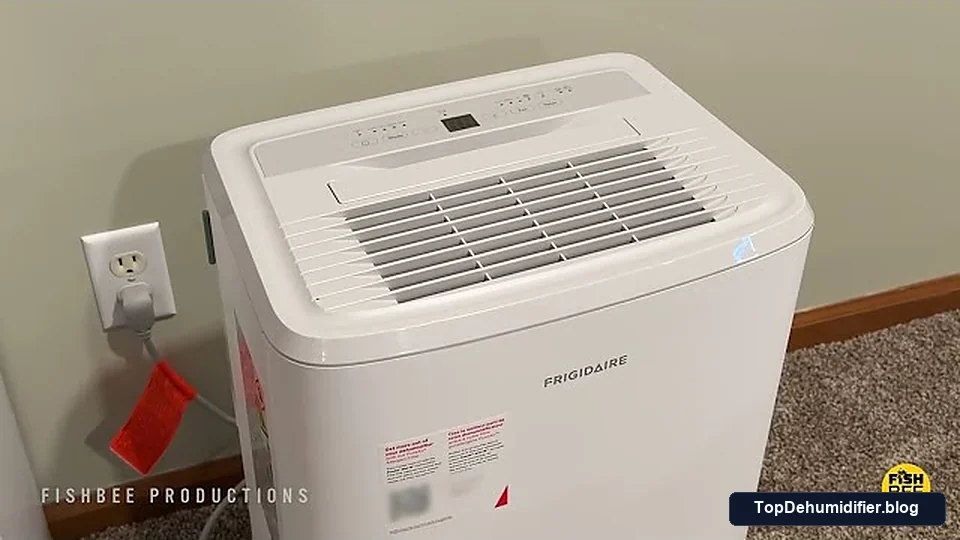
Both systems utilize rotary compressors housed within durable polymer cabinets. However, the internal layout accommodates distinctly different drainage pathways for moisture removal.
The structural engineering reveals distinct chassis designs between these units. You can read our detailed frigidaire ffad5033w1 review to understand how the gravity drainage and bucket collection methods operate efficiently.
Internal component layout dictates total operational durability. Heavy-duty compressor mountings reduce vibration transmission across both frames, though the pump-equipped chassis requires slightly more internal clearance for condensate hose routing and safety float switches.
- Identical 50-pint daily moisture removal capacity ratings
- Similar digital humidistat control panels with LED displays
- Identical refrigerant types compliant with current safety standards
Chassis Construction and Materials
The outer housings utilize high-impact ABS plastics designed to resist cracking. Internal components are securely mounted to minimize vibration and operational noise.
Structural reinforcement around the base ensures stability during high-speed compressor cycles.
- Corrosion-resistant evaporator and condenser coils
- Heavy-duty caster wheels for smooth floor mobility
Real-World Water Extraction Performance
Extracting moisture efficiently requires optimal airflow across chilled evaporator coils. Both machines pull ambient air through washable mesh filters to protect internal mechanisms.
Under standard test conditions of relative humidity and temperature, both units extract moisture rapidly. Their cooling coils maximize surface area for optimal thermodynamic heat exchange.
Moisture removal capacity hits 50 pints per day under strict standards. Explore our frigidaire ffad5033w1 review to see how ambient relative humidity dictates actual extraction rates during continuous basement operation cycles.
Refrigerant circulation through the evaporator coils ensures rapid dew point suppression. Users must maintain proper clearance around intake grilles to prevent airflow restriction and optimize latent heat exchange efficiency throughout the room.
- Fan speeds adapt to ambient humidity levels automatically
- Rapid dew point reduction in sealed residential basements
- Automatic defrost cycles prevent coil freeze-up issues
Airflow Dynamics and Fan Speeds
A multi-speed centrifugal fan pulls humid air through the rear intake grille. The treated air exits through the top louvered vent smoothly.
Proper clearance around the appliance ensures uninterrupted intake velocity during continuous duty cycles.
- Quiet fan motor bearings reduce acoustic resonance
- Optimized blade pitch maximizes cubic feet per minute
Drainage Systems and Pump Integration
Drainage capability represents the single greatest differentiator between these appliances. The integrated condensate pump on the first model enables vertical water evacuation.
Gravity drainage is standard on the alternative unit, requiring lower floor drain placements. Selecting the correct drainage method prevents messy basement overflows.
Selecting the correct drainage configuration prevents operational overflow risks. The pump model utilizes a mechanical impeller to discharge water vertically, making it ideal for installations requiring overhead hose routing toward nearby utility sinks.
Gravity-fed configurations demand continuous downward slope positioning to ensure unhindered fluid movement. Utilizing a standard garden hose adapter simplifies continuous drainage setups, bypassing the manual bucket emptying process entirely during peak humidity seasons.
- Pump model lifts water multiple feet through small tubing
- Standard model relies strictly on gravity or manual emptying
- Bucket shut-off switches prevent accidental water spills
Pump Mechanics vs Gravity Flow
Internal pressure switches activate the drainage pump automatically when reservoirs fill. This engineering feat allows homeowners to route water upward into laundry sinks.
Gravity configurations require continuous downward slope angles to function properly.
- Check valves prevent backflow in pump discharge lines
- Simple threaded hose adapters fit standard garden hoses
Maintenance Protocols and Filter Hygiene
Regular maintenance ensures longevity and maintains peak moisture removal efficiency over years. Dust buildup on coils drastically reduces heat transfer capabilities.
Washable mesh filters require bi-weekly rinsing with mild soap and warm water. Proper drying prevents mold growth inside the filter compartment before reinstallation.
Preventative upkeep preserves cooling coil integrity and maintains proper airflow dynamics. Washable mesh filters capture airborne particulates, requiring bi-weekly cleaning with mild detergent to prevent mold spore proliferation inside the internal cabinet housing.
Regular sanitization of the condensate collection bucket inhibits bacterial slime accumulation. Inspecting the drainage ports and clear tubing prevents mineral blockages that could trigger safety float switches and interrupt automatic shutoff functions.
- Removable bucket features an ergonomic carrying handle
- Filter check indicator lights signal required cleaning intervals
- Pump intake tubing requires periodic descaling inspections
Cleaning the Condensate Reservoirs
Mineral deposits and biological slime can accumulate inside collection buckets over time. Scrubbing internal basin walls with vinegar solutions eliminates stubborn residues.
Ensuring float switches move freely prevents false full-bucket error codes.
- Anti-microbial bucket coatings inhibit bacterial growth
- Accessible drain plugs simplify manual water removal tasks
Electrical Efficiency and Operating Footprint
Energy consumption remains a critical factor for appliances running continuously in damp environments. Both units meet strict efficiency criteria established by regulatory agencies.
Compressor cycling is managed by precise solid-state electronic humidistats. This prevents short-cycling and lowers overall electrical draw during moderate humidity days.
Power consumption metrics align with standard 115-volt household electrical circuits. Operating these dehumidifiers requires dedicated breaker capacity to prevent overloads, especially when compressors initiate drawing maximum starting current loads during initial startup phases.
Energy Factor ratings reflect balanced thermodynamic engineering across our best dehumidifier selections. Utilizing programmable timer functions helps minimize unnecessary runtime, lowering overall electricity consumption while maintaining comfortable indoor relative humidity consistently.
- Energy Star certified operational profiles for lower utility bills
- Automatic restart functions restore settings after power outages
- Low-voltage control boards protect sensitive internal microchips
Power Draw and Circuit Loads
Operating on standard residential circuits, these appliances require dedicated grounded outlets. Compressor startup amperage spikes briefly before stabilizing into normal running currents.
Internal thermal overload protectors safeguard motors from overheating hazards.
- Heavy-duty power cords withstand continuous electrical loads
- Integrated cord wraps simplify off-season storage organization
Ergonomics, Controls, and Noise Levels
User interfaces dictate how easily homeowners program desired humidity levels and fan speeds. Tactile buttons and bright digital readouts provide clear operational feedback.
Acoustic dampening materials around the compressor compartment keep operating noise manageable in finished living spaces.
Digital humidistat interfaces provide precise ambient moisture adjustments. Soft-touch control pads and LED display panels allow users to monitor current room conditions and program desired target humidity percentages with high operational accuracy.
Acoustic dampening materials enclose the rotary compressors to suppress mechanical operating noise. While fan turbulence generates normal white noise, placing the unit on a level surface prevents undesirable chassis vibration resonance.
- Clear LED displays show ambient humidity percentages accurately
- Timer programming allows scheduled daily operating windows
- Balanced cabinet construction minimizes rattling and buzzing noises
Control Panel Layout and Usability
Intuitive button configurations make adjusting target humidity levels straightforward for all users. Indicator lights clearly signal filter maintenance and bucket status.
Lock features prevent accidental setting changes by children or pets.
- Responsive membrane switches resist moisture infiltration
- Preset humidity modes simplify daily operation tasks
Selecting the Right Model for Your Space
Matching appliance capabilities to your specific architectural layout ensures optimal humidity control. Assess your drainage availability before finalizing your purchasing decision.
Spaces lacking floor-level drains benefit immensely from integrated pump technology. Read our in-depth frigidaire ffap5033w1 with pump dehumidifier review to see how utility rooms accommodate specific drainage requirements efficiently and safely.
Determining the optimal unit depends heavily on permanent drainage access and room layout. Basements lacking floor-level gravity drains benefit immensely from the integrated pump system, eliminating frequent manual intervention during heavy moisture seasons.
Standard living areas with accessible floor drains or frequent bucket monitoring needs match the gravity configuration well. Assessing your specific structural layout ensures you purchase the correct moisture control solution for long-term reliability.
- Evaluate basement layout and elevation change requirements
- Consider local ambient temperatures and relative humidity loads
- Verify electrical outlet capacity in your intended installation zone
Final Buyer Recommendations
Homeowners dealing with elevated utility sinks or distant windows should invest in pump-equipped variants. Standard gravity models suit traditional basement setups with floor drains perfectly.
Prioritizing proper sizing ensures maximum comfort and structural protection.
- Match pint capacity to total square footage dimensions
- Prioritize ease of maintenance based on your schedule
Frequently Asked Questions
What is the primary operational difference between these two models?
The primary distinction is that one features an integrated internal pump for vertical water lifting, while the other relies on gravity drainage.
Do both dehumidifiers share the same moisture removal capacity?
Yes, both engineered units are rated to extract up to 50 pints of moisture daily under standard certified test conditions.
Can the gravity drain model pump water upward into a sink?
No, standard gravity models cannot lift water vertically without purchasing an external auxiliary condensate pump separately. You must use the built-in pump model for vertical drainage.
How often should the washable air filters be cleaned?
You should inspect and clean the mesh filters every two weeks to maintain optimal airflow efficiency and protect internal coils.
Are these appliances certified for energy efficiency?
Both variants carry Energy Star certification to ensure responsible power consumption during continuous seasonal operation.