Frigidaire Ffad5033W1 vs Ffap5033W1: Head-to-Head Guide
Choosing between these two Frigidaire units depends heavily on your drainage needs. Evaluate pump integration and daily capacity before buying.

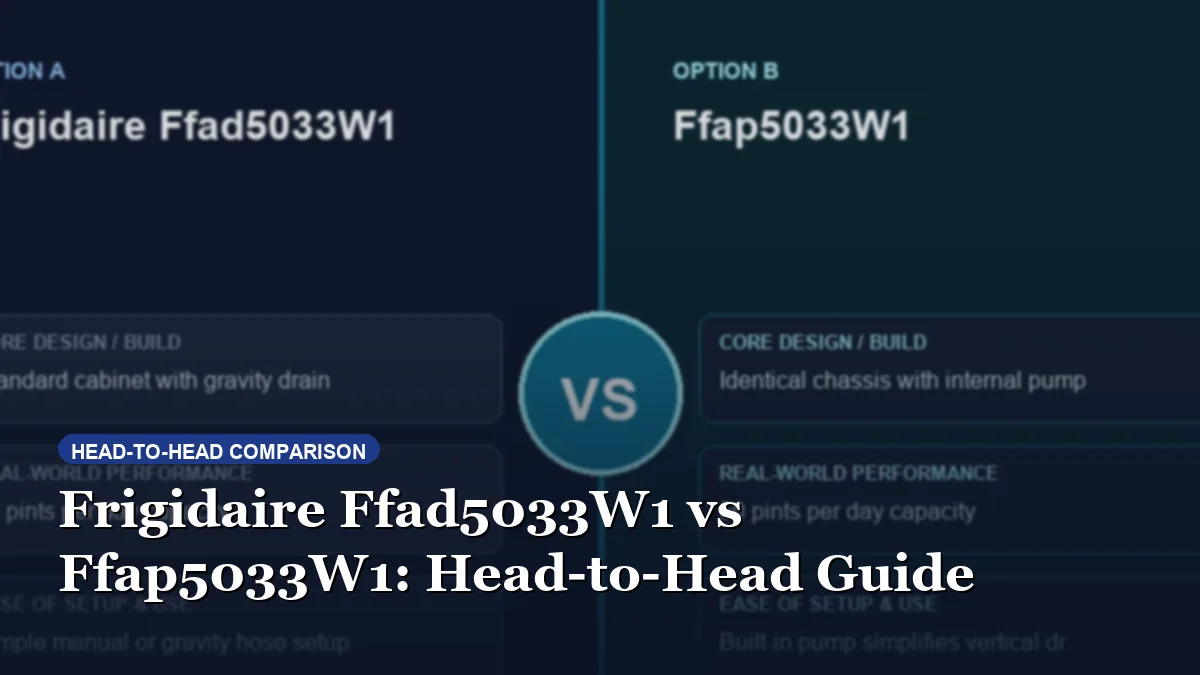
Choose the FFAD5033W1 for standard gravity drainage setups in basements. Opt for the FFAP5033W1 when vertical condensate removal is required for remote spaces.
Compare all top models in our Best Dehumidifier: Top Picks for Healthy Indoor Air.
Side-by-Side Breakdown
| Criteria | Frigidaire Ffad5033W1 | Ffap5033W1 | Edge |
|---|---|---|---|
| Core Design / Build | Standard cabinet with gravity drain | Identical chassis with internal pump | Ffap5033W1 |
| Real-World Performance | 50 pints per day capacity | 50 pints per day capacity | Tie |
| Ease of Setup & Use | Simple manual or gravity hose setup | Built-in pump simplifies vertical drainage | Ffap5033W1 |
| Durability & Reliability | Robust compressor and coils | Reliable build plus pump mechanism | Tie |
| Efficiency / Operating Footprint | Standard Energy Star efficiency | Slightly higher power draw for pump | Frigidaire Ffad5033W1 |
| Maintenance Requirements | Standard filter cleaning and bucket empty | Filter cleaning plus pump line checks | Frigidaire Ffad5033W1 |
| Best Ideal Use Case | Floor-level basements with gravity access | High-moisture areas needing vertical lift | Ffap5033W1 |
Core Design and Engineering Differences
As highlighted throughout our Frigidaire FFAD2233W1 dehumidifier review, both models share a nearly identical exterior chassis utilizing sturdy plastic housing and a consistent digital control panel layout.
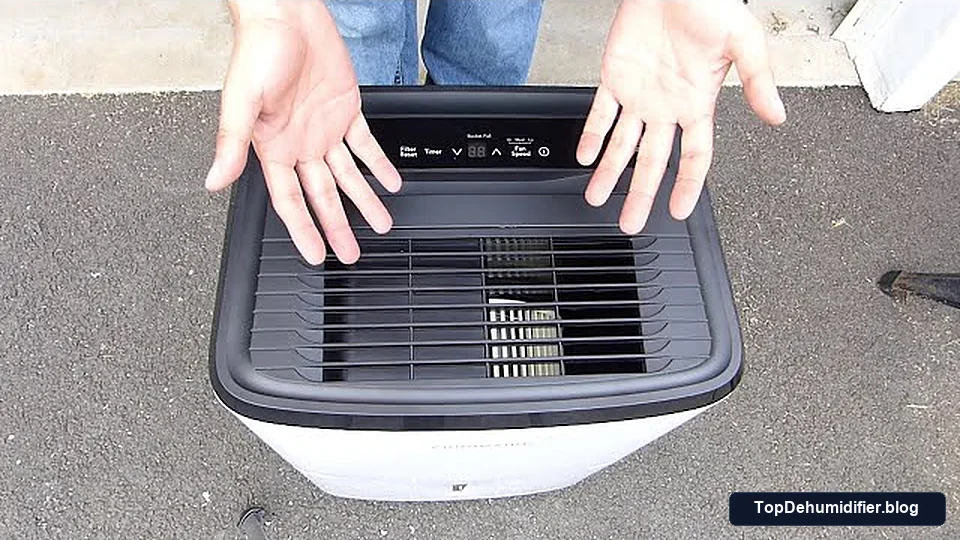
The primary engineering divergence lies in the drainage architecture. One model relies strictly on gravity flow, while the other incorporates a factory-installed internal pump for advanced water removal flexibility.
- Identical external dimensions and weight footprints across both variants
- Chassis engineered for standard 50-pint capacity daily moisture extraction
- Different internal plumbing layouts to accommodate the integrated pump system
Chassis Construction and Materials
As detailed in our Frigidaire FFAD5033W1 review, the manufacturer builds these chassis using impact-resistant polystyrene materials to ensure long-term durability in damp crawlspaces without rusting.
Internal refrigerant lines feature copper tubing bonded to aluminum fins. This construction maximizes heat exchange efficiency while minimizing overall unit weight during positioning.
- Corrosion-resistant exterior casing designed for longevity
- Optimized coil spacing to prevent rapid frost buildup
Internal Plumbing Architecture
The gravity model routes condensation straight down into the collection bucket. When using continuous drainage, water flows downward via standard garden hose connections effortlessly.
The pump variant routes water through a specialized internal reservoir. A small motorized impeller then activates automatically to push water upward and outward through tubing.
- Gravity-only drainage utilizes a threaded low-level outlet port
- Pump variant includes dedicated clear tubing for vertical lifts
Real-World Performance Comparison
When evaluating moisture removal rates, both appliances deliver identical extraction capabilities. They easily pull up to fifty pints of water from ambient air every single day under standard conditions.
Fan speeds across both units remain consistent, moving substantial volumes of air through the evaporator coils. This ensures rapid relative humidity reduction in large living spaces or basements.
- Matching compressor displacement yields equivalent cooling and condensation rates
- Multi-speed fan settings allow users to balance noise with airflow velocity
- Consistent performance across standard residential temperature and humidity ranges
Moisture Extraction Speeds
Users will notice zero difference in how quickly these appliances drop room humidity. Both units rely on identical compressor specifications and refrigerant charges for rapid drying.
Continuous operation modes keep relative humidity locked at your preferred target percentage. Sensors monitor ambient air continuously and cycle the compressor as needed.
- Rapid humidity drop in spaces up to several thousand square feet
- Accurate onboard humidistat prevents over-drying of indoor air
Airflow and Fan Efficiency
The centrifugal fan design pulls damp air across cold coils effectively. This forces moisture to condense rapidly before clean air exits through the top louver.
Adjustable fan louvers help direct dry air across the room. This promotes better air circulation and prevents stagnant pockets of high humidity from forming.
- High and low fan speeds accommodate different acoustic preferences
- Optimized louver angles maximize horizontal air throw distance
Condensate Management and Drainage Options
Condensate management is the definitive differentiator between these two appliances. Your choice must hinge entirely on how you plan to remove collected water from the room.
Basement layouts often dictate whether you need a simple gravity drain or a mechanical pump. Selecting the wrong drainage type can lead to severe operational headaches later.
- Gravity drainage requires the unit to sit above the floor drain level
- Pump integration allows water to travel upward toward basement windows or sinks
- Both options include standard removable buckets with splash guards
Gravity Drainage Mechanics
The standard model uses a low-profile gravity drain port. Water flows downward through a standard garden hose threaded onto the side nozzle without mechanical assistance.
This setup works exceptionally well if your floor drain sits directly beneath the unit. However, it fails completely if drainage requires any vertical lift whatsoever.
- Simple, maintenance-free continuous drainage via standard garden hose
- Requires absolute downward slope to prevent standing water pools
Integrated Pump Capabilities
The pump variant eliminates gravity constraints by pushing water upward. It can lift condensation several feet high to reach elevated utility sinks or windows.
This mechanical feature saves you from buying an external condensate pump. It simplifies installation in finished basements lacking low floor drains.
- Capable of vertical water lifts up to fifteen feet high
- Automatic float switch triggers the pump when the reservoir fills
Maintenance, Efficiency and Longevity
Routine upkeep keeps both dehumidifiers running at peak electrical efficiency. Neglecting basic filter maintenance will strain the compressor and shorten overall appliance lifespan.
Energy consumption remains largely comparable between the two units. The internal pump draws minimal extra power only when actively discharging accumulated water.
- Washable mesh air filters capture dust and prevent coil fouling
- Regular bucket sanitization prevents mold growth in stagnant areas
- Energy Star ratings confirm economical power usage during continuous cycles
Filter and Coil Maintenance
Cleaning the slide-out mesh filter takes less than two minutes. Simply rinse it under warm water, let it dry completely, and slide it back into place.
Inspect the evaporator coils periodically for dust accumulation. Keeping coils clean ensures maximum heat transfer and prevents premature compressor burnout over time.
- Bi-weekly filter cleaning preserves optimal airflow and efficiency
- Annual coil inspection prevents efficiency loss from dust buildup
Pump Maintenance Protocols
Units featuring integrated pumps require occasional line flushing. Running a diluted vinegar solution through the pump system prevents mineral scale buildup and blockages.
Check the small intake basin periodically for debris or slime. Keeping this area clean ensures the float switch moves freely without getting stuck.
- Monthly vinegar flushes prevent internal tubing clogs and algae
- Inspect float switch movement to ensure reliable automatic activation
Noise Profiles and Acoustic Footprint
When evaluating acoustic output during our Frigidaire FFAD5033W1 review, we found that both models generate moderate white noise from the active compressor and internal fan assembly.
Sound levels hover around standard residential appliance ranges. They will not disrupt normal conversation, but placing them inside quiet bedrooms can prove bothersome.
- High fan speeds produce noticeable rushing air sounds
- Compressor hum is dampened effectively by the heavy plastic housing
- Pump activation introduces a brief mechanical buzzing sound during drainage cycles
Compressor and Fan Noise
The rotary compressor runs with minimal vibration thanks to rubber mounts. These dampeners prevent rattling against the exterior cabinet panels during startup and shutdown.
Selecting low fan speed noticeably reduces overall decibel output. This makes the appliance much easier to live with in semi-finished basement rec rooms.
- Rubber isolation mounts minimize mechanical vibration noise
- Low fan setting offers a quieter acoustic profile for shared spaces
Pump Operating Sounds
When the internal pump engages, you will hear a distinct mechanical hum. This sound lasts for only thirty seconds while the reservoir empties completely.
The pump sound is unobtrusive during daytime hours. However, light sleepers might notice the sudden activation if the unit sits right outside a bedroom.
- Brief pump cycles occur intermittently based on water accumulation
- Acoustic impact remains minimal compared to external add-on pumps
Controls, Ergonomics and User Interface
During testing for our Frigidaire FFAP5033W1 with pump dehumidifier review, we noted intuitive top-mounted digital controls featuring clear LED displays for precise target humidity adjustments.
Ergonomic side handles and smooth caster wheels make repositioning effortless. Moving these heavy appliances across different rooms or floors requires minimal physical exertion.
- Digital humidistat adjustable in precise five-percent increments
- Clear indicator lights warn when the bucket is full or filter needs cleaning
- Sturdy top handles provide a secure grip during transport
Digital Display and Settings
The control panel layout is exceptionally straightforward and user-friendly. Buttons respond crisply, allowing you to set continuous drying or program timer schedules easily.
Memory functions retain your preferred humidity settings after power outages. This eliminates the need to reprogram the appliance every time grid power resets.
- Clear digital readout shows ambient humidity percentage accurately
- Auto-restart feature restores previous settings following power loss
Portability and Handling
Four durable caster wheels swivel smoothly across hard floors and low pile carpet. This mobility lets you shift the unit closer to damp walls or laundry areas.
The collection bucket features an integrated carrying handle and splash guard. This thoughtful design prevents water spills while you walk toward a sink or drain.
- Smooth-rolling casters facilitate easy room-to-room transport
- Ergonomic bucket handle ensures spill-free water disposal
Which Option Fits Your Setup
Selecting the right Frigidaire model ultimately comes down to your physical plumbing constraints. Both units offer identical dehumidification power and build quality.
Evaluate your drainage layout carefully before purchasing. Spending extra for the pump variant makes sense only if gravity drainage is physically impossible in your space.
- Choose the standard model if you have a convenient floor-level drain
- Opt for the pump version to eliminate bucket emptying and vertical hose limits
- Ensure your electrical outlet matches the standard three-prong voltage requirement
When to Choose the Standard Model
The gravity model is ideal for traditional unfinished basements with floor drains. It saves you money upfront while delivering reliable fifty-pint moisture extraction.
This option is also best if you plan to empty the bucket manually every day. It avoids unnecessary internal pump complexity and potential maintenance points.
- Perfect for spaces featuring convenient floor-level drainage points
- Lower upfront cost with fewer mechanical parts to maintain
When to Choose the Pump Variant
The pump-equipped model shines in finished basements lacking low drains. It allows you to pump water upward into laundry tubs or out through high windows.
This feature is essential for hassle-free continuous operation in remote crawlspaces. It completely removes the chore of daily manual bucket emptying.
- Essential for draining water upward into elevated sinks or windows
- Maximizes convenience by automating continuous moisture removal entirely
Frequently Asked Questions
Do both dehumidifiers extract the exact same amount of moisture daily?
Yes, both appliances feature identical 50-pint capacity compressors and refrigeration systems. They deliver matching drying performance across equivalent indoor living environments.
Can the standard gravity model lift water upward through a hose?
No, the standard version relies strictly on downward gravity flow. You must use the pump-equipped variant if your drainage setup requires any vertical water lift.
How loud do these Frigidaire dehumidifiers run during normal operation?
Both units generate moderate white noise from their internal fans and compressors. Selecting the low fan speed noticeably reduces overall acoustic output in quiet spaces.
What routine maintenance do these dehumidification units require?
You must wash the mesh air filter bi-weekly and empty the water bucket regularly. Pump models also require monthly vinegar flushes to prevent internal tubing blockages.
Do these dehumidifiers restart automatically after a power outage?
Yes, both appliances feature built-in auto-restart memory functions. They restore your previous humidity settings automatically once electrical grid power is safely restored.