Humidifier vs Dehumidifier For Allergies: Concise Verdict
Choosing between moisture additions and moisture removal dictates your allergy relief strategy. Selecting the correct appliance transforms indoor air quality and respiratory comfort instantly.

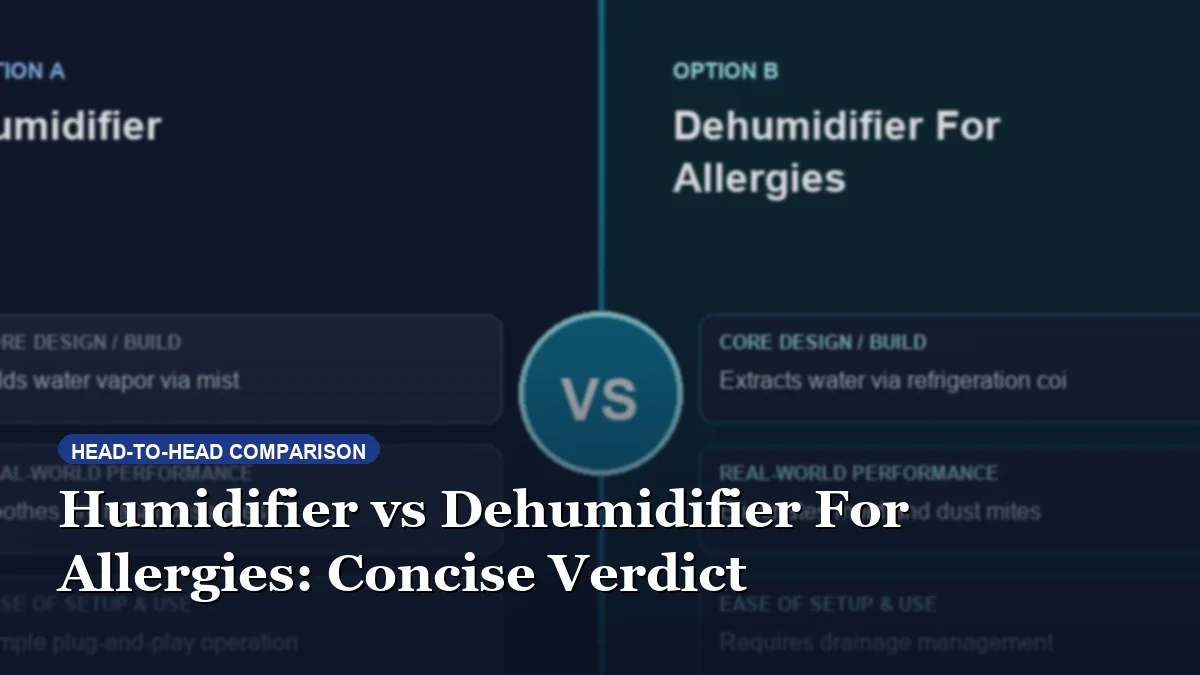
Choose side a if dry winter air triggers your persistent respiratory irritation. Select side b if airborne dust mites and mold spores dominate your allergen profile.
Compare all top models in our Best Dehumidifier: Top Picks for Healthy Indoor Air.
Side-by-Side Breakdown
| Criteria | Humidifier | Dehumidifier For Allergies | Edge |
|---|---|---|---|
| Core Design / Build | Adds water vapor via mist | Extracts water via refrigeration coils | Depends on Goal |
| Real-World Performance | Soothes dry nasal passages | Eliminates mold and dust mites | Side B for Allergies |
| Ease of Setup & Use | Simple plug-and-play operation | Requires drainage management | Side A |
| Durability & Reliability | Moderate lifespan with descaling | Robust compressor construction | Side B |
| Efficiency / Operating Footprint | Low energy consumption | Higher electrical draw | Side A |
| Maintenance Requirements | Daily tank cleaning needed | Regular bucket and coil upkeep | Side A |
| Best Ideal Use Case | Dry winter bedrooms | Damp basements and humid rooms | Side B for Allergies |
Core Allergy Mechanisms and Indoor Air Physics
Indoor relative humidity directly dictates how allergens behave inside your living spaces. Managing water vapor concentrations requires understanding strict psychrometric principles and seasonal shifts.
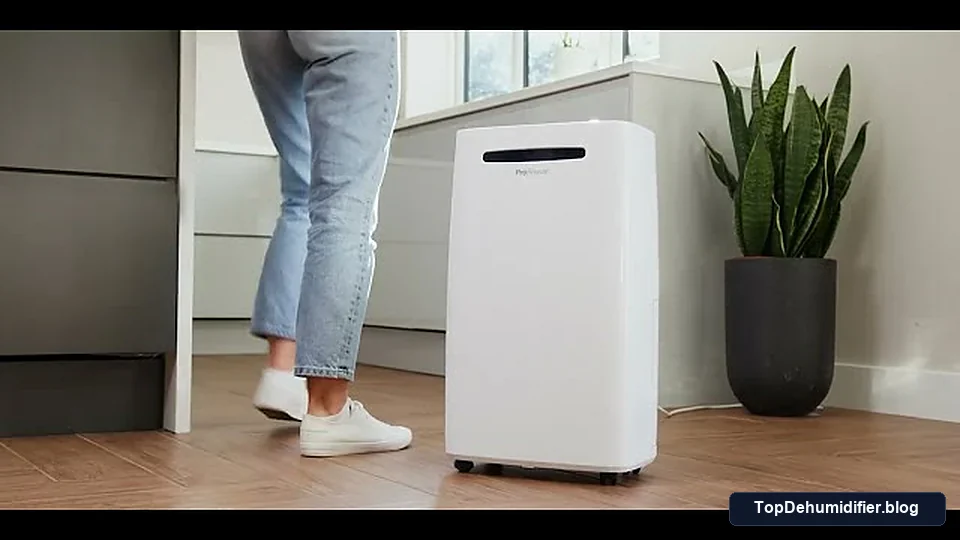
Airborne irritants react differently depending on atmospheric moisture levels. Installing the best dehumidifier for bathroom areas effectively controls localized humidity and airborne allergen concentrations.
- Relative humidity ranges must remain between thirty and fifty percent.
- Allergy triggers multiply rapidly when moisture metrics exceed safe boundaries.
- Dry air compromises mucous membranes, increasing vulnerability to floating particulate matter.
The Physics of Airborne Particulates
Tiny particles suspend themselves in indoor air based on weight and humidity. Heavy moisture forces dust and pollen to settle onto flooring surfaces.
Conversely, bone-dry winter heating keeps fine irritants airborne indefinitely. Balancing these extremes is the primary challenge of modern indoor environmental control.
- Aerosolized allergens travel easily through forced-air HVAC networks.
- Proper ventilation works alongside moisture control to minimize symptoms.
Understanding Humidifier Functionality for Respiratory Health
Ultrasonic and evaporative humidifiers actively introduce water vapor into dry environments. These systems alleviate winter coughing fits by soothing irritated respiratory tracts.
Individuals suffering from non-allergic dryness benefit immensely from added atmospheric moisture. However, mismanaged humidification quickly creates ideal breeding grounds for mold.
- Ultrasonic models utilize high-frequency vibrations to generate cool mist.
- Evaporative units draw air through a saturated wick filter naturally.
- Warm mist devices boil water before releasing sterile vapor.
Targeted Relief for Dry-Air Allergies
Winter heating strips homes of natural moisture, causing severe throat and sinus irritation. Pairing these units with the best dehumidifier for allergies helps maintain clean air.
Users must monitor output levels carefully using an external digital hygrometer. Exceeding recommended moisture limits defeats the original therapeutic purpose.
- Keep output below fifty percent to prevent condensation.
- Clean water tanks daily to stop bacterial colonization.
The Role of Dehumidifiers in Controlling Allergen Vectors
Dehumidifiers extract excess moisture from humid indoor environments using refrigeration coils. This mechanical drying process directly starves dust mites and mold colonies.
Dust mites cannot survive or reproduce when ambient relative humidity drops below fifty percent. Therefore, extraction units serve as frontline defenses for allergy sufferers.
- Compressor dehumidifiers condense water effectively in warm, damp spaces.
- Peltier units offer quiet operation for small bathrooms or closets.
- Continuous drainage hoses prevent manual bucket-emptying chores.
Suppressing Mold and Dust Mites
Basements and damp crawlspaces harbor invisible mold spores that trigger severe allergic reactions. Deploying high-capacity moisture extraction units neutralizes these persistent biological threats.
Consistent humidity management stops microbial proliferation across porous building materials and carpets. Maintaining dry conditions protects your household from chronic respiratory distress.
- Mold spores require high humidity to germinate and spread.
- Dust mite populations collapse rapidly in dry indoor air.
Evaluating Indoor Humidity Thresholds and Hygrometer Use
Accurate measurement remains the cornerstone of any successful indoor allergy management plan. Digital hygrometers provide exact readings of current atmospheric moisture levels.
Homeowners should position hygrometers away from direct drafts and moisture sources. Monitoring these metrics ensures you deploy the correct remediation equipment.
- Digital hygrometers display real-time humidity and temperature data.
- Calibrate sensors periodically for maximum measurement accuracy.
- Record peak humidity times to identify problem zones.
Setting Safe Operational Ranges
Maintaining the ideal humidity sweet spot prevents both mold growth and dry nasal passages. Aim for a stable indoor range between forty and fifty percent.
Crossing these established thresholds invites either biological infestations or severe skin dryness. Diligent tracking eliminates guesswork from your daily allergy prevention routine.
- Target forty-five percent humidity for optimal year-round comfort.
- Adjust settings dynamically as seasonal outdoor weather shifts.
Maintenance Protocols for Preventing Secondary Microbial Growth
Both machine types require rigorous daily and weekly maintenance routines to remain safe. Neglected water reservoirs quickly become breeding grounds for harmful bacteria.
Humidifiers need frequent tank disinfection to prevent aerosolizing mold spores indoors. Utilizing the best dehumidifier for bedroom spaces ensures quiet operation and easy cleaning.
- Sanitize humidifier tanks using mild vinegar and water solutions.
- Empty dehumidifier reservoirs regularly to prevent stagnation odors.
- Replace wick filters and air intake screens according to schedules.
Avoiding Device-Induced Contamination
Poorly maintained climate control appliances often worsen existing allergy symptoms significantly. Dirty internal components spray pathogens directly into your breathing zone.
Establishing a strict cleaning schedule guarantees your equipment provides genuine relief. Always unplug units before performing any water removal or filter replacement tasks.
- Inspect internal coils and basins for unexpected mold growth.
- Allow all washed components to dry thoroughly before reassembly.
Energy Consumption, Power Footprint, and Electrical Safety
Operating climate control devices impacts monthly utility bills and electrical load safety. Dehumidifiers generally consume more electricity due to heavy compressor and fan operations.
Standard ultrasonic humidifiers draw minimal power, functioning quietly in bedrooms overnight. Understanding these power footprints helps budget for continuous seasonal usage requirements.
- Compressor systems require dedicated electrical circuits in damp basements.
- Ultrasonic units feature low wattage draws for safe bedside placement.
- Check Energy Star ratings to identify cost-effective models.
Safe Placement and Electrical Best Practices
Water and electricity demand cautious placement strategies to prevent dangerous household hazards. Never run heavy extension cords for high-draw moisture extraction appliances.
Position units on level surfaces to prevent accidental spills and mechanical strain. Following basic safety guidelines ensures long-term operational reliability across seasons.
- Keep power cords away from standing water pools.
- Ensure wall outlets feature functioning ground fault protection.
Choosing the Right Device for Specific Climate Zones
Regional climates heavily dictate whether your home needs moisture addition or removal. Coastal regions demand aggressive dehumidification to combat persistent maritime humidity levels.
Arid inland deserts require consistent humidification to protect sensitive respiratory tissue during winter. Matching your appliance choice to local geography ensures effective allergy mitigation.
- Humid regions require continuous extraction to control dust mites.
- Dry winter regions necessitate cool-mist addition for sinus health.
Assessing Your Personal Allergy Triggers
Identify whether your symptoms stem from dust mites or mold. Selecting the best dehumidifier for basement environments protects your respiratory health from excessive dampness.
Once you know your specific triggers, selecting the correct machine becomes straightforward. Investing in the right technology transforms your indoor living environment.
- Test indoor air quality before purchasing expensive remediation gear.
- Prioritize moisture extraction if mold is your primary trigger.
Frequently Asked Questions
Can a humidifier help if I have dust mite allergies?
No, introducing moisture with a traditional humidifier will actually worsen dust mite allergies because these microscopic pests thrive in damp indoor environments exceeding fifty percent relative humidity thresholds.
You should utilize a high-capacity mechanical dehumidifier instead to lower ambient moisture levels and successfully eradicate those stubborn allergen populations from your living spaces entirely.
When is it appropriate to use a humidifier for allergy relief?
You should only use a humidifier when dry winter heating systems strip indoor air of natural moisture and cause severe nasal irritation and coughing.
Adding clean cool mist helps soothe inflamed respiratory passages without triggering unwanted mold growth if maintained properly below strict indoor humidity safety limits every single day.
How do dehumidifiers specifically reduce allergy symptoms?
Dehumidifiers specifically reduce chronic allergy symptoms by extracting excess water vapor from damp indoor air to effectively starve mold and dust mites of necessary moisture.
Keeping relative humidity below fifty percent halts reproduction cycles for these common biological allergens instantly across your entire home environment for maximum relief.
Can running the wrong device make my allergies worse?
Yes, running a humidifier in an already damp home will quickly accelerate mold growth and trigger severe allergic flare-ups.
Conversely, drying out a desert home too much causes painful sinus cracking and persistent respiratory distress requiring careful balance of indoor atmospheric metrics daily.
What is the ideal humidity level for allergy sufferers?
The ideal humidity level for allergy sufferers generally ranges strictly between thirty and fifty percent throughout the entire year. This specific environmental sweet spot prevents dust mites and mold from multiplying while keeping your delicate nasal passages comfortable every day.