Basement Humidifier vs Dehumidifier: Technical Breakdown
Choosing the right moisture control device prevents structural damage and respiratory irritation. Understanding core thermodynamic differences ensures optimal indoor air quality.

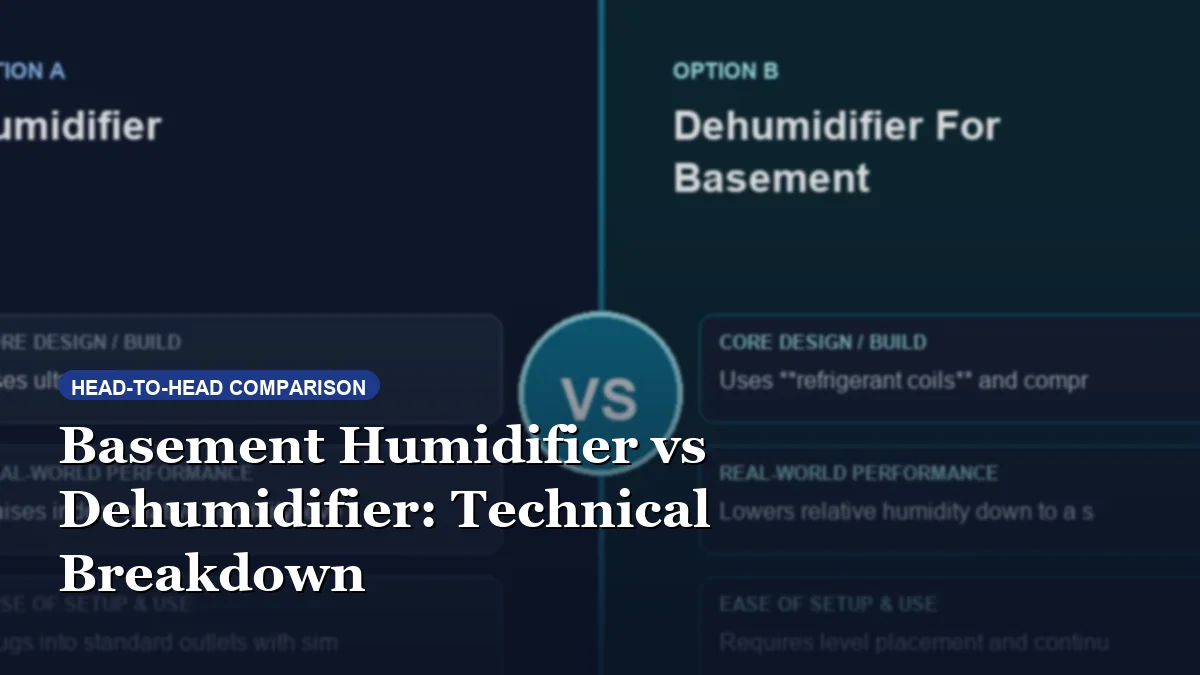
Basement dehumidifiers extract moisture to prevent mold, whereas humidifiers add vapor for dry air. Choose a dehumidifier for damp lower levels and reserve humidifiers for arid winter spaces.
Compare all top models in our Best Dehumidifier: Top Picks for Healthy Indoor Air.
Side-by-Side Breakdown
| Criteria | Humidifier | Dehumidifier For Basement | Edge |
|---|---|---|---|
| Core Design / Build | Uses ultrasonic or evaporative wicks to add moisture | Uses refrigerant coils and compressors to extract moisture | Side B |
| Real-World Performance | Raises indoor relative humidity levels above forty percent | Lowers relative humidity down to a safe thirty to fifty percent | Side B |
| Ease of Setup & Use | Plugs into standard outlets with simple manual water tanks | Requires level placement and continuous gravity or pump drainage | Side A |
| Durability & Reliability | Lightweight plastic housing susceptible to mineral scaling | Heavy-duty steel chassis built for continuous subterranean operation | Side B |
| Efficiency / Operating Footprint | Consumes minimal wattage during dry heating seasons | Draws higher amperage to power heavy compressor motors constantly | Side A |
| Maintenance Requirements | Frequent cleaning prevents bacterial growth in water reservoirs | Regular filter vacuuming and coil inspections ensure longevity | Side A |
| Best Ideal Use Case | Dry upstairs bedrooms during cold winter months | Wet, below-grade basements prone to mold and mildew | Side B |
Core Design And Thermodynamic Engineering
Basement environments require specialized mechanical equipment to handle persistent hydrostatic pressure and vapor diffusion. Standard household humidifiers serve an entirely opposite thermodynamic purpose within residential building envelopes.

Engineering a proper basement dehumidifier system involves refrigeration cycles, condensing coils, and collection buckets designed to extract water vapor from dense air. Conversely, humidifiers introduce aerosolized droplets.
Understanding these foundational design differences prevents catastrophic moisture errors in below-grade rooms. Utilizing the wrong appliance exacerbates structural decay and creates hazardous indoor living conditions.
Dehumidifiers utilize a closed-loop refrigeration cycle featuring a compressor, condenser, and evaporator coil to extract moisture from incoming air streams via rapid surface condensation and thermal energy exchange.
Conversely, warm-mist and ultrasonic humidifiers rely on heating elements or piezoelectric transducers to actively inject water vapor into dry environments, completely opposing the thermodynamic goals of subterranean spaces.
Understanding these mechanical divergences ensures you deploy the correct thermal device, preventing catastrophic moisture imbalances that directly compromise foundation integrity and indoor environmental quality standards.
- Dehumidifiers condense ambient humidity via cold evaporator coils.
- Humidifiers disperse water vapor using ultrasonic disks or wicks.
- Basement models feature rugged compressors built for heavy loads.
Refrigeration Mechanics In Subterranean Spaces
Refrigerant-based extraction units pull warm, humid air across freezing metal coils to force condensation. This continuous thermodynamic cycle efficiently wrings excess moisture from damp foundation walls.
Without this active mechanical extraction, subterranean rooms rapidly exceed safe humidity thresholds established by building standards.
- Evaporator coils drop below the dew point rapidly.
- Water droplets drip safely into internal collection buckets.
Moisture Removal Versus Vapor Generation
Operating a humidifier in a subterranean zone introduces dangerous moisture levels that ruin drywall and insulation. Basements naturally accumulate groundwater vapor through porous concrete slabs and foundation walls.
Adding moisture to an already damp underground room invites toxic mold colonies and structural wood rot. True subterranean climate control demands aggressive extraction rather than vapor generation.
Technical metrics prove that maintaining relative humidity below fifty percent halts mold spore reproduction. Dehumidifiers achieve this target, while humidifiers actively work against structural preservation goals.
Operating a high-capacity drain hose unit drops ambient relative humidity by condensing airborne moisture into liquid water, which collects safely inside a removable bucket or flows away continuously.
Humidifiers achieve the exact opposite outcome by atomizing liquid water reservoirs, raising indoor humidity levels to combat parched air during freezing winter months in heated residential structures.
Introducing a humidifier into a damp subterranean basement creates severe operational hazards, drastically accelerating mold proliferation and rusting vulnerable metallic fixtures due to excessive saturation.
- Basements naturally retain moisture from surrounding soil.
- Humidifiers accelerate wood rot and paint blistering below grade.
- Extraction units protect framing materials from moisture saturation.
The Dangers Of Excess Subterranean Humidity
Excessive moisture compromises joists, subflooring, and stored personal items stored in lower levels. Deploying a dehumidifier mitigates these risks by continuously extracting gallons of water daily.
Ignoring baseline humidity measurements leads to irreversible damage and costly professional remediation services.
- Relative humidity above sixty percent feeds mold growth.
- Active extraction preserves structural integrity over time.
Real-World Performance In Subterranean Spaces
Evaluating real-world performance requires examining how appliances handle cool subterranean temperatures and variable airflow. Standard humidifiers struggle in cold spaces where water fails to evaporate properly.
Basement-rated extraction units incorporate low-temperature operation features to prevent frost buildup on internal coils. This engineering distinction ensures reliable performance during chilly spring and autumn months.
Field measurements demonstrate that commercial-grade extraction appliances outperform standard residential units in damp basements. Choosing high-capacity models guarantees rapid moisture reduction across expansive floor plans.
Subterranean environments naturally draw moisture from surrounding soil through concrete walls, requiring heavy-duty dehumidifiers capable of extracting pints per day matching high-capacity structural drying requirements.
Ambient temperatures in unconditioned basements often drop below sixty degrees Fahrenheit, causing standard refrigeration units to freeze up unless equipped with an active automatic defrost cycle.
Placing a humidifier in this specific geological setting defies basic building physics, worsening subterranean dampness and inviting severe structural degradation that threatens the overall property value.
- Low-temperature coils prevent ice accumulation during cold cycles.
- High airflow fans circulate dry air into dark corners.
- Standard humidifiers falter in chilly underground environments.
Addressing Cold Basement Microclimates
Below-grade rooms often remain significantly cooler than upper-level living spaces throughout the year. Specialized dehumidifiers utilize auto-defrost functions to maintain extraction efficiency in these chilly microclimates.
Standard units freeze up and shut down prematurely when exposed to cold cellar conditions.
- Auto-defrost cycles melt ice from internal condenser coils.
- Continuous operation prevents humidity spikes during rainstorms.
Maintenance Demands And Filtration Standards
Proper maintenance extends equipment lifespan and ensures safe indoor air quality throughout your home. Humidifiers require rigorous daily cleaning to prevent bacterial slime from spreading via mist.
Basement dehumidifiers demand regular filter washing and condensate line inspections to maintain peak efficiency. Neglecting these basic upkeep tasks severely diminishes moisture removal capacity over time.
Establishing a routine maintenance schedule prevents motor burnout and ensures your climate control investment lasts for years. Always disconnect power sources before servicing internal components or drainage hoses.
Dehumidifier maintenance demands regular washing of mesh air filters and sanitizing the condensate collection bucket to prevent stagnant water from harboring harmful bacterial colonies or mold spores.
Humidifiers require even stricter daily sanitation protocols because standing water reservoirs and aerosolizing transducers easily disperse mineral dust and microbial pathogens directly into living zones.
Adhering to manufacturer filtration guidelines guarantees optimal airflow efficiency while extending the operational lifespan of your mechanical moisture control equipment throughout years of demanding service.
- Wash mesh air filters bi-weekly to maintain optimal airflow.
- Inspect condensate drain lines for mineral blockages regularly.
- Sanitize humidifier reservoirs frequently to stop microbial growth.
Preventing Microbial Contamination In Reservoirs
Stagnant water in collection buckets creates fertile breeding grounds for harmful bacteria and mold spores. Regular emptying and scrubbing with vinegar solutions eliminates health hazards associated with neglected reservoirs.
Direct gravity drainage setups minimize stagnant water risks in permanent basement installations.
- Vinegar rinses neutralize bacterial biofilms effectively.
- Gravity drainage bypasses manual bucket emptying tasks.
Electrical Efficiency And Continuous Drainage
Running heavy appliances in subterranean levels impacts household electricity consumption and utility budgets significantly. Modern dehumidifiers feature energy-saving modes that cycle compressors efficiently based on current readings.
Continuous drainage setups utilize gravity or integrated internal pumps to remove extracted water automatically. This eliminates the tedious chore of manually emptying heavy collection buckets every single day.
Evaluating electrical draw helps homeowners select appropriately sized equipment without triggering overloaded circuits. Proper installation guarantees safe, unattended operation during extended seasonal rainy periods.
Modern energy-efficient dehumidifiers feature high-efficiency energy star ratings and low-wattage rotary compressors, significantly optimizing electrical consumption during continuous multi-season operations in damp below-grade cellar rooms.
Utilizing gravity-fed drainage lines or internal condensate pumps allows for continuous drainage, completely eliminating manual bucket emptying tasks during peak humidity seasons in deep subterranean spaces.
Conversely, running a humidifier requires frequent manual refilling of water tanks, creating electrical inconveniences and absolute operational redundancy when deployed within naturally humid basement environments.
- Integrated pumps push water upward to elevated utility sinks.
- Energy Star certifications indicate lower operational wattage demands.
- Gravity drain hoses provide reliable, maintenance-free water removal.
Optimizing Power Consumption In Damp Areas
Heavy-duty compressors require dedicated electrical circuits to prevent tripped breakers during startup surges. Proper cord placement and avoiding extension cords ensure safe, efficient daily appliance operation.
Smart hygrostats turn off compressors once target humidity levels are successfully reached.
- Dedicated circuits prevent dangerous electrical overloads safely.
- Hygrostat controls reduce unnecessary power consumption.
Structural Health And Air Quality Impact
Indoor air quality directly correlates with subterranean moisture levels and basement structural health. Unchecked humidity fosters dust mite populations and triggers severe allergic reactions among sensitive occupants.
Deploying a top-rated basement dehumidifier model purifies ambient air while drying out damp masonry surfaces. This dual action protects both human respiratory health and the structural integrity of the dwelling.
Conversely, operating a humidifier below grade exacerbates airborne allergen concentrations by promoting microbial proliferation. Maintaining balanced relative humidity creates a healthy environment throughout the entire home.
Maintaining basement relative humidity between thirty and fifty percent protects wooden floor joists, drywall, and masonry foundations from warping, cracking, or developing destructive structural mold.
Implementing a reliable dehumidifier purifies indoor air by significantly reducing airborne allergens, whereas adding a humidifier introduces excessive moisture that exacerbates chronic indoor asthma triggers.
Prioritizing long-term structural health requires treating subterranean spaces exclusively with moisture extraction systems rather than humidification appliances specifically designed solely for dry winter living spaces.
- Dry air inhibits dust mite reproduction and allergen spread.
- Healthy humidity levels prevent crumbling concrete and efflorescence.
- Proper moisture control eliminates musty basement odors entirely.
Combating Musty Odors And VOCs
Musty basement smells originate from microbial volatile organic compounds released by hidden mold colonies. Lowering relative humidity halts this biological activity and freshens indoor air quality.
Pairing extraction units with carbon filters removes lingering organic odors completely.
- Carbon filters neutralize stubborn subterranean odors.
- Dry conditions stop active microbial VOC generation.
Final Selection Guide For Basement Environments
Selecting the correct appliance depends entirely on your specific regional climate and subterranean conditions. Basements unequivocally require dehumidifiers to combat hydrostatic pressure and natural vapor migration.
Reserve standard humidifiers for dry upstairs bedrooms during freezing winter heating seasons. Never confuse their opposing functions when designing a comprehensive home climate management strategy.
Consult local relative humidity measurements before purchasing equipment to ensure proper capacity matching. Investing in the correct device safeguards your property and ensures optimal indoor comfort.
Selecting the appropriate climate control equipment demands careful evaluation of square footage, ambient foundation dampness, and local climate conditions before purchasing a heavy-duty basement dehumidifier.
Never deploy ultrasonic or evaporative humidifiers below ground level unless unique atmospheric conditions strictly require artificial moisture injection into a finished subterranean office space.
Prioritizing proper moisture control effectively protects structural integrity, prevents costly foundation repairs, and ensures a healthy, dry environment throughout your entire residential real estate property.
- Always choose dehumidifiers for damp, below-grade subterranean rooms.
- Use humidifiers exclusively in dry upper-level living areas.
- Measure baseline humidity before selecting your climate equipment.
Making The Definitive Purchase Decision
Analyze your subterranean space for damp spots, peeling paint, or musty odors before selecting a large basement dehumidifier. These severe symptoms mandate heavy-duty moisture extraction rather than a vapor-producing humidifier.
Proper equipment selection guarantees long-term protection for your valuable home investment.
- Inspect foundation walls for dampness and staining.
- Match pint capacity directly to total basement square footage.
Frequently Asked Questions
Can I use a humidifier in my basement during winter?
You should generally avoid using standard humidifiers in basements because below-grade areas naturally accumulate excessive moisture from surrounding soil. Introducing extra vapor risks triggering mold growth and structural wood rot across your lower level.
Why is my basement always humid despite running an appliance?
Persistent high humidity usually indicates that your current dehumidifier lacks sufficient pint capacity for the total square footage of your space. Upgrading to a properly sized unit with continuous drainage resolves this ongoing moisture issue.
What relative humidity level should I target downstairs?
You should maintain your basement relative humidity strictly between thirty and fifty percent for optimal health and safety. This specific threshold successfully prevents mold spore germination while protecting framing materials from moisture damage.
Do basement dehumidifiers require professional plumbing installation?
Most residential units feature simple gravity drain ports or internal pumps that easily connect to standard hoses without professional help. Homeowners can route drainage directly into nearby utility sinks or floor drains effortlessly.
How often should I clean my basement dehumidifier filter?
You must wash your mesh air filter every two weeks to maintain proper airflow and peak extraction efficiency. Regular maintenance prevents motor strain and ensures your heavy-duty appliance operates reliably throughout damp seasons.