Humidifier vs Dehumidifier For Congestion: Technical Verdict
Choosing the right respiratory device requires understanding your home relative humidity. Treating sinus congestion depends heavily on whether dry air or allergens trigger your symptoms.


Pick a humidifier if dry winter air irritates your nasal passages. Choose a dehumidifier if dampness, mold, and dust mites worsen your nighttime congestion and breathing.
Compare all top models in our Best Dehumidifier: Top Picks for Healthy Indoor Air.
Side-by-Side Breakdown
| Criteria | Humidifier | Dehumidifier For Congestion | Edge |
|---|---|---|---|
| Core Design / Build | Evaporative wick or ultrasonic transducer | Refrigeration compressor and condenser coils | Depends on air |
| Real-World Performance | Raises relative humidity up to 60 percent | Lowers relative humidity down to 45 percent | Contextual |
| Ease of Setup & Use | Plugs in with simple water reservoir | Requires drainage hose and floor clearance | Humidifier |
| Durability & Reliability | Susceptible to mineral scaling and mold | Heavy compressors last years with filter care | Dehumidifier |
| Efficiency / Operating Footprint | Low power consumption under 50 watts | Higher energy draw around 300 to 700 watts | Humidifier |
| Maintenance Requirements | Daily tank rinsing and weekly disinfection | Bi-weekly filter vacuuming and coil checks | Dehumidifier |
| Best Ideal Use Case | Winter heating season and dry coughs | Allergy-induced congestion and humid basements | Split Choice |
Core Design and Engineering Differences
Humidifiers actively introduce moisture into indoor air streams. They utilize either high-frequency ultrasonic vibrations or wet wicks combined with fans to vaporize liquid water from an onboard plastic reservoir into fine mist particles.
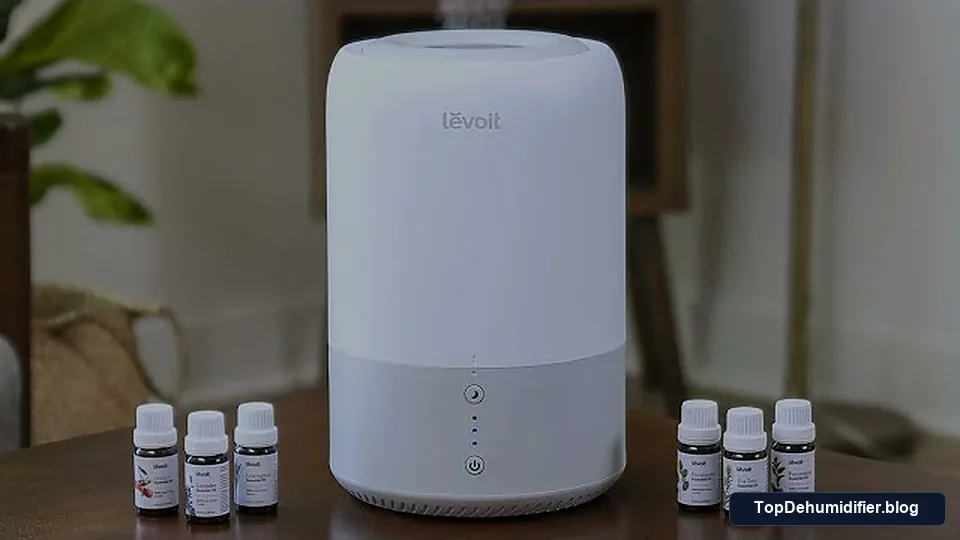
Dehumidifiers operate on opposite thermodynamic principles. These refrigeration appliances pull humid air across cold evaporator coils, channeling condensate directly into an internal collection bucket or the best dehumidifier for basement with drain hose setup.
Humidifiers rely on ultrasonic diaphragms or evaporative wicks to introduce moisture, whereas dehumidifiers use refrigeration coils to condense airborne water vapor into a removable bucket.
Understanding these opposing thermodynamic cycles ensures you select the correct appliance type for treating winter sinus dryness versus managing heavy mold-induced respiratory inflammation at home.
- Humidifiers add moisture via ultrasonic vibrations or evaporative wicks.
- Dehumidifiers extract humidity through refrigeration cycles and condensation coils.
- Electrical draw ranges from low-wattage fans to heavy compressor motors.
Moisture Generation versus Extraction Mechanics
Understanding internal mechanics helps clarify why these two machines serve vastly different respiratory needs. Adding water changes mucous membrane hydration directly inside dry bedrooms.
Removing moisture eliminates environmental triggers like mold spores that inflame chronic sinus passages. Both units alter absolute humidity but target opposite ends of the indoor climate spectrum.
- Thermal output differs significantly between heated mist and compressor operation.
- Airflow dynamics dictate room coverage and evaporation rates across living spaces.
Real-World Performance During Congestion Episodes
When dealing with a common cold or winter flu, dry indoor heating often thickens nasal mucus. A humidifier thins these secretions by increasing ambient moisture, allowing easier breathing and relieving sinus pressure.
Conversely, if chronic allergies or dust mites trigger your nasal congestion, adding moisture worsens symptoms. A dehumidifier reduces indoor humidity below fifty percent, starving dust mites and mold of necessary moisture.
During an acute sinus flare-up, adding warm or cool mist thins thick nasal mucus, while running a compressor-based unit drops relative humidity below forty percent to eliminate dust mites.
Clinical environments show that maintaining balanced indoor moisture prevents mucosal irritation, though over-drying air can actually trigger compensatory mucus production and worsen nighttime nasal congestion.
- Cold symptoms respond well to warm or cool mist moisture addition.
- Allergic rhinitis requires aggressive humidity reduction via compressor dehumidification.
- Incorrect appliance choice can exacerbate nighttime coughing and sinus swelling.
Measuring Symptom Relief Against Hygrometer Readings
Monitoring your room with a digital hygrometer ensures optimal therapeutic conditions. Target ranges between forty and fifty percent humidity prevent both mucosal drying and microbial proliferation.
Failing to track relative humidity often leads to over-saturation or extreme dryness. Precision control remains the cornerstone of effective respiratory relief in residential bedrooms.
- Hygrometers provide exact environmental data for safe breathing conditions.
- Target thresholds protect sensitive lung tissues from secondary irritants.
Maintenance Protocols and Hygiene Standards
Humidifiers demand rigorous daily maintenance to prevent bacterial growth inside water tanks. Standing water quickly breeds pathogens that get aerosolized directly into your breathing zone during operation.
Dehumidifiers require less frequent sanitization but still demand attention. Air filters must be vacuumed bi-weekly, and collection buckets need occasional washing to prevent slime accumulation in damp housings.
Ultrasonic mist producers demand rigorous daily water tank sterilization to prevent aerosolizing harmful bacteria, while refrigerant systems require bi-weekly filter rinsing and coils cleaning to stop mildew.
Neglecting these vital sanitation routines transforms either appliance into a breeding ground for pathogens, inadvertently aggravating the exact respiratory issues you bought the equipment to alleviate.
- Humidifier tanks require daily rinsing and weekly antimicrobial scrubbing.
- Dehumidifier upkeep focuses on filter cleaning and coil inspections.
- Neglecting either device turns your respiratory aid into a biological hazard.
Preventing Microbial Growth in Residential Appliances
Pathogen control separates safe respiratory care from dangerous indoor pollution. Using distilled water in humidifiers minimizes mineral dust accumulation and reduces bacterial breeding grounds.
Emptying dehumidifier buckets prevents stagnant water odors from permeating your living space. Consistent maintenance safeguards your lungs from unintended secondary infections during treatment.
- Distilled water prevents scale buildup in ultrasonic transducers.
- Drain hoses eliminate stagnant standing water inside collection buckets.
Energy Efficiency and Operating Footprint
Energy consumption varies dramatically between these two appliance categories. Cool-mist evaporative humidifiers consume minimal electricity, usually operating under fifty watts using only a small internal fan.
Dehumidifiers draw significantly more power due to their heavy refrigeration compressors. Standard residential units consume between three hundred and seven hundred watts during continuous extraction cycles.
Standard compressor-based moisture extractors typically consume between three hundred and seven hundred watts, making them heavier energy drains than simple evaporative humidifiers running low-power fans.
Reviewing your utility bills alongside daily runtime hours helps optimize household electricity use, especially if you must run climate control units continuously through humid summer allergy seasons.
- Humidifiers offer exceptionally low electrical operating costs year-round.
- Dehumidifiers represent a noticeable increase in monthly utility expenditures.
- Appliance placement impacts overall room footprint and acoustic output.
Acoustic Profiles and Bedroom Suitability
Noise levels dictate whether you can comfortably sleep while these machines run. If excess dampness disturbs your rest, finding the best dehumidifier for bedroom use is essential for quiet operation.
Compressor dehumidifiers produce noticeable mechanical hums and fan noise. Selecting quiet models or placing them in hallways prevents sleep disruption during congestion treatment.
- Ultrasonic units deliver whisper-quiet operation for bedrooms.
- Compressor vibrations require strategic placement on level flooring.
Assessing Your Specific Environmental Trigger
Accurate diagnosis of your congestion source determines the correct equipment purchase. For below-grade moisture issues, selecting the best dehumidifier for basement spaces ensures proper allergen reduction.
Year-round morning stuffiness often stems from mold or dust mite allergens thriving in damp environments. These specific triggers demand aggressive moisture extraction using reliable dehumidifiers.
Check your room's baseline relative humidity using a calibrated hygrometer before buying, ensuring you address dry heating systems rather than dealing with hidden basement dampness.
Matching your device choice to measured atmospheric data guarantees you target the true allergen source responsible for your persistent morning sinus blockage and chest tightness symptoms.
- Viral infections respond positively to increased air moisture levels.
- Allergen-driven congestion requires strict humidity suppression protocols.
- Consulting medical professionals helps identify your exact environmental triggers.
Evaluating Room Size and Climate Conditions
Room dimensions dictate the output capacity required for effective treatment. Large master bedrooms need high-capacity appliances to maintain stable relative humidity percentages overnight.
Regional climate heavily influences your baseline indoor moisture levels. Coastal homes rarely need humidifiers, whereas arid desert environments mandate constant moisture supplementation.
- Output ratings must match total square footage for results.
- Geographic climate dictates your primary indoor air management strategy.
Durability, Longevity, and Build Quality
Long-term reliability depends heavily on manufacturing standards and routine upkeep. Humidifiers feature simpler plastic assemblies but suffer from mineral scaling on transducers over time.
Dehumidifiers feature robust refrigeration systems built for years of heavy service. Their sealed compressor loops offer exceptional mechanical longevity when filters remain clean.
High-quality mechanical builds feature robust rotary compressors and sealed motor housings, significantly extending operating life far beyond cheap residential units prone to premature fan motor failure.
Inspecting all internal plastic reservoirs and structural chassis materials ensures your equipment investment withstands continuous operation through many successive winters of heavy respiratory care use.
- Plastic humidifier reservoirs require careful handling during daily refills.
- Metal compressor coils deliver superior mechanical durability over time.
- Regular descaling extends the operating lifespan of ultrasonic units.
Warranty Coverage and Long-Term Investment
Manufacturer warranties reflect confidence in internal component engineering. Reputable brands offer multi-year coverage on sealed refrigeration systems for dehumidifiers.
Humidifiers typically carry shorter warranty terms due to their consumable nature. Factoring replacement timelines helps determine the true long-term cost of ownership.
- Compressor warranties often cover major internal refrigeration components.
- Budget humidifier models may require replacement after several seasons.
Making Your Final Purchasing Decision
Synthesizing your clinical symptoms and environmental readings leads to the right choice. Never guess your indoor humidity when treating stubborn respiratory congestion and sinus pressure.
Invest in a reliable hygrometer before purchasing any respiratory appliance. Matching your machine to actual atmospheric data ensures genuine relief and better health.
Carefully weigh room square footage against the manufacturer extraction or mist output ratings to guarantee proper sizing for your specific bedroom or living space dimensions.
Always prioritize units featuring auto-shutoff functions, highly washable filtration components, and accurate onboard humidistats to secure effortless daily operation tailored to your nasal health needs.
- Measure room humidity before buying any new appliance.
- Match equipment specifications directly to your diagnosed symptoms.
- Prioritize ease of cleaning to maintain healthy indoor air.
Summary of Key Selection Criteria
Dry winter air demands humidification to soothe irritated nasal linings. Conversely, damp moldy environments require units like the best dehumidifier for bathroom spaces to eliminate allergen triggers completely.
Evaluate your specific room conditions carefully before making a final investment. Proper climate control brings lasting relief from chronic respiratory congestion.
- Use humidifiers for dry winter heating seasons.
- Deploy dehumidifiers for damp, allergy-prone living spaces.
Frequently Asked Questions
Can a dehumidifier help with cold congestion?
A dehumidifier rarely helps cold congestion because dry air worsens viral symptoms. You should use a humidifier instead to thin out mucus.
Why does high humidity cause stuffy noses?
High humidity promotes dust mites and mold growth that trigger allergic reactions. Using a dehumidifier eliminates these allergens to clear your sinuses.
Should I run a humidifier and dehumidifier together?
Running both units simultaneously wastes energy and fights against each other. You must measure your room humidity to pick the correct appliance.
What humidity level is best for congestion?
Maintaining indoor humidity between forty and fifty percent prevents mucosal irritation. A digital hygrometer helps you track these optimal breathing ranges.
Do humidifiers stop morning sinus headaches?
Humidifiers add necessary moisture to prevent nasal passages from drying overnight. This added hydration successfully reduces morning sinus pressure and headaches.