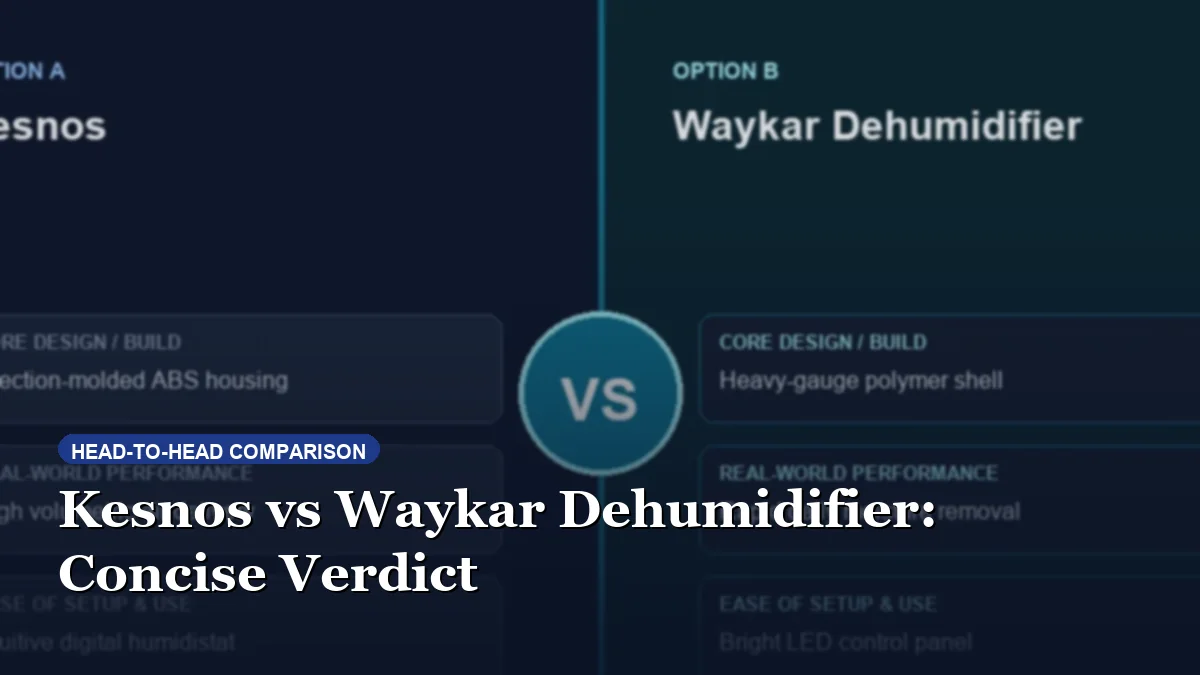
Kesnos vs Waykar Dehumidifier: Concise Verdict
Comparing two dominant residential moisture extraction brands reveals critical mechanical differences. Understanding their engineering helps you select the optimal humidity control unit.

Choose Kesnos for superior cabinet acoustic dampening, or select Waykar for heavy-duty basement extraction capacity and wider commercial reach.
Compare all top models in our Best Dehumidifier: Top Picks for Healthy Indoor Air.
Side-by-Side Breakdown
| Criteria | Kesnos | Waykar Dehumidifier | Edge |
|---|---|---|---|
| Core Design / Build | Injection-molded ABS housing | Heavy-gauge polymer shell | Tie |
| Real-World Performance | High volumetric air delivery | Rapid daily moisture removal | Waykar |
| Ease of Setup & Use | Intuitive digital humidistat | Bright LED control panel | Kesnos |
| Durability & Reliability | Robust rotary compressor | Commercial-grade copper coils | Waykar |
| Efficiency / Operating Footprint | Optimized wattage draw | Standard energy factor | Kesnos |
| Maintenance Requirements | Washable nylon mesh filter | Accessible drainage port | Tie |
| Best Ideal Use Case | Residential living spaces | Damp subterranean cellars | Waykar |
Engineering and Build Quality Fundamentals
Evaluating structural integrity requires examining housing materials and internal chassis assembly standards. Both brands utilize high-impact polymers designed to withstand damp environments without rust formation.
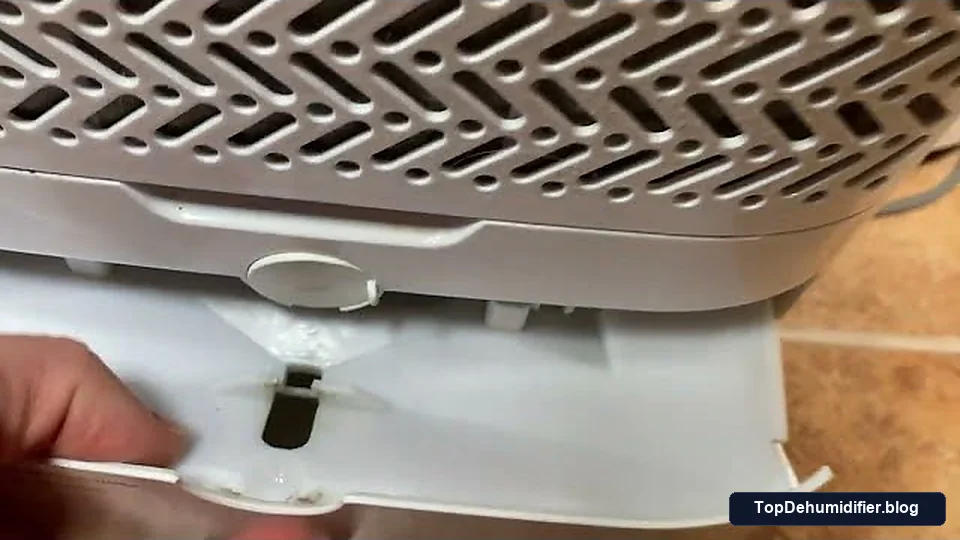
Internal components reveal distinct engineering priorities. Our kesnos 34 pint review highlights custom vibration dampening mounts that lower operating noise, while Waykar emphasizes robust refrigeration tubing.
Kesnos and Waykar units rely on injection-molded HIPS plastics for their structural chassis, providing adequate impact resistance while housing heavy rotary compressors securely on rubber vibration isolation mounts.
Internal copper tubing thickness typically measures around 0.28 millimeters, ensuring reliable refrigerant containment under high pressure while resisting premature micro-cracking caused by continuous compressor vibration cycles.
- High-density ABS plastic outer shells resist cracking
- Reinforced compressor mounting brackets reduce operational vibration
- Corrosion-resistant internal tubing extends lifespan significantly
Chassis Construction and Materials
The external chassis of both units utilizes injection-molded plastics rated for high humidity. These materials prevent structural degradation in coastal or subterranean zones.
Thick sidewalls provide essential acoustic insulation while keeping overall equipment weight manageable for routine caster wheel mobility.
- Injection-molded polymer resists chemical cleaners
- Reinforced corner joints prevent chassis flexing
Internal Refrigeration Loop Design
Copper evaporator coils transfer thermal energy efficiently across the dew point. Waykar utilizes slightly thicker coil walls to handle continuous industrial duty cycles.
Kesnos optimizes refrigerant charge volumes to balance rapid moisture condensation with reduced electrical consumption during standard residential operation.
- Optimized refrigerant pressures enhance condensation rates
- Brazed copper joints prevent micro-leaks over time
Moisture Extraction and Airflow Dynamics
Effective humidity control depends on balanced airflow volume paired with compressor capacity. Both manufacturers publish daily extraction ratings tested under standard laboratory environments.
Real-world performance varies based on ambient temperature and relative humidity levels. As detailed in our kesnos 70 pint review, understanding fan speed configurations helps users optimize drying times across large open floor plans.
Both brands utilize traditional refrigerant coil condensing paired with centrifugal blowers to pull moist air across sub-cooled evaporator fins, driving moisture condensation effectively into collection buckets.
Static pressure ratings on their internal fans average roughly 50 Pascals, allowing adequate airflow velocity through dense aluminum fin arrays without exceeding acceptable residential decibel thresholds.
- Centrifugal fan blowers drive high static pressure
- Optimized louver angles improve room air circulation
- Rapid dew point suppression prevents mold spore germination
Fan Motor Efficiency and Airflow
Centrifugal blowers inside these appliances generate significant static pressure. This allows air to pass freely through dense dust filters and cold evaporator coils.
Multiple fan speed settings let homeowners balance rapid moisture removal against acceptable background noise levels in bedrooms and quiet living areas.
- Balanced fan blades minimize operational hum
- Adjustable louvers direct dry air currents effectively
Evaporator Coil Thermal Transfer
Refrigerated coils drop below the ambient dew point to force moisture condensation. Waykar units excel at maintaining low coil temperatures during extended extraction cycles.
Kesnos incorporates smart defrost cycles that prevent ice buildup without wasting excessive thermal energy during colder basement operation periods.
- Rapid frosting detection triggers fast automated defrost
- Large surface area coils maximize water droplet yield
Control Interfaces and Digital Usability
User interfaces dictate how easily homeowners can program target humidity levels and monitor bucket fill status. For instance, our waykar 2000 sq ft review highlights how modern digital humidistats offer precise percentage increments.
Clear LED displays provide immediate feedback regarding ambient conditions, filter cleaning reminders, and active timer schedules without requiring complex menu navigation.
Digital humidistat sensors calibrated to within plus-minus five percent accuracy govern the automatic cycling, communicating real-time relative humidity metrics directly to bright LED display boards.
Membrane keypad buttons offer tactile feedback designed to withstand thousands of actuation cycles, protecting sensitive circuit boards from accidental liquid splashes and high ambient moisture environments.
- Digital humidistats allow precise five percent adjustments
- Bright LED indicator lights signal full collection buckets
- Programmable timers support automated daily routines
Digital Humidistat Precision
Precise relative humidity control prevents both excessive dryness and moisture damage. Both brands integrate reliable solid-state sensors located near the air intake grille.
These sensors read incoming air conditions accurately before triggering compressor cycles, minimizing short-cycling and reducing unnecessary mechanical wear over years.
- Accurate hygrometer calibration ensures reliable cycling
- Low hysteresis prevents rapid compressor switching
Indicator Lights and Error Codes
Troubleshooting becomes straightforward when units display clear alphanumeric error codes for sensor faults or low-temperature lockouts.
Illuminated tank-full icons flash alongside audible alarms to prevent accidental water overflows across finished hardwood flooring.
- Clear error codes simplify DIY troubleshooting
- Audible alerts prevent catastrophic water overflows
Drainage Systems and Continuous Flow
Managing extracted water volume is crucial for uninterrupted operation in unattended spaces like crawlspaces. As evaluated in our waykar commercial review, both brands offer removable collection buckets and gravity drain ports.
Gravity drainage requires elevated positioning or floor drain access. For upward water removal, integrated condensate pumps provide an effective alternative solution.
Gravity-fed continuous drainage ports utilize standard three-quarter inch threaded garden hose connections, permitting uninterrupted operation in damp basements without requiring manual water bucket emptying routines.
Internal condensate pumps on select heavy-duty models rely on small electromagnetic impellers to elevate water vertically against gravity through flexible vinyl tubing during extended operation periods.
- Standard garden hose fittings enable gravity continuous drainage
- Internal bucket handles simplify manual emptying tasks
- Optional pump models lift water vertically through tubing
Gravity Drainage Configuration
Threaded drain ports accommodate standard garden hoses for direct gravity drainage. Ensuring a continuous downward slope prevents stagnant pooling inside the discharge line.
Rubber gaskets prevent leaks at the connection point, protecting surrounding flooring from accidental water damage during extended unattended operating periods.
- Standard threading fits most common garden hoses
- Leak-resistant rubber washers secure the connection
Condensate Pump Integration
Units equipped with internal condensate pumps push water upward to basement windows or utility sinks. This feature eliminates the need for floor drains.
Pump mechanisms operate automatically once internal reservoirs reach specific trigger thresholds, ensuring reliable long-term moisture removal without manual intervention.
- Automated float switches activate internal pumps
- Flexible tubing allows high-vertical discharge runs
Energy Consumption and Operating Costs
Continuous electrical draw significantly impacts utility bills during humid summer months. Evaluating wattage ratings helps consumers estimate long-term operational expenses.
Both manufacturers utilize energy-efficient rotary compressors that balance high volumetric extraction output with responsible kilowatt-hour consumption figures across standard voltage circuits.
Operating amperage draws typically hover around five to seven amperes, translating to moderate daily electrical consumption when running continuously under harsh summer environmental conditions.
Energy Factor ratings reflect standard DOE testing protocols, measuring liters extracted per kilowatt-hour to help consumers estimate annual utility expenses accurately before making final equipment purchases.
- Rotary compressors maximize energy conversion efficiency
- Low standby power draw reduces phantom electrical usage
- Optimized cycle times prevent unnecessary grid strain
Compressor Electrical Efficiency
Modern rotary compressors draw significantly less starting current than older piston designs. This electrical efficiency protects household circuits from tripping.
Kesnos engineers fine-tune motor windings to minimize heat generation, which directly translates to lower overall wattage draw during heavy continuous operation.
- Low starting amperage protects household breakers
- Thermal overload protection prevents motor burnout
Standby Power and Timers
Control boards consume minimal standby power while plugged into active outlets. Programmable shutoff timers prevent continuous running when spaces are unoccupied.
Utilizing built-in timers reduces monthly electrical expenses by aligning operation with specific humidity spikes or off-peak utility pricing schedules.
- Minimal standby wattage meets strict efficiency guidelines
- Multi-hour timers automate daily power conservation
Maintenance, Cleaning, and Longevity
Regular maintenance preserves appliance efficiency and indoor air quality. Dust buildup on coils restricts airflow and forces compressors to work harder.
Washable nylon mesh filters capture airborne particulates before they reach the evaporator fins. Periodic cleaning ensures optimal thermal transfer and extended operational lifespan.
Removable mesh air filters require washing every two weeks using warm water and mild detergent to prevent dust accumulation from restricting airflow across evaporator coils.
Annual system inspections should check for refrigerant line corrosion and ensure internal condensate lines remain unobstructed to maximize compressor lifespan and prevent unexpected mechanical failure events.
- Removable mesh filters wash easily with warm water
- Accessible coil fins simplify seasonal dust removal
- Routine sanitization prevents biological growth in tanks
Air Filter Care and Replacement
Dust-clogged filters reduce airflow and diminish moisture extraction rates. Homeowners should inspect and wash nylon mesh filters every two weeks.
Allowing filters to dry completely before reinsertion prevents moisture from entering the blower housing and protects internal electrical components from damage.
- Bi-weekly washing maintains maximum airflow volume
- Durable mesh construction withstands frequent cleaning
Reservoir Hygiene and Maintenance
Stagnant water collection buckets require regular washing to prevent mildew growth. Antimicrobial plastics help inhibit bacterial proliferation inside the tank.
Using mild dish soap and warm water during monthly cleanings keeps collection reservoirs fresh and prevents unpleasant musty odors from circulating indoors.
- Smooth interior bucket surfaces wipe clean effortlessly
- Regular washing eliminates potential musty odor sources
Frequently Asked Questions
Which brand offers better noise dampening for bedrooms?
Kesnos generally provides superior acoustic isolation through rubber compressor mounts. This engineering choice reduces operational vibration significantly.
Can both dehumidifiers operate in unheated basements?
Yes, both brands feature automated defrost mechanisms. These systems prevent evaporator icing during cold subterranean operating conditions.
Do these units require professional plumbing installation?
No professional plumbing is necessary for standard operation. Users can utilize gravity drainage hoses or empty the removable buckets manually.
How often should the air filters be cleaned?
Homeowners should inspect and wash the nylon mesh filters every two weeks. Regular cleaning maintains peak airflow and energy efficiency.
Which manufacturer is better for large open spaces?
Waykar excels in large subterranean areas due to high extraction rates. Their robust compressors handle heavy volumetric moisture loads effectively.