Lgr vs Standard Commercial Dehumidifier: Concise Verdict
Selecting the right water extraction unit depends on your job site humidity demands. Lgr units excel in deep-drying scenarios, while standard commercial options handle routine moisture control efficiently.

Choose an lgr dehumidifier for severe structural drying and dense materials like hardwood. Select a standard commercial unit for general warehouse humidity maintenance and lower equipment budgets.
Compare all top models in our Best Dehumidifier: Top Picks for Healthy Indoor Air.
Side-by-Side Breakdown
| Criteria | Lgr | Standard Commercial Dehumidifier | Edge |
|---|---|---|---|
| Core Design / Build | Advanced bypass cooling and microchannel coils | Traditional refrigeration and single-pass coils | Lgr |
| Real-World Performance | Extracts lower grains per pound in deep drying | Standard extraction rates in moderate humidity | Lgr |
| Ease of Setup & Use | Integrated digital humidistat and pump purging | Simple analog dials or basic digital controls | Lgr |
| Durability & Reliability | Rotomolded polyethylene housing for harsh sites | Rugged steel chassis with protective powder coat | Tie |
| Efficiency / Operating Footprint | Higher energy factor per pint of water | Standard amperage draw under normal conditions | Lgr |
| Maintenance Requirements | Frequent filter checks and specialized coil cleaning | Standard filter maintenance and basic coil washes | Standard Commercial Dehumidifier |
| Best Ideal Use Case | Severe water damage and structural restoration | General commercial space and warehouse humidity | Lgr |
Core Refrigeration Architecture and Technology
Commercial drying equipment relies on thermodynamics to pull moisture from ambient air. Understanding how these internal systems function helps technicians match the right machine to challenging restoration environments.
Traditional units use standard refrigeration cycles to cool incoming air below its dew point. This method works well for routine spaces but struggles when relative humidity drops below critical thresholds.
Advanced drying units incorporate bypass mechanisms that pre-cool incoming air streams. This engineering breakthrough allows the appliance to squeeze significantly more moisture from already dry air masses.
- Standard units utilize single-pass evaporator coil layouts.
- Lgr variants employ specialized bypass configurations for pre-cooling.
- Refrigerant pressures vary significantly between the two designs.
Evaporator Efficiency and Coil Design
Coil surface area directly influences condensation rates inside units like the Alorair Storm Lgr Extreme commercial dehumidifier review. Larger surface areas capture more water droplets during high-volume continuous operation cycles.
Advanced low-grain models optimize refrigerant distribution through microchannel coil architecture. This modern design reduces refrigerant charge while maximizing heat transfer across the entire evaporator face.
- Microchannel coils reduce overall equipment operating weight.
- Traditional copper-tube aluminum-fin coils remain highly serviceable.
Low-Grain Performance and Evaporator Design
The primary differentiator between these equipment classes involves terminal grain depression capabilities. Measuring output in grains per pound helps professionals evaluate true drying performance.
Standard commercial dehumidifiers generally stop removing moisture effectively once relative humidity hits forty percent. Analyzing models like the Waykar 70 pint commercial dehumidifier review helps professionals evaluate true drying performance and limits.
Units equipped with bypass technology continue dropping humidity levels into the twenties. This capability prevents secondary moisture damage in tightly sealed structural cavities during restoration jobs.
- Standard units plateau near forty percent relative humidity limits.
- Lgr variants drive grain depression down into deep structural zones.
- Continuous water removal prevents mold growth in dense framing.
Managing Grains Per Pound Effectively
Grains per pound measures the actual mass of water vapor suspended in dry air. Controlling this specific metric is vital when restoring luxury hardwood flooring and structural studs.
Standard machines leave ambient air too moist for safe structural wood drying standards. Advanced units drop this vapor content rapidly, protecting valuable materials from warping and permanent cupping.
- Hardwood restoration demands aggressive low-grain performance specs.
- Vapor pressure differentials dictate overall drying speed rates.
Energy Consumption and Power Draw Metrics
Job site power availability frequently dictates unit selection, which you can compare in our best commercial dehumidifier for basement roundup. Drawing too many amps can trip circuit breakers across older commercial buildings.
Standard commercial units typically operate within safe fifteen-amp electrical thresholds. This moderate power draw allows multiple units to run simultaneously on a single standard branch circuit.
Advanced low-grain extractors manage electrical consumption efficiently by utilizing high-efficiency compressors. Even with added bypass features, modern engineering keeps overall amperage draw surprisingly manageable.
- Standard units align with standard fifteen-amp electrical constraints.
- Advanced extractors optimize compressor cycles to conserve job site power.
- Amperage monitoring prevents accidental breaker overloads during deployment.
Amperage Limits on Restoration Sites
Managing power distribution across large water damage sites prevents costly work stoppages. Technicians must calculate total connected load before daisy-chaining multiple heavy-duty drying machines.
Standard commercial models offer predictable power profiles for multi-unit facility deployments. High-output specialty units may require dedicated circuits or portable generator power distribution boxes.
- Calculate cumulative amperage before deploying multiple heavy machines.
- Portable generators support high-draw specialty units safely.
Job Site Portability and Ergonomic Housing
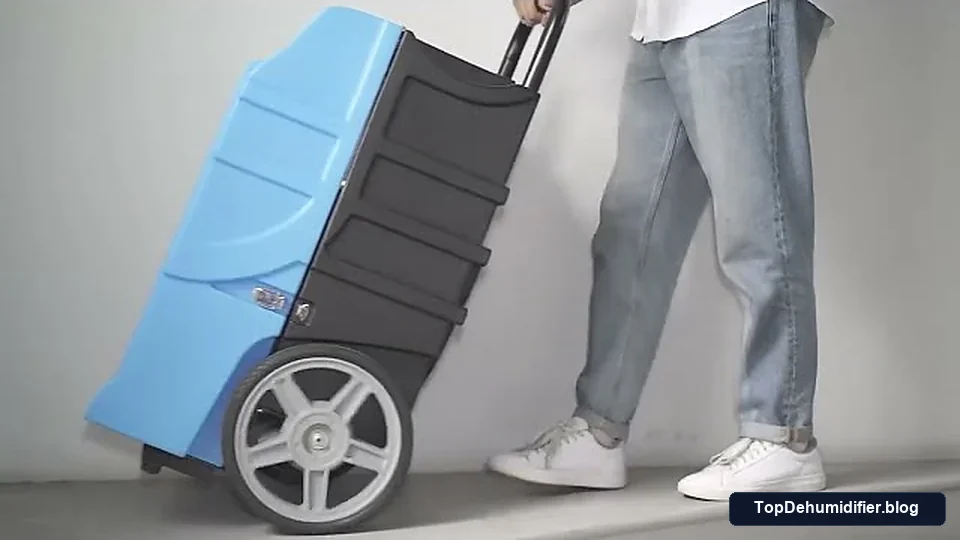
Moving heavy equipment up flights of stairs requires thoughtful ergonomic housing design. Manufacturers utilize rugged polyethylene shells to protect internal refrigeration components from heavy impacts.
Standard commercial units often feature durable steel frames with large transport wheels. These traditional configurations roll smoothly across smooth warehouse floors and paved loading docks.
Modern low-grain extractors adopt stackable rotomolded bodies with integrated handles. This space-saving footprint allows contractors to transport multiple units securely inside standard service vehicle beds.
- Rotomolded polymer shells resist heavy job site impacts effectively.
- Stackable designs maximize cargo space in contractor service vans.
- Large pneumatic wheels simplify rolling over rough construction terrain.
Handling Rough Terrain and Staircases
Navigating multi-level commercial buildings tests the physical durability of any restoration equipment. Balanced weight distribution prevents operator fatigue when lifting heavy units over thresholds.
Recessed handles and built-in stair glides make vertical transport significantly safer. Ergonomic improvements reduce the risk of workplace injuries during demanding equipment loading procedures.
- Stair glides protect housing corners during vertical transport operations.
- Balanced center of gravity reduces operator strain significantly.
Maintenance Protocols and Digital Integration
Keeping equipment running at peak efficiency requires consistent preventative maintenance routines. Our best commercial dehumidifier for water damage guide details how neglected air filters and dirty evaporator coils reduce extraction rates drastically over time.
Standard commercial models feature straightforward analog or digital interfaces for basic operation. Users can quickly adjust target humidity levels without navigating complex menu systems.
Advanced units incorporate digital hour meters, automatic pump purging, and smartphone app connectivity. Technicians can monitor job site conditions remotely without visiting every deployed machine daily.
- Digital hour meters track runtime for scheduled preventative maintenance.
- Automatic condensate pumps ensure continuous unattended water removal.
- App integration allows remote monitoring of active job sites.
Filter Upkeep and Coil Cleaning Schedules
Dust and debris accumulation on evaporator coils chokes airflow and ruins efficiency. Establishing a strict cleaning schedule extends the operational lifespan of expensive commercial compressors.
Washable mesh filters catch large particulates before they reach delicate internal components. Regular rinsing keeps airflow optimized across both standard and specialty low-grain drying platforms.
- Washable mesh filters simplify routine field maintenance tasks.
- Annual professional coil cleanings restore original manufacturer performance.
Industrial Facility and Dairy Processing Applications
Industrial environments present unique humidity challenges that demand heavy-duty atmospheric control. Facilities like commercial food plants and milk processing centers require continuous moisture management.
Tims Dairy processing plants and similar food production facilities rely on robust humidity control. Controlling ambient moisture prevents condensation dripping onto processing equipment and packaging lines.
Standard commercial units handle general warehouse storage areas where humidity spikes remain moderate. Industrial spaces with intense washdown cycles require specialized moisture extraction capabilities.
- Food processing facilities demand rigorous humidity and condensation control.
- Warehouse storage areas benefit from reliable standard commercial units.
- Washdown-rated housings protect electrical components from moisture damage.
Controlling Condensation in Processing Plants
High humidity in food manufacturing leads to sanitation risks and operational delays. Selecting the correct extraction technology ensures strict compliance with health and safety inspection standards.
Advanced low-grain units manage heavy moisture loads generated by daily equipment sanitation. Maintaining dry ceilings and walls prevents mold spore proliferation in sensitive production zones.
- Sanitation washdowns release heavy vapor loads into plant air.
- Preventing ceiling condensation safeguards food safety compliance records.
Initial Investment Versus Long-Term Operating Value
Purchasing commercial drying equipment represents a major capital expenditure for business owners. Evaluating long-term value requires balancing upfront equipment costs against expected daily extraction efficiency.
Standard commercial dehumidifiers feature lower initial purchase prices and simpler repair requirements. This makes them an attractive option for general property maintenance and basic humidity control.
Specialized low-grain units command higher initial purchase prices due to advanced internal engineering. However, their superior drying speed often reduces total project duration and labor expenses.
- Standard commercial units offer lower initial acquisition costs.
- Advanced extractors reduce total project timelines and labor overhead.
- Long-term reliability offsets higher upfront specialized equipment investments.
Calculating Return on Equipment Investment
Contractors must weigh equipment purchase costs against potential billing revenues per drying job. Faster structural drying cycles allow restoration businesses to complete more projects annually.
Investing in high-performance extraction machinery expands service offerings into heavy water damage. Choosing the right category directly impacts profitability across competitive restoration market sectors.
- Faster drying turnaround increases total annual project capacity.
- Heavy water damage specialization boosts contractor billing potential.
Frequently Asked Questions
What is the main difference between an lgr and standard commercial dehumidifier?
An lgr unit uses advanced bypass cooling to extract moisture from much drier air. Standard commercial models work best for moderate, routine humidity maintenance.
When should I choose an lgr dehumidifier for my job site?
Select an lgr model when tackling severe structural water damage and dense materials. They excel at driving down humidity levels where standard units fail.
Do standard commercial dehumidifiers use less electricity?
Standard commercial units generally draw fewer amps, fitting easily onto standard fifteen-amp circuits. Power management is simpler with these traditional machines.
Are lgr dehumidifiers harder to maintain than standard units?
Both types require regular filter checks and occasional coil cleanings for optimal performance. Preventative maintenance ensures long equipment lifespans across both categories.
Can I use a standard commercial unit for hardwood floor drying?
Standard units struggle to reach the low grain depression required for safe hardwood drying. Specialized lgr equipment is strongly recommended for structural wood restoration.