Rotary vs Reciprocating Dehumidifier Technical Guide
Selecting the right compressor mechanism impacts efficiency, noise levels, and long-term durability in home humidity control systems.

Choose rotary units for quieter operation and compact designs, while reciprocating compressors suit heavy-duty, industrial drying applications.
Compare all top models in our Best Dehumidifier: Top Picks for Healthy Indoor Air.
Side-by-Side Breakdown
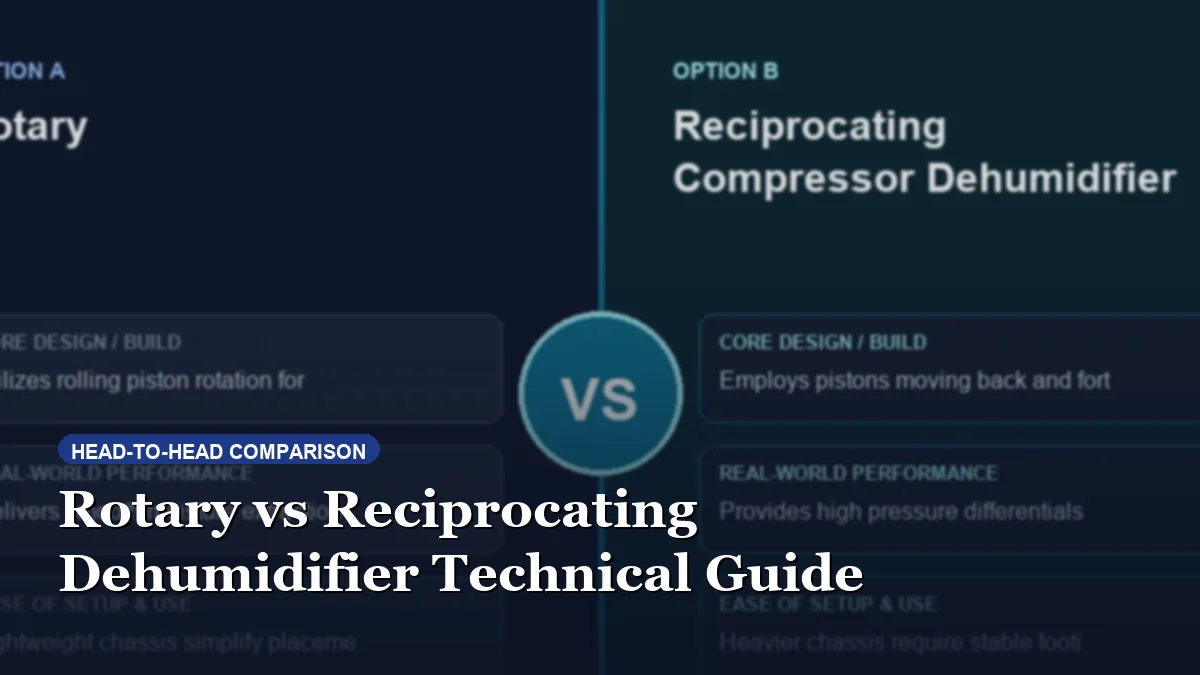
| Criteria | Rotary | Reciprocating Compressor Dehumidifier | Edge |
|---|---|---|---|
| Core Design / Build | Utilizes rolling piston rotation for continuous refrigerant flow. | Employs pistons moving back and forth within sealed cylinders. | Rotary |
| Real-World Performance | Delivers smooth moisture extraction with minimal vibration outputs. | Provides high pressure differentials for extreme environments. | Reciprocating |
| Ease of Setup & Use | Lightweight chassis simplify placement in residential living areas. | Heavier chassis require stable footing and dedicated floor space. | Rotary |
| Durability & Reliability | Fewer mechanical linkages reduce long-term wear during cycles. | Robust metal construction withstands high continuous pressure loads. | Reciprocating |
| Efficiency / Operating Footprint | Higher energy efficiency ratios under moderate temperature ranges. | Consumes more power but excels in extreme temperature swings. | Rotary |
| Maintenance Requirements | Standard annual coil cleaning and basic filter replacements suffice. | Requires periodic inspection of mechanical valves and mounts. | Rotary |
| Best Ideal Use Case | Basements, bedrooms, and general residential moisture management. | Unconditioned crawlspaces, workshops, and commercial job sites. | Rotary |
Mechanical Architecture and Compression Mechanics
Understanding internal compressor design helps residential buyers select reliable climate control hardware. Review dehumidifier fan running continuously guidelines to diagnose common control board behavior issues easily.
Conversely, reciprocating units rely on a piston driven by a crankshaft moving up and down within a sealed cylinder. This traditional design handles extreme pressures effectively but introduces distinct vibration profiles during continuous daily operation.
Rotary compressors utilize a rolling piston rotating within a cylinder to continuously compress refrigerant. This design reduces mechanical friction points and eliminates the heavy reciprocating mass found in traditional piston-driven alternatives.
Reciprocating units rely on a piston moving linearly inside a cylinder driven by a crankshaft. While robust, this mechanism introduces higher mechanical inertia and numerous valves prone to wear during continuous operation cycles.
- Rotary models feature rolling pistons for continuous fluid motion.
- Reciprocating models use reciprocating pistons for high-pressure output.
- Mechanical friction varies significantly between these two compression styles.
Internal Component Wear and Tear
Continuous rotational movement in rotary compressors reduces direct mechanical shock across components. This engineering choice minimizes internal stress during frequent startup and shutdown phases common in modern residential appliances.
Reciprocating architectures experience constant directional changes, accelerating wear on valves and piston rings over extended operational lifetimes.
- Rotary designs limit stress during motor startup sequences.
- Reciprocating valves endure high cyclical fatigue over years.
Energy Efficiency and Power Consumption Profiles
Energy efficiency remains a critical purchasing factor for homeowners managing baseline electrical costs. Rotary compressors generally achieve superior efficiency ratings under standard residential conditions due to continuous refrigerant displacement.
Reciprocating systems may consume additional electrical current during initial startup phases, yet they maintain reliable performance when operating in unconditioned spaces featuring fluctuating ambient temperatures.
Rotary systems achieve superior volumetric efficiency by maintaining continuous refrigerant flow with minimal pulsation. Their modern brushless motors draw lower starting currents compared to the high initial torque demands of reciprocating compressors.
Reciprocating models often suffer from higher energy losses due to intermittent suction and discharge valve actions. Under heavy thermal loads, their coefficient of performance typically drops below that of equivalent rotary units.
- Rotary units maximize efficiency in moderate ambient conditions.
- Reciprocating units demand higher starting torque and running wattage.
Voltage Draw and Thermal Management
Thermal management differs notably based on how each compressor dissipates internal heat. Review common dehumidifier compressor failure signs to spot overheating before permanent motor burnout occurs safely.
Reciprocating compressors often require external airflow management or larger chassis footprints to disperse heat generated by rapid piston strokes.
- Suction gas cooling enhances overall rotary thermal efficiency.
- Reciprocating units need adequate ventilation to prevent overheating.
Acoustic Output and Vibration Characteristics
Noise levels directly dictate where you can comfortably place a dehumidifier within your home environment. Rotary compressors produce significantly lower decibel levels, making them ideal for bedrooms and living spaces.
Reciprocating units generate noticeable low-frequency hums and mechanical vibrations that require rubber dampening feet to prevent rattling on hard flooring surfaces.
The balanced rotational movement of rotary compressors generates a smooth, low-decibel hum. Manufacturers easily isolate these units using rubber grommet mounts, effectively dampening high-frequency vibrations before they reach the outer cabinet.
Reciprocating compressors produce distinct mechanical knocks from piston stroke reversals and valve snapping. Controlling this operational noise requires heavy damping materials and rigid chassis designs to prevent resonant structural rattling.
- Rotary systems operate quietly with minimal acoustic disruption.
- Reciprocating systems require vibration pads to isolate noise.
Sound Dampening Engineering
Manufacturers implement advanced internal mufflers and insulated casings to suppress rotary operational noise. These additions keep decibel output well within comfortable household thresholds.
Reciprocating hardware demands heavier acoustic insulation blankets because reciprocating piston strokes create inherent mechanical impulses.
- Internal mufflers successfully quiet rolling piston hums.
- Heavy insulation is necessary for reciprocating noise control.
Space Requirements and Installation Ergonomics
Physical dimensions and unit weight influence placement flexibility in cramped basements or utility closets. Rotary dehumidifiers feature compact, lightweight chassis that simplify vertical stacking and corner positioning.
Reciprocating compressors add substantial weight to the appliance frame, requiring dedicated floor space and stable leveling during initial setup procedures.
Rotary architectures offer a compact, cylindrical footprint that fits seamlessly into modern, portable dehumidifier housings. Their lightweight construction greatly improves handling ergonomics for users transporting units between different living spaces.
Traditional reciprocating units demand taller, heavier chassis to accommodate the vertical crankshaft and balancing weights. This increased mass complicates placement and reduces the overall unit portability in residential basement applications.
- Rotary units offer lightweight portability for easy room relocation.
- Reciprocating units demand permanent, stable placement surfaces.
Weight Distribution and Portability
Balanced weight distribution allows homeowners to transport rotary dehumidifiers between floors without risking back strain or structural damage.
Heavy reciprocating assemblies make upper-floor placement challenging, often necessitating permanent drain hose installations rather than manual bucket emptying.
- Balanced chassis weights facilitate safe multi-floor transport.
- Heavy reciprocating frames discourage frequent room-to-room moving.
Durability in Extreme Environmental Conditions
Environmental extremes test the structural limits of refrigeration components in unconditioned areas. Check compressor dehumidifier low temp limits to prevent operational failures during cold weather.
Rotary models perform exceptionally well in typical living spaces but may experience reduced volumetric efficiency if subjected to sub-optimal ambient temperatures over prolonged cycles.
Rotary components manage high ambient temperatures efficiently thanks to continuous refrigerant cooling across the motor winding. However, severe voltage fluctuations can damage their inverter driver boards if proper surge protection is missing.
Reciprocating compressors excel in rugged, unconditioned spaces where mechanical simplicity outweighs efficiency. Their heavy-duty cast-iron cylinders withstand frequent power surges much better than sensitive electronic rotary compressor control systems.
- Reciprocating builds handle harsh industrial environments exceptionally well.
- Rotary builds prioritize comfort in standard climate-controlled homes.
Refrigerant Pressure Handling
High pressure tolerances allow reciprocating systems to push refrigerant through restrictive capillary tubes without suffering immediate mechanical failure.
Rotary designs rely on precise clearances that demand clean refrigerant lines free of particulate contamination to maintain optimal performance.
- Robust valves manage high system pressures without stalling.
- Precise rotary clearances require strict contaminant filtration.
Maintenance Protocols and Long-Term Servicing
Routine maintenance ensures your dehumidifier maintains peak moisture extraction rates year after year. Explore our top picks for healthy indoor air to find reliable units featuring accessible filter compartments and robust coils.
Reciprocating systems demand similar baseline care but may occasionally require professional technician intervention to service mechanical valves or inspect motor mounts.
Sealed rotary systems generally require zero routine internal servicing throughout their operational lifecycle. Technicians focus primarily on condenser coil cleaning and checking electronic sensor calibrations during standard annual maintenance checks.
Reciprocating units occasionally require valve plate replacements or crankcase heater inspections during extensive overhauls. Technicians must monitor refrigerant charge levels closely because vibration can loosen threaded service port connections over time.
- Regular filter washing preserves rotary airflow efficiency.
- Professional valve servicing benefits reciprocating longevity.
Preventative Care Best Practices
Inspect condensate lines monthly to prevent biological growth and standing water blockages within the collection basin. Keeping coils clean prevents unnecessary compressor strain.
Verify that vibration dampening feet remain firmly attached to prevent accelerated wear on internal reciprocating suspension components over time.
- Monthly condensate line flushes prevent unexpected water overflows.
- Checking rubber feet protects internal suspension mounts.
Application Matching and Buyer Decision Framework
Matching compressor technology to your specific space ensures optimal humidity reduction and financial value. Choose rotary models for finished basements, bedrooms, and general household areas requiring quiet operation.
Select reciprocating dehumidifiers for damp crawlspaces, unheated workshops, or commercial job sites where robust durability outweighs noise considerations.
Select rotary compressor dehumidifiers for quiet living areas, energy-conscious households, and frequent portability needs. Prioritize models featuring high-efficiency rotary designs to minimize long-term electrical operational expenditures in residential spaces.
Choose reciprocating compressors for heavy-duty, unheated outbuildings where robust mechanical endurance is paramount. Evaluate structural support and noise tolerance thresholds before installing these heavier units in inhabited residential environments.
- Rotary systems suit quiet living spaces and finished basements.
- Reciprocating systems suit rugged workshops and damp crawlspaces.
Cost-Benefit Evaluation for Buyers
Evaluate your primary usage goals before finalizing any dehumidifier purchase decision. Energy-conscious buyers prioritizing low noise will find rotary compressors exceed expectations.
Facility managers needing relentless, heavy-duty moisture extraction in challenging climates should invest in reliable reciprocating hardware.
- Prioritize rotary units for residential energy savings.
- Invest in reciprocating units for rugged commercial duties.
Frequently Asked Questions
Which compressor type runs quieter in residential bedrooms?
Rotary compressors operate significantly quieter due to continuous rolling piston mechanics. This design minimizes disruptive vibrations, making them ideal for quiet bedrooms.
Are reciprocating dehumidifiers better for unheated spaces?
Yes, reciprocating compressors handle wide temperature fluctuations and extreme conditions exceptionally well. Their robust design ensures reliable performance in cold basements.
Do rotary compressors consume less electricity overall?
Rotary units typically offer higher energy efficiency ratios during standard operation. They draw less starting current, reducing your monthly utility bills.
What maintenance do rotary dehumidifiers require?
Standard maintenance involves washing air filters monthly and cleaning evaporator coils annually. This upkeep ensures optimal moisture extraction throughout the season.
How long do these compressor types typically last?
Both types last many years when properly maintained and kept clean. Reciprocating units offer unmatched durability in heavy-duty environments.