Good Room Humidity Winter: Ideal Targets
Cold weather brings unique atmospheric challenges indoors. Proper monitoring protects your structural materials.


Keep winter indoor humidity between thirty and forty percent to prevent destructive window condensation and mold growth.
Ready to compare models? Start with our Best Dehumidifier: Top Picks for Basements & Homes.
Winter Humidity Management Parameters
| Outdoor Temperature | Target Indoor Humidity | Operational Risk |
|---|---|---|
| Below zero Fahrenheit | Twenty to thirty percent | Extreme window frost and frame rot |
| Zero to twenty Fahrenheit | Thirty percent | Moderate condensation on cold thermal bridges |
| Twenty to thirty Fahrenheit | Thirty-five percent | Minor moisture accumulation on glass panes |
| Thirty to forty Fahrenheit | Forty percent | Balanced air quality without static shocks |
| Basement environments | Thirty-five to forty percent | Foundation seepage and musty odors |
| Crawl space partitions | Thirty percent maximum | Structural timber decay and fungal growth |
Winter Thermal Dynamics and Indoor Vapor Pressure
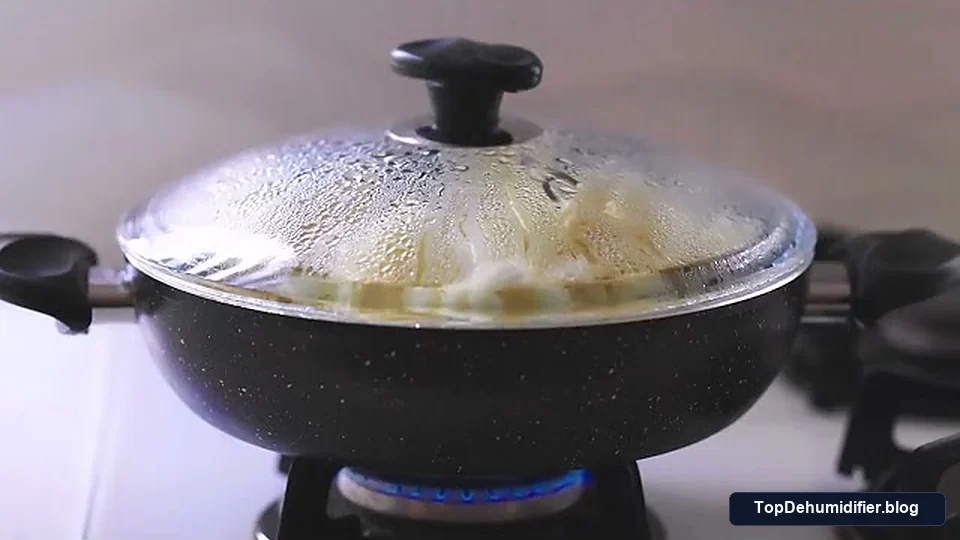
Cold outdoor air holds remarkably little moisture compared to summer air. When this cold air enters your living space and warms up, its relative humidity drops significantly.
Your heating system further desiccates the indoor environment. Running furnaces continuously strips moisture from structural wood, drywall, and furniture, creating static electricity and dry respiratory tracts.
Conversely, human activities like cooking, bathing, and breathing constantly release water vapor indoors. Without adequate ventilation, this vapor migrates toward cold exterior walls and window assemblies.
Understanding vapor pressure differentials helps you balance indoor comfort with building preservation. Warm air exerts higher pressure, forcing moisture through porous building materials toward colder exterior surfaces.
During freezing months, exterior temperatures drive down surface temperatures. This creates a steep vapor pressure differential that forces moisture through permeable building materials toward the colder outdoor environment.
- Cold air entering homes contains very little actual moisture.
- Heating systems aggressively reduce indoor relative humidity levels.
- Daily indoor activities continuously add invisible water vapor.
- Vapor pressure drives moisture toward colder exterior building envelopes.
Understanding Absolute Versus Relative Humidity
Relative humidity fluctuates inversely with indoor air temperature changes. A fixed amount of water vapor yields a lower relative percentage when air gets warmer.
Absolute humidity measures the exact water vapor mass in a specific air volume. Controlling this metric is easier when selecting units from our best small room dehumidifiers collection.
- Relative humidity changes whenever ambient room temperature fluctuates.
- Absolute moisture content remains stable despite heating cycles.
Establishing Baseline Room Humidity Targets
Finding the correct winter humidity target requires balancing human comfort with structural protection. Most residential buildings require indoor levels maintained between thirty and forty percent.
Exceeding forty percent relative humidity during deep winter guarantees condensation on poorly insulated windows. Mitigate this heavy moisture load by deploying units featured in our best dehumidifier for large room lineup.
Dropping below thirty percent causes wood joints to shrink, musical instruments to crack, and skin to dry out painfully. Static electricity shocks become frequent occurrences in overly dry rooms.
External outdoor temperatures dictate your exact indoor target. As exterior weather grows colder, your indoor humidity setpoint must decrease to prevent freezing moisture inside wall cavities.
Maintaining indoor relative humidity between 30% and 40% prevents condensation on cold glass. Exceeding these baseline metrics during sub-freezing weather rapidly causes structural moisture accumulation inside exterior walls.
- Target thirty to forty percent relative humidity during winter months.
- Exceeding forty percent triggers destructive window condensation issues.
- Dropping below thirty percent damages wooden furniture and flooring.
- Adjust targets downward when outdoor temperatures plunge below freezing.
Outdoor Temperature Sliding Scale
Modern building standards recommend lowering indoor humidity as outdoor weather gets colder. This prevents warm indoor air from condensing inside cold insulation layers.
When outdoor temperatures drop below ten degrees, reduce your indoor target to twenty-five percent. This prevents ice damming and frost accumulation within exterior wall cavities.
- Lower indoor targets as outdoor temperatures drop significantly.
- Prevent hidden wall condensation by following strict sliding scales.
Video Walkthrough: Ask Andrew: Why indoor humidity matters during the cold season
Mechanics of Cold Weather Condensation Risks

Condensation occurs when warm, moisture-laden indoor air contacts a surface below the dew point temperature. Windows and metal framing components are primary cold bridging spots.
Thermal bridging allows outdoor coldness to penetrate deep into interior living spaces. Uninsulated corners and aluminum window frames chill rapidly during freezing winter weather conditions.
When indoor air touches these chilled surfaces, it instantly cools and loses its moisture-holding capacity. Use our pint capacity calculator tool to determine the exact extraction rate needed to prevent fungal spore growth.
Mitigating this risk involves raising surface temperatures through better insulation or lowering the absolute moisture content of your indoor air via targeted ventilation or dehumidification.
Thermal bridging around metal window frames dramatically lowers local temperatures. When indoor air contacts these chilled surfaces below the dew point, heavy condensation and mold rapidly develop.
- Dew point tracking identifies exact surface condensation thresholds.
- Thermal bridges chill interior building materials during freezing weather.
- Liquid water pooling on window sills causes rapid wood rot.
- Raise surface temperatures or lower vapor content to stop condensation.
Calculating Cubic Footage and Dehumidifier Sizing
Proper equipment sizing ensures efficient moisture removal without excessive energy consumption. Consult our best dehumidifier for room options to calculate your space requirements accurately using length, width, and ceiling height.
Winter dehumidification needs differ significantly from humid summer basements. Spaces experiencing heavy moisture loads require higher extraction capacities rated in pints per twenty-four hours.
Overtightening spaces without considering ventilation can drop humidity to dangerously low levels. Always match your equipment capacity to the specific cubic footage of the problematic zone.
Consult manufacturer sizing charts carefully before purchasing auxiliary drying equipment. Undersized units run continuously without achieving target levels, leading to premature motor burnout.
Calculate required extraction capacity by multiplying total cubic footage by the severity factor. Basements needing winter humidity control require specialized sizing adjustments compared to standard upper-level living areas.
- Multiply room length, width, and height to find cubic footage.
- Winter drying requirements differ from heavy summer humidity demands.
- Match equipment extraction ratings precisely to your calculated space.
- Avoid continuous operation of undersized units to prevent motor failure.
Calibration Protocols and Hygrometer Placement
Accurate humidity monitoring starts with a properly calibrated digital hygrometer. Inexpensive sensors often drift significantly over time, displaying inaccurate readings that mislead homeowners.
Perform a simple salt test to verify your hygrometer sensor accuracy. Seal the device inside a baggie with a damp salt slurry for six hours.
A calibrated sensor should read seventy-five percent humidity inside the sealed testing environment. Adjust your digital device settings if the displayed reading deviates from this standard.
Place your hygrometer away from direct heat sources, exterior doors, and humidification appliances. Central room locations on interior walls provide the most reliable ambient measurements.
Verify your sensor accuracy using a reliable salt test inside a sealed container. Mount hygrometers five feet off the floor away from direct heating vents to secure accurate readings.
- Digital hygrometers require periodic accuracy verification checks.
- Use the standard salt slurry test to calibrate sensors accurately.
- Target a seventy-five percent reading in a sealed test bag.
- Position monitors away from direct drafts, heat vents, and doorways.
Video Walkthrough: What's the Best Humidity Level for Your Home?
Air Circulation Strategies for Low Temperature Spaces
Stagnant air allows microclimates of high humidity to form in cold corners and closets. Proper air movement prevents moisture from settling against exterior building walls.
Use oscillating interior fans to keep air moving gently across problematic exterior walls. Enhanced circulation increases local surface temperatures and discourages mold growth.
Keep interior doors open between rooms to equalize humidity levels throughout the entire house. Closed bedroom doors quickly trap moisture exhaled by sleeping occupants.
Ensure heating supply registers and return vents remain completely unobstructed by furniture or heavy drapery. Balanced airflow is essential for maintaining consistent indoor environmental parameters.
Stagnant air pockets in cold rooms accelerate localized moisture damage. Deploying oscillating fans at low speeds helps maintain consistent air exchange rates across exterior corners and external walls.
- Stagnant air pockets encourage localized mold and condensation growth.
- Run oscillating fans to improve surface temperatures on exterior walls.
- Keep interior doors open to equalize whole-house moisture levels.
- Clear all heating vents and return ducts of obstructing furniture.
Preventive Maintenance Schedule During Heating Season
Regular maintenance keeps environmental control equipment operating at peak technical efficiency. Inspect and clean air intake filters every two weeks during heavy heating seasons.
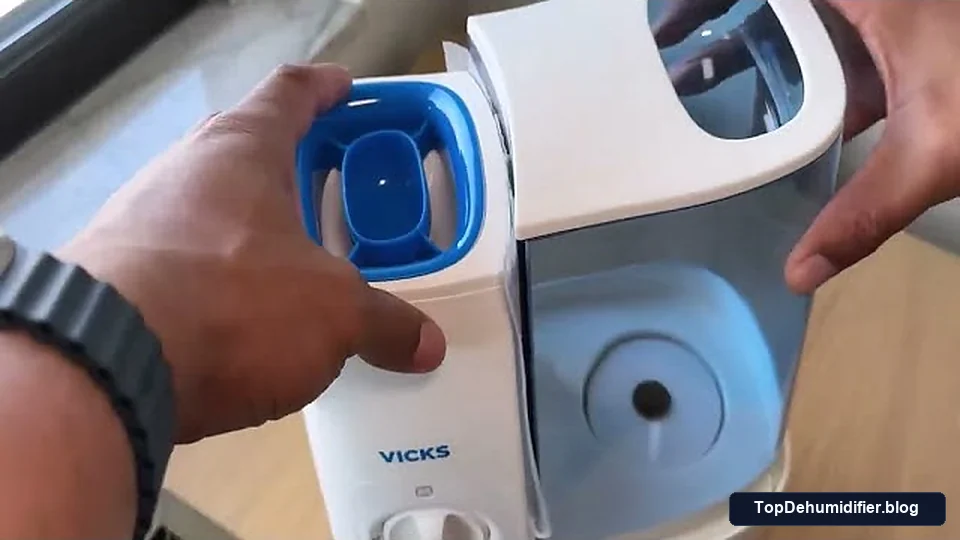
Dust accumulation on internal coils reduces heat exchange efficiency and increases electrical power consumption. Gently vacuum filter screens to maintain optimal airflow parameters.
Check condensate collection buckets and drainage hoses for mineral buildup or biological slime. Ensure gravity drain lines slope continuously downward without kinks or blockages.
Test automatic shutoff switches monthly to prevent accidental water overflows during continuous operation cycles. Proactive maintenance extends equipment lifespan and ensures reliable humidity control.
Inspect intake filters bi-weekly during heavy heating system operation. Cleaning washable meshes prevents airflow restriction and ensures your dehumidifier maintains optimal energy efficiency throughout winter months.
- Clean equipment air filters every two weeks during winter use.
- Remove dust from internal coils to preserve heat exchange efficiency.
- Inspect drainage lines and collection buckets for mineral blockages.
- Test automatic overflow safety switches monthly to prevent water damage.
Troubleshooting Frosting and Low Capacity Issues
Low ambient winter temperatures frequently cause evaporator coils to freeze solid. Operating mechanical dehumidifiers in spaces below sixty-five degrees Fahrenheit causes ice buildup.
Ice formation insulates the evaporator coils, dropping extraction efficiency to zero and risking compressor damage. Turn off the unit immediately if frost coats the metal tubing.
Many modern units feature automatic defrost cycles that periodically warm the coils. For unheated spaces like garages or workshops, select equipment equipped with low-temp operation features.
If your space remains excessively damp despite continuous running, check for hidden water leaks, unvented clothes dryers, or inadequate building insulation layers.
Low ambient temperatures often trigger evaporator coil frosting. Modern units feature automatic defrost cycles, but persistent ice buildup indicates refrigerant loss or failing thermal sensors requiring professional repair.
- Cold ambient temperatures cause evaporator coils to freeze solid.
- Ice insulation halts moisture extraction and threatens compressor health.
- Use specialized low-temperature equipment for unheated auxiliary spaces.
- Investigate hidden plumbing leaks if humidity remains stubbornly high.
Frequently Asked Questions
What is the ideal room humidity in winter?
Maintain indoor relative humidity between thirty and forty percent. This range prevents window condensation while avoiding dry skin.
Why does winter air feel so dry indoors?
Cold outdoor air holds very little moisture naturally. Heating systems warm this incoming air, significantly dropping its relative humidity percentage.
How can I stop window condensation in cold weather?
Lower your indoor humidity setpoint and improve air circulation. Using ceiling fans keeps warm air moving across cold window glass.
Can I run a standard dehumidifier in a cold basement?
Standard units freeze up when temperatures drop below sixty-five degrees. Use specialized low-temperature models designed for cold spaces.
How do I calibrate my digital hygrometer at home?
Seal your sensor inside a bag with wet salt for six hours. Adjust the reading until it displays seventy-five percent.