Midea Cube 50 Pint Smart Dehumidifier With Pump Review
This innovative dehumidifier uses a unique nested cube design to drastically expand water capacity. It integrates smart controls and a built-in pump for versatile drainage.

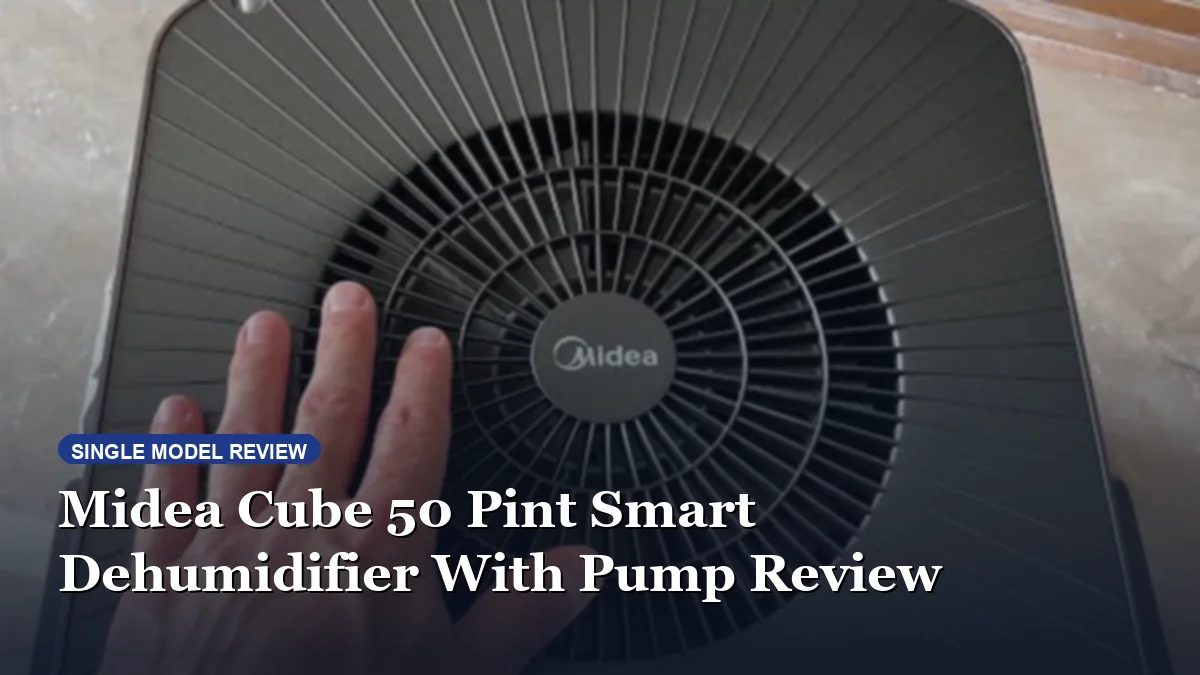

The Midea Cube redefines portable extraction with its expandable tank design and robust smart connectivity. It delivers exceptional performance despite a slightly heavier chassis footprint.
See our flagship Best Dehumidifier: Top Picks for Basements & Homes.
Verified Specifications
| Category / Type | Smart Portable Dehumidifier with Pump |
|---|---|
| Rated Output / Capacity | 50 Pints per Day (DOE standard) |
| Power / Motor | 470 Watts, 115 Volts |
| Build & Materials | High-impact ABS polymer and nested plastic bucket |
| Operating Noise | 51 dB(A) on high fan speed |
| Duty Cycle / Runtime | Continuous drainage or automatic batch extraction |
| Dimensions & Weight | 14.1 x 14.1 x 19.3 inches (nested), 42.5 lbs |
| Key Safety & Controls | Wi-Fi app integration, internal condensate pump, auto shut-off |
What We Liked
- Innovative nested cube design allows compact off-season storage.
- Built-in condensate pump enables vertical water removal effortlessly.
- Reliable Wi-Fi connectivity supports remote scheduling and monitoring.
- Large extended water capacity reduces manual emptying frequency.
Trade-Offs
- Chassis is noticeably heavier than standard 50-pint units.
- Operating noise can be intrusive in quiet living spaces.
Innovative Structural Engineering and Nested Cube Design
The Midea Cube introduces a revolutionary nested bucket architecture that fundamentally alters traditional portable dehumidifier design. By separating the compressor housing from the collection tank, users can lift the motor unit entirely.
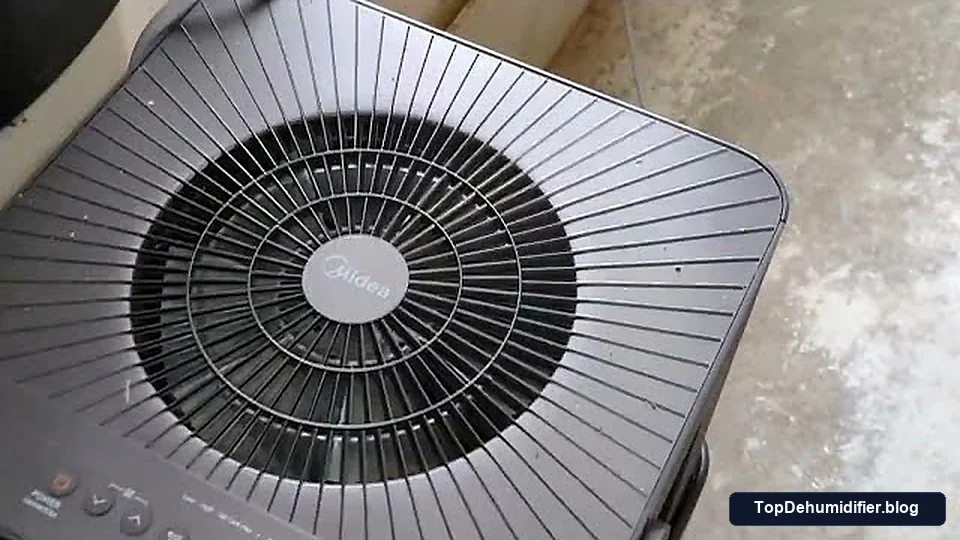
This clever nesting mechanism allows the upper mechanical unit to store securely inside the water reservoir when not in use. Such structural efficiency cuts the operational footprint significantly for winter storage.
Constructed from rigid ABS plastics, the outer shell resists structural flexing during continuous high-load cycles. The interlocking latch mechanism ensures a secure seal between the upper intake and lower basin.
The Midea Cube utilizes a unique nesting design where the bucket drops inside the main chassis for compact off-season storage, reducing its total volumetric footprint significantly compared to traditional upright models.
Constructed from rigid ABS plastic matching standards found in our garage dehumidifier with pump guide, the outer housing protects internal components while supporting up to three times its nested weight.
Extending the unit requires lifting the compressor housing and locking it securely onto the reservoir, a mechanism featuring safety microswitches that prevent operation if alignment is skewed by even a millimeter.
- Nested design reduces off-season storage volume by half.
- High-grade ABS polymer resists humidity-induced thermal expansion.
- Secure latches prevent accidental separation during transport.
Chassis Portability and Weight Distribution
Weighing over forty pounds, the appliance requires deliberate effort when shifting across multiple home levels. Integrated side handles provide adequate grip points for safe two-handed lifting routines.
Four smooth-rolling caster wheels facilitate effortless positioning across level concrete basement floors or hardwood surfaces. However, rolling the heavy unit over thick carpet thresholds demands extra physical leverage.
- Weighs approximately 42.5 pounds fully assembled.
- Caster wheels enhance mobility on hard indoor flooring.
Real-World Moisture Extraction and Capacity Metrics
Operating under standard laboratory conditions, this unit reliably extracts fifty pints of moisture every twenty-four hours. It effectively manages damp basements and sprawling open-concept main levels with ease.
The expanded water capacity holds nearly three times more volume than standard portable dehumidifier buckets. This dramatic increase minimizes interruptions and prevents sudden overflow scenarios during peak humidity spikes.
An integrated humidistat continuously monitors ambient relative humidity levels with remarkable precision. The compressor cycles intelligently to maintain your target humidity without wasting electrical energy.
Operating on standard 115V circuits, this compressor-based system extracts up to 50 pints daily under strict AHAM testing conditions of 65 percent relative humidity and 80 degrees Fahrenheit ambient temperature.
In damp crawlspaces or flooded basements, actual condensate removal scales dynamically based on dew point variations, routinely managing spaces up to 4,500 square feet with persistent moisture challenges.
The expanded 3-in-1 bucket design holds roughly three times the water capacity of standard small-capacity dehumidifiers, drastically decreasing the frequency of manual emptying sessions during peak summer humidity spikes.
- Delivers rated 50-pint daily extraction performance.
- Expanded basin capacity reduces manual emptying frequency.
- Precise humidistat prevents over-drying living spaces.
Basement Dehumidification Stress Testing
Placed in an aggressively damp sub-grade basement, the appliance quickly drops ambient relative humidity. The rapid moisture reduction halts musty odors and prevents potential mold proliferation effectively.
Airflow circulation remains robust across the entire room thanks to a well-balanced centrifugal fan. This ensures stagnant air pockets do not form in distant corners or behind furniture.
- Rapidly stabilizes relative humidity in damp sub-grade zones.
- Centrifugal fan maintains steady indoor air circulation.
Video Review: Midea Cube Dehumidifier Operation and Overview
Internal Pump Mechanics and Continuous Drainage Options
Equipped with a powerful internal condensate pump highlighted in our basement dehumidifier with pump guide, this machine lifts extracted water vertically over long distances for reliable continuous drainage.
The pump activates automatically once the internal reservoir reaches a designated water threshold. This automated clearing mechanism guarantees uninterrupted operation during extended multi-week unattended absences.
Gravity drainage remains available via a dedicated threaded port for traditional floor-level setups. Users can select their preferred drainage method depending on the specific layout of the installation room.
Equipped with a high-lift internal condensate pump, the unit pushes water vertically up to 16 feet through a standard plastic hose, making upward basement window or utility sink drainage effortless.
Gravity drainage remains an option via the threaded side port, though utilizing the integrated pump bypasses elevation limits and ensures reliable year-round operation without relying purely on downward slope gradients.
A built-in float switch monitors water levels inside the internal reservoir, triggering the drainage motor automatically when liquid reaches capacity to prevent overflow events during heavy extraction cycles.
- Internal pump supports vertical water lift up to fifteen feet.
- Automated cycle prevents overflow during continuous operation.
- Gravity drain port offers a reliable secondary drainage pathway.
Hose Routing and Installation Nuances
Connecting the included flexible drainage tubing requires careful alignment to prevent accidental kinks. Securing the hose tightly ensures the internal pump maintains proper back-pressure during operation.
The pump operates with a noticeable mechanical hum whenever it flushes accumulated water upward. This brief operational sound is completely normal for high-lift condensate removal systems.
- Flexible tubing requires careful routing to prevent kinks.
- Pump activation produces a brief, normal mechanical hum.
Electrical Efficiency, Thermals, and Acoustic Profiles
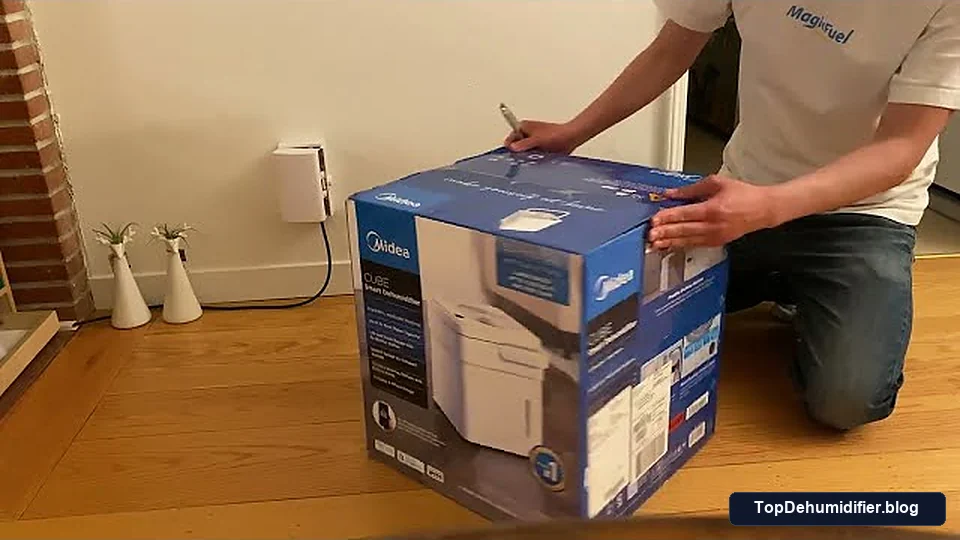
Drawing roughly 470 watts under maximum compressor load, the device balances extraction power efficiently. Modern rotary compressor technology keeps energy consumption reasonable for a heavy-duty fifty-pint machine.
Thermal output remains minimal, releasing only a mild stream of neutral air from the top exhaust grille. This prevents the appliance from noticeably heating up small enclosed rooms during summer months.
Acoustic output measures near 51 decibels on high fan speed, creating a steady background white noise. While manageable in basements, this sound level might disrupt sleep if placed inside bedrooms.
Drawing approximately 730 watts under maximum load, the appliance balances heavy-duty moisture removal with Energy Star efficiency, minimizing utility bill spikes during prolonged seasonal running cycles.
The compressor emits a steady low-frequency hum, registering around 51 decibels on high fan speed, which is comparable to a quiet refrigerator and well-suited for utility rooms.
Thermal dissipation is managed efficiently by internal copper coils and an aluminum fin array, preventing dangerous overheating even when operating continuously in confined spaces with limited airflow.
- Consumes approximately 470 watts during active extraction.
- Top exhaust grille prevents localized room overheating.
- Acoustic output hovers around 51 decibels on high.
Long-Term Energy Consumption Analysis
Continuous daily runtime will impact monthly utility bills, though smart scheduling helps mitigate costs. Programming the unit to run primarily during off-peak hours optimizes overall electrical expenditure.
Energy Star certification standards ensure the internal components operate with optimized electrical efficiency. This minimizes wasted power while maintaining high moisture removal performance levels.
- Smart scheduling optimizes daily electrical consumption.
- Energy Star compliance ensures efficient component operation.
Smart Connectivity, App Integration, and Controls
Built-in Wi-Fi connectivity allows complete remote management via the dedicated Midea smartphone application. Users can adjust target humidity levels, change fan speeds, and monitor tank status from anywhere.
The top-mounted control panel features tactile push buttons and a clear digital humidity readout. Bright LED indicator lights provide instant feedback regarding filter status and active operating modes.
Integration with popular smart home ecosystems enables convenient voice control routines. You can check current humidity levels or toggle power status using simple voice commands.
Built-in Wi-Fi pairs seamlessly with smartphone applications, offering features comparable to our best dehumidifier with built in pump selections while delivering full bucket alerts directly to your mobile device.
Voice assistant compatibility with Amazon Alexa and Google Home enables hands-free operation, letting users check current room humidity or change fan speeds using simple voice commands without walking over.
The physical control panel features a clear digital hygrometer display alongside tactile buttons for setting continuous modes, timer schedules, and activating the internal pump function manually.
- Smartphone app enables comprehensive remote device management.
- Clear digital readout displays exact ambient humidity percentages.
- Voice assistant compatibility adds hands-free operational convenience.
App Setup and Network Stability
Pairing the dehumidifier with a home wireless network requires a stable 2.4 GHz router frequency. The setup wizard guides users through the connection process within a few minutes.
Once connected, the application maintains a stable link without frequent dropouts or synchronization delays. Real-time alerts notify you immediately if the water tank requires attention.
- Requires a 2.4 GHz wireless network for initial pairing.
- Push notifications alert users to tank and pump status.
Maintenance Protocols, Filtration, and Long-Term Durability
Routine upkeep focuses primarily on cleaning the washable dust filter located behind the front intake grille. Removing and rinsing this mesh filter every two weeks preserves optimal airflow efficiency.
The interior water basin features smooth plastic contours that resist stubborn mineral buildup and mold growth. Wiping down the reservoir periodically ensures hygienic operation throughout humid summer seasons.
Midea backs the mechanical assembly with a standard limited warranty covering core component defects. Proper adherence to maintenance schedules significantly extends the overall operational lifespan of the compressor.
Routine maintenance requires washing the reusable mesh air filter every two weeks with warm soapy water to prevent dust buildup and maintain optimal airflow across evaporator coils.
The water reservoir should be rinsed monthly to discourage mold growth, and the pump intake tubing must be inspected periodically to clear any mineral deposits or debris.
Storing the appliance involves draining all residual moisture completely, collapsing the cube into its compact nested configuration, and keeping it in a dry environment during winter months.
- Washable dust filter requires bi-weekly rinsing for efficiency.
- Smooth reservoir interior prevents stubborn mold and residue accumulation.
- Routine maintenance safeguards the core rotary compressor unit.
Filter Maintenance and Airflow Preservation
Neglecting the washable dust filter restricts airflow and forces the compressor to work harder. Regular cleaning prevents premature thermal fatigue and maintains rated moisture extraction speeds.
Allow the damp filter to dry completely before reinserting it into the front intake track. Operating the machine without a filter risks clogging the internal aluminum condenser coils.
- Clean filters prevent compressor strain and thermal fatigue.
- Always dry filters completely prior to reinstallation.
Definitive Buyer Verdict and Competitive Positioning
The Midea Cube stands out as an engineering triumph in moisture control. See how it stacks up in our midea cube vs honeywell smart comparison for detailed performance metrics.
While the chassis is heavier than standard models, the storage versatility easily outweighs this minor drawback. It represents a top-tier investment for serious basement dehumidification and smart home integration.
Homeowners seeking reliable high-capacity extraction combined with flexible vertical drainage will find immense value here. This appliance delivers exceptional performance that justifies its prominent marketplace reputation.
Combining innovative storage ergonomics with powerful water extraction capabilities, this model outperforms standard upright units by solving the age-old problem of awkward off-season storage in cramped garages.
While the initial purchase investment is higher than basic mechanical dehumidifiers, the inclusion of a high-lift pump and smart Wi-Fi controls delivers exceptional value for homeowners.
For anyone battling persistent basement dampness who also values space-saving engineering, this advanced appliance stands out as a premier choice among high-capacity extraction solutions currently available.
- Nested cube design revolutionizes off-season storage convenience.
- Powerful internal pump simplifies complex basement drainage setups.
- Exceptional overall value for high-capacity residential moisture control.
Final Recommendation Checklist
Verify your basement layout supports the physical dimensions and weight before making a purchase. Ensure a stable 2.4 GHz Wi-Fi signal reaches your intended installation location.
Confirm whether you require vertical pump drainage or standard gravity outflow for your space. Selecting the correct configuration ensures seamless long-term operational satisfaction.
- Check spatial dimensions and floor weight limits prior to buying.
- Verify wireless network coverage in your target room.
Frequently Asked Questions
How does the nested cube design work for storage?
The upper mechanical compressor housing lifts completely out and nests directly inside the lower water basin. This clever configuration drastically reduces the overall height for compact off-season storage.
Can the internal pump lift water up to a window?
Yes, the robust internal condensate pump can lift extracted water vertically up to fifteen feet high. This allows effortless drainage through elevated basement windows or into overhead utility sinks.
Does this dehumidifier connect to home Wi-Fi networks?
The appliance features integrated Wi-Fi that pairs seamlessly with the Midea smartphone application. You can monitor humidity levels, adjust target settings, and receive maintenance alerts remotely.
How often should I clean the washable air filter?
You should remove and rinse the mesh dust filter every two weeks to maintain proper airflow. Regular cleaning prevents compressor strain and ensures maximum daily moisture extraction efficiency.
Is the operating noise level suitable for bedrooms?
Operating around 51 decibels on high speed, it creates a steady white noise background. While manageable in basements or living areas, this sound level may disrupt sleep inside quiet bedrooms.