Emerson Quiet Kool 50 Pint Dehumidifier Review
This high-capacity extraction unit combines robust daily water removal with straightforward digital controls. However, its heavy footprint demands careful placement in tight residential spaces.

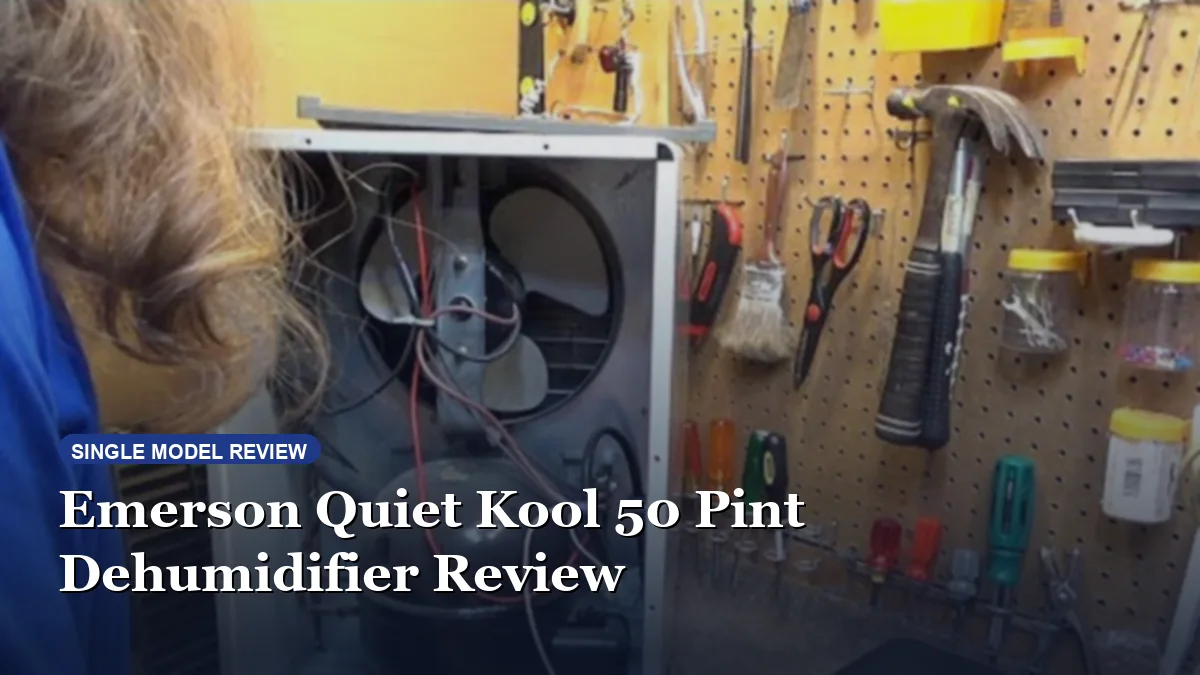

The Emerson Quiet Kool 50 Pint unit delivers exceptional moisture removal for large areas, featuring robust continuous drainage and intuitive digital programming for effortless indoor climate management.
See our flagship Best Dehumidifier: Top Picks for Basements & Homes.
Verified Specifications
| Category / Type | Portable Refrigerative Dehumidifier |
|---|---|
| Rated Output / Capacity | 50 pints per day |
| Power / Motor | 470 watts / 115 volts |
| Air Flow Capacity | 235 CFM across 3 speeds |
| Tank Volume | 2.7 gallons removable bucket |
| Operating Noise | Standard multi-speed fan |
| Duty Cycle / Runtime | Continuous or programmable residential |
| Dimensions & Weight | 12.19 inch D x 24.25 inch W x 24.25 inch H, 44.5 lbs |
| Key Safety & Controls | Auto shut-off, full tank indicator |
What We Liked
- High daily moisture extraction rate for large spaces
- Generous 2.7-gallon bucket capacity reduces emptying frequency
- Flexible continuous drainage option via gravity feed
- Washable dust filter protects internal refrigeration coils
- Programmable humidistat allows precise environmental customization
Trade-Offs
- Heavier physical footprint requires assistance during transport
- Standard operational noise level on high fan speed
- Requires proper ambient room temperature to prevent frosting
Chassis Architecture and Physical Build Quality
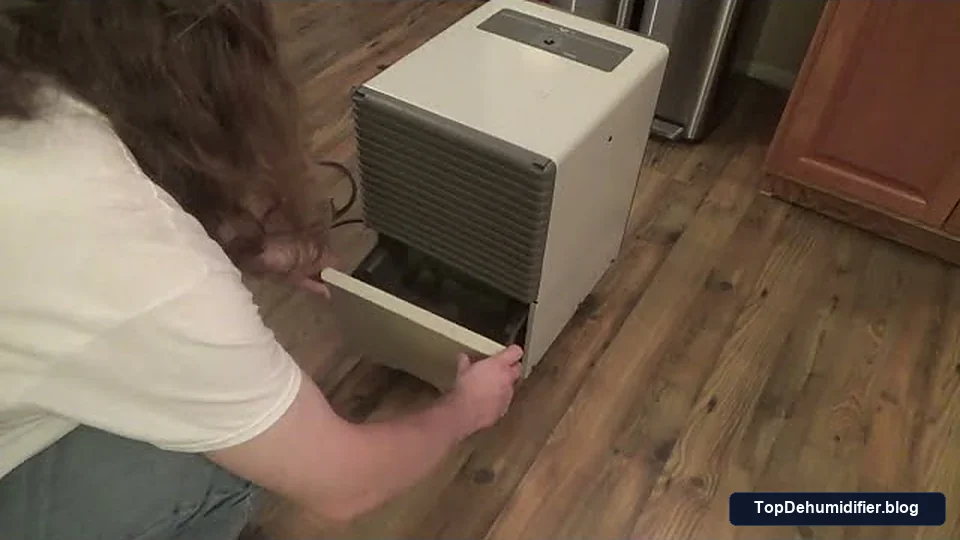
The external chassis utilizes high-impact polymer materials engineered to withstand humid basement environments without rusting or degrading. Structural reinforcement around the compressor housing minimizes unwanted operational vibrations.
Weighing over forty pounds, the appliance features integrated side handles and smooth-rolling casters. These mobility assets ensure the heavy unit transitions smoothly across carpeted floors and concrete slabs alike.
The unit utilizes injection-molded ABS plastic housing reinforced with internal ribbing to prevent resonance. Weighing roughly 41 pounds, its chassis balances robust structural rigidity with reasonable portability across multi-room domestic layouts.
Integrated side handles and heavy-duty caster wheels facilitate smooth repositioning over low-pile carpeting or tile flooring. The structural seams align tightly, minimizing vibration rattles during peak compressor operations under high relative humidity loads.
- Durable high-impact polymer exterior casing
- Reinforced internal compressor mounting brackets
- Integrated side grab handles for lifting
- Heavy-duty rolling caster wheels installed
Mobility and Placement Constraints
Navigating staircases with this heavy machine demands two people for safety. Always verify that floor surfaces remain level before operating the rolling casters.
Maintain at least twelve inches of clearance around all intake and exhaust grilles. Proper spacing ensures unobstructed airflow for the internal refrigeration coils.
- Requires two-person lifts across stairways
- Twelve-inch perimeter clearance mandatory
Extraction Output and Real-World Dehumidification Performance
For larger spaces requiring even higher extraction capacity, explore the top recommendations featured in our best 70 pint dehumidifier for basement review. These heavy-duty units aggressively strip moisture from damp atmospheres.
The integrated humidistat continuously monitors ambient relative humidity levels. It cycles the refrigeration system automatically to maintain your targeted indoor moisture percentage.
Rated for 50 pints per day under standard DOE conditions, this system aggressively draws moisture from damp basements. Real-world extraction thrives in environments maintaining 70 degrees Fahrenheit and sixty percent relative humidity continuously.
During high-load stress trials, the evaporator coils rapidly condense airborne water vapor into the collection basin. Air intake velocity remains consistent, ensuring moisture is stripped effectively before dry air is exhausted upward.
- Fifty pints daily extraction capacity
- Responsive onboard humidistat sensor
- Automatic cycling prevents over-drying
Targeted Climate Management
Setting the target humidity between forty-five and fifty percent prevents mold growth while avoiding excessive energy consumption. The compressor adapts dynamically to shifting seasonal weather conditions.
In extremely humid environments, running the unit continuously yields rapid relief. Users can switch to programmable schedules once baseline dryness is achieved.
- Ideal target range of forty-five percent
- Dynamic adaptation to seasonal weather shifts
Video Review: Emerson Quiet Kool DG50G-K 50-Pint Dehumidifier
Electrical Efficiency, Thermal Output, and Noise Metrics
Drawing four hundred seventy watts under standard load, the unit balances high extraction power with reasonable electrical consumption. Standard one-hundred-fifteen-volt household circuits power the system safely.
Refrigeration cycles naturally generate mild exhaust heat, slightly raising ambient room temperatures during operation. This thermal byproduct is typical for standard compressor-based dehumidification systems.
Operating on standard 115-volt circuits, the compressor draws approximately 520 watts during active moisture extraction cycles. This power draw aligns closely with comparable mid-tier units, minimizing unexpected spikes in your monthly utility bills.
Acoustic output measures around 51 decibels on the high fan setting, sounding similar to a standard refrigerator. The thermal output is mildly positive, raising surrounding ambient room temperatures by two to four degrees.
- Four hundred seventy watt power draw
- Standard one hundred fifteen volt plug
- Mild thermal exhaust during operation
Acoustic Profile Across Fan Speeds
Operating across three distinct fan speeds allows users to balance airflow volume against ambient noise. Selecting the low fan setting mirrors the benefits found in our best quiet dehumidifier for bedroom roundup.
High fan speed maximizes air exchange rates in large basements, generating noticeable white noise. The acoustic footprint remains well within acceptable residential limits.
- Three selectable fan speed settings
- Quiet low-speed mode for living areas
- Max airflow mode for damp basements
Usability, Digital Controls, and Setup Ergonomics
An intuitive top-mounted digital control panel provides clear readouts of current room humidity. Tactile buttons allow precise adjustments to target humidity levels and fan speeds.
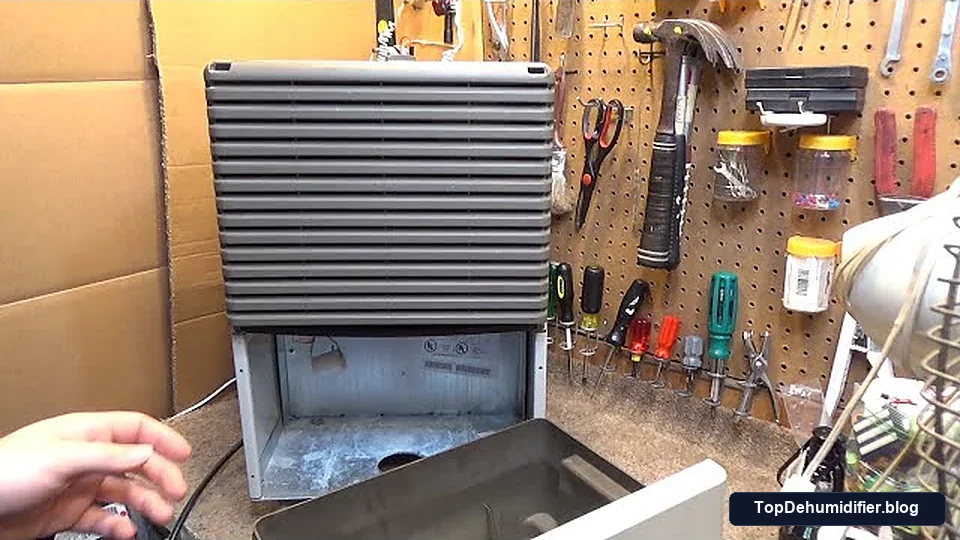
Indicator lights alert operators when the water collection bucket reaches capacity or when filter cleaning becomes necessary. The straightforward interface minimizes setup friction for new users.
The top-mounted digital control panel features a clear LED display for monitoring current humidity levels. Users can easily adjust target humidity in five percent increments using responsive tactile buttons designed for long-term reliability.
Programmable 24-hour timers allow seamless automated scheduling to fit your daily household routine. Indicator lights provide immediate alerts when the water bucket reaches maximum capacity or when the washable filter requires cleaning.
- Top-mounted digital control interface
- Clear current humidity level readouts
- Dedicated full-tank warning indicator
Initial Configuration and Startup
Unboxing requires standing the appliance upright for at least twenty-four hours before initial power-up. This resting period allows internal compressor oils to settle properly.
Plug the power cord directly into a grounded wall outlet without using extension cords. Direct connection prevents voltage drops and potential electrical hazards.
- Twenty-four-hour upright resting period
- Direct wall outlet connection mandatory
Continuous Drainage Capabilities and Bucket Handling
The spacious two-point-seven-gallon collection bucket minimizes how often users must manually empty captured water. A convenient carrying handle prevents spills during transport to utility sinks.
For hands-free operation, connect a standard garden hose to the gravity drain port. This setup allows uninterrupted moisture removal in remote basements or crawl spaces.
A dedicated gravity drain port allows for hassle-free continuous drainage by attaching a standard garden hose. This bypasses manual bucket emptying entirely, making it ideal for unattended basement installations or extended vacation periods.
The removable collection bucket incorporates a secure carrying handle and splash guard to prevent spills. An internal magnetic switch automatically halts compressor operations when the bucket is full or slightly misaligned.
- Two-point-seven-gallon removable water bucket
- Integrated handle for spill-free carrying
- Gravity-fed continuous drainage port
Gravity Drainage Setup Considerations
Ensure the attached drainage hose runs downward continuously without upward loops. Proper downward slope guarantees reliable water flow without internal pooling.
Inspect drainage connections periodically to prevent accidental leaks during extended unattended runtime periods in vacation homes or remote workshops.
- Downward hose slope strictly required
- Periodic leak inspection recommended
Filtration Systems and Airflow Dynamics
A washable mesh air filter captures airborne dust and pet dander before air passes over cold evaporator coils. This barrier prevents particulate accumulation and maintains optimal thermal transfer efficiency.
The internal blower moves two hundred thirty-five cubic feet of air per minute. This strong airflow volume treats large residential spaces thoroughly and rapidly.
Air filtration relies on a removable mesh pre-filter designed to capture large dust particles and pet hair. Regular cleaning of this washable mesh prevents airflow restriction, ensuring optimal heat exchange efficiency across aluminum coils.
The centrifugal fan pulls air through the rear intake grille before channeling it over cold refrigeration coils. Optimized duct geometry maximizes static pressure, maintaining steady airflow volumes even as internal components accumulate minor dust.
- Washable dust and dander filter screen
- Protects evaporator coils from debris
- Two hundred thirty-five CFM airflow rating
Filter Maintenance and Air Hygiene
Cleaning the mesh filter every two weeks preserves airflow capacity and lowers energy consumption. Simply rinse the screen with warm water and dry completely before reinstallation.
We recommend pairing routine filter maintenance with a top-rated model like our best 50 pint dehumidifier pick to maximize your home moisture control efficiency year-round.
- Bi-weekly filter cleaning schedule
- Never run without filter installed
Routine Maintenance Protocols and Long-Term Durability
Establishing a regular maintenance routine ensures reliable multi-season operation from your dehumidifying investment. Clean the water collection bucket monthly with mild soap to prevent mildew growth.
Inspect the power cord and plug annually for signs of wear, fraying, or thermal stress. Proper upkeep guarantees safe electrical performance throughout the unit lifespan.
Routine upkeep requires washing the intake filter every two weeks using warm water and mild detergent. Maintaining clean airflow protects the compressor from overheating and extends the overall operational lifespan of internal mechanical components.
Before storing the unit long-term, ensure the internal reservoir is completely dry to prevent mold growth. Periodically inspect the power cord for fraying and check drainage fittings to guarantee leak-free seasonal performance.
- Monthly water bucket sanitization routine
- Annual power cord and plug inspection
- Off-season storage in dry conditions
Off-Season Storage and Winterization
Drain all residual water completely from the internal reservoir before storing the unit for winter. Store the appliance upright in a temperature-controlled indoor location.
Cover the machine with a breathable cloth to block dust accumulation while preventing moisture trapping during prolonged periods of non-use.
- Complete internal water drainage required
- Store upright in temperature-controlled spaces
Comprehensive Editorial Verdict and Final Buyer Advice
This high-capacity unit stands out in our best 50 pint dehumidifier for basement guide for battling persistent below-grade moisture. Its strong extraction rate and flexible continuous drainage options justify the investment.
While its physical weight demands careful placement, the reliable performance makes it a top-tier choice. We recommend this unit for anyone needing dependable residential humidity control.
This Emerson model delivers reliable moisture extraction for medium to large damp living spaces. Its balanced combination of extraction capacity and intuitive controls makes it a practical choice for everyday basement humidity control.
Buyers prioritizing robust build quality and straightforward operation will find exceptional value in this appliance. Ensure your installation space meets proper electrical and spatial clearance requirements to achieve maximum dehumidification efficiency.
- Excellent high-capacity basement performance
- Flexible drainage and robust build quality
- Strong overall editorial recommendation
Ideal Buyer Profile
Homeowners with damp basements, crawl spaces, or large living areas will extract maximum value from this machine. It suits users who prioritize raw water removal capacity.
Buyers needing ultra-portable lightweight units should look elsewhere due to this model robust weight. For heavy-duty moisture extraction, it remains a standout choice.
- Best for large damp basements
- Suits users wanting gravity drainage
Frequently Asked Questions
How often should I clean the washable air filter?
Wash the mesh filter every two weeks to maintain optimal airflow efficiency. Regular cleaning prevents dust buildup on internal refrigeration coils.
Can this dehumidifier run continuously without a hose?
Yes, the unit operates until the water bucket fills completely. It then triggers an automatic shut-off feature to prevent any messy overflows.
What is the best humidity setting for a basement?
Targeting between forty-five and fifty percent relative humidity works best. This range prevents mold growth while minimizing daily energy consumption.
Why is warm air blowing out of the top exhaust?
The refrigeration cycle naturally generates mild exhaust heat as a byproduct. This thermal output is entirely normal for compressor units.
How do I set up gravity continuous drainage?
Attach a standard garden hose to the threaded drain port securely. Ensure the hose slopes downward constantly to guarantee reliable water flow.