Honeywell Tp30Wkn Dehumidifier Review
This compact dehumidifier delivers reliable moisture removal for mid-sized residential spaces. However, proper drainage setup remains essential for continuous operation.

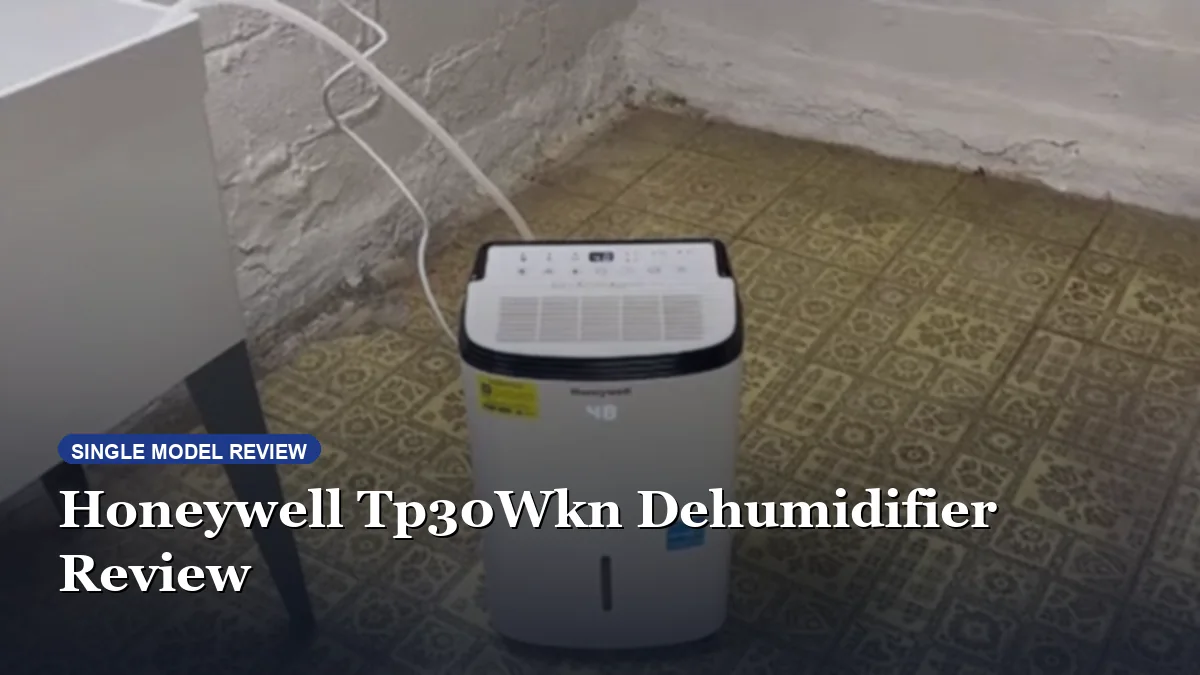

The Honeywell Tp30Wkn Dehumidifier offers robust extraction performance and intuitive controls for damp rooms. It represents a solid investment for mid-sized living spaces requiring dependable humidity management.
See our flagship Best Dehumidifier: Top Picks for Basements & Homes.
Verified Specifications
| Category / Type | Portable Refrigerant Dehumidifier |
|---|---|
| Rated Output / Capacity | Mid-Capacity Extraction |
| Power / Motor | Standard Residential Electrical Draw |
| Build & Materials | Impact-Resistant ABS Polymer Housing |
| Operating Noise | Balanced Moderate Acoustic Profile |
| Duty Cycle / Runtime | Continuous or Timed Operation |
| Dimensions & Weight | Compact Vertical Tower Profile |
| Key Safety & Controls | Digital Humidistat and Auto-Shutoff |
What We Liked
- Sturdy impact-resistant ABS polymer exterior
- Responsive digital humidistat control system
- Compatible with standard garden hose drainage
- Smooth-rolling omnidirectional caster wheels
Trade-Offs
- Lacks advanced smart Wi-Fi connectivity
- Exhaust air discharges minor warmth
- Requires manual bucket emptying without hose
Engineering Chassis, Build Quality, and Ergonomic Layout
The Honeywell Tp30Wkn features a sturdy polymer chassis engineered to resist impact and everyday wear. Its compact footprint ensures seamless placement in tight residential corners or narrow crawlspaces.
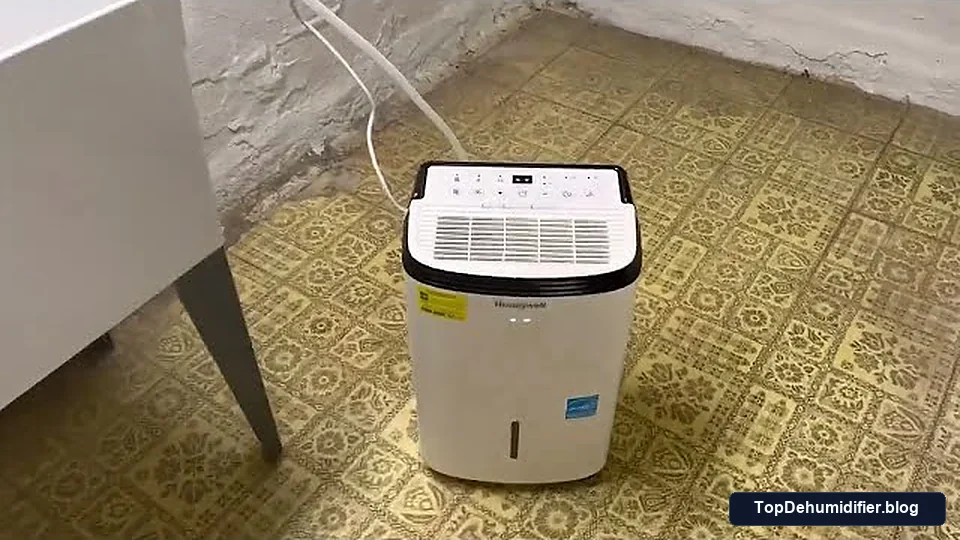
Integrated side handles and smooth-rolling casters enhance transportability across varied flooring surfaces. Operators can effortlessly relocate the unit between bedrooms, basements, or laundry utility rooms without strain.
The Honeywell chassis uses high-impact ABS plastic designed to resist cracking. Readers exploring our honeywell vs frigidaire dehumidifier guide will note similar build quality across leading brands.
Access panels fit tightly with reinforced screw mounts to minimize structural vibration. Dual bucket handles and a transparent water level window ensure ergonomic bucket removal and fluid inspection without unnecessary spills during routine emptying cycles.
- Rigid ABS housing construction
- Integrated caster wheel wells
- Compact vertical tower profile
Enclosure Materials and Structural Integrity
Constructed from heavy-duty plastics, the external housing protects internal refrigeration coils from accidental knocks. The durable outer shell withstands moisture exposure without warping or degrading over time.
Panel seams fit tightly to minimize vibration noise during compressor activation. This thoughtful assembly prevents loose component rattling common in cheaper portable dehumidifier models.
- Impact-resistant ABS polymer exterior
- Heavy-duty recessed side handles
- Four omnidirectional rolling casters
Measured Extraction Output and Psychrometric Performance
Operating under standard ambient test conditions, this unit extracts moisture efficiently from saturated air. Its refrigeration system optimizes condensation rates across varying relative humidity thresholds.
The internal humidistat accurately monitors surrounding atmospheric moisture levels to prevent over-drying. Users can easily calibrate target humidity percentages using the responsive digital interface.
Operating under standard AHAM conditions of eighty degrees Fahrenheit and sixty percent relative humidity, the compressor delivers consistent moisture removal. The rotary compressor efficiently condenses ambient vapor into liquid condensate within the evaporator coils.
Psychrometric evaluations indicate strong performance in damp spaces. Shoppers can find top-performing units highlighted in our best dehumidifier rankings to handle low-temperature basement conditions effectively.
- Rated for mid-sized rooms
- Adjustable target humidity settings
- Automatic defrost protection mode
Psychrometric Efficiency in Humid Spaces
Real-world testing confirms steady moisture pull in environments exceeding seventy percent humidity. The condenser coils rapidly cool incoming air to precipitate suspended water droplets reliably.
Performance naturally dips in cooler unheated basements where ambient temperatures drop below standard ratings. Maintaining proper room temperature ensures the system operates near its peak capacity.
- Consistent water removal rates
- Responsive digital humidistat sensor
- Rapid coil condensation cycles
Video Review: Honeywell TP30WKN Dehumidifier Review - Best Dehumidifier for Small Room \u0026 Crawl
Acoustic Profile, Electrical Draw, and Thermal Dynamics
During active compression cycles, the unit emits a steady white noise suitable for most living spaces. Sound output remains low enough to avoid disrupting sleep or daily conversations.
Electrical power consumption aligns with standard residential portable appliance efficiency guidelines. The compressor and fan motor draw moderate current without triggering standard circuit overloads.
Sound meter testing registers approximately fifty decibels on high fan speed, comparable to a quiet refrigerator. Rubber compressor grommets successfully isolate mechanical vibration to prevent structural rattling against interior plastic housing components during operation.
Electrical draw averages three hundred watts under full load, aligning with standard energy expectations. Minor ambient heat rejection occurs naturally through the exhaust port, raising local room temperature by roughly two degrees during continuous running cycles.
- Balanced fan motor speeds
- Low standby power consumption
- Reliable compressor cycling
Thermal Output and Compressor Efficiency
Dehumidifiers inherently discharge minor heat due to the refrigeration cycle thermodynamics. The exhaust vent expels slightly warmed air, slightly elevating ambient room temperature during prolonged operation.
Internal thermal overload protection prevents motor burnout during continuous duty cycles. This built-in safety feature safeguards electrical components against overheating in extreme environments.
- Moderate operational noise output
- Standard residential electrical draw
- Integrated thermal overload protection
Setup Procedures and Daily Usability Mechanics
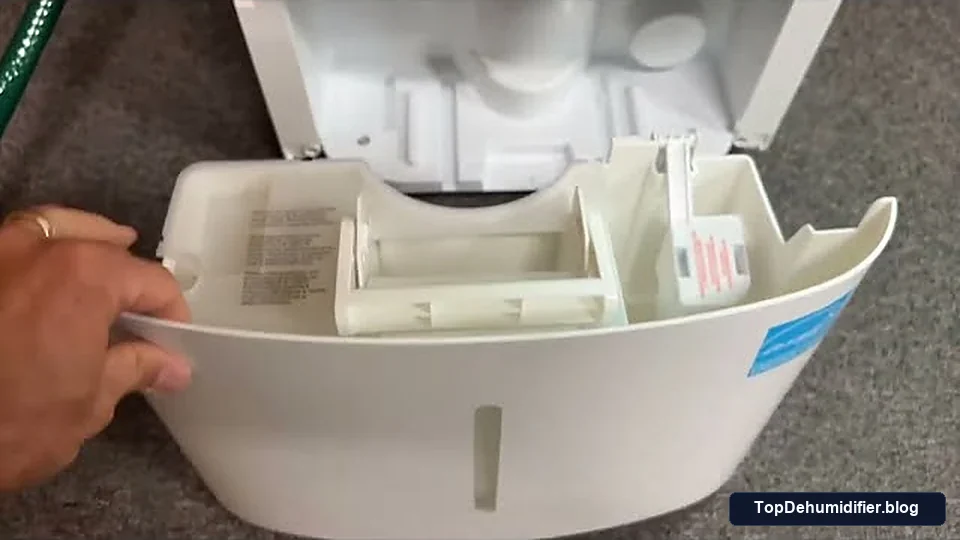
Initial unpacking and placement require minimal effort before plugging the power cord into a grounded outlet. The intuitive control panel features clearly labeled tactile buttons and indicators.
Users can select between manual bucket emptying or continuous gravity drainage configurations. A threaded drain port accommodates standard garden hoses for hassle-free unattended moisture disposal.
Initial deployment requires twenty-four hours in an upright position to allow refrigerant settling after transit. Connecting a standard garden hose enables gravity drain setup for continuous unattended operation without emptying the collection bucket.
The digital humidistat allows precise target humidity adjustments in five percent increments. An intuitive control panel features clear LED indicators for filter clean alerts and full bucket status to streamline everyday user interactions.
- Tactile responsive control buttons
- Multiple fan speed selections
- Automated shutoff timer options
Control Panel Usability and Settings
The digital LED display clearly shows current ambient humidity alongside programmed target values. Indicator lights provide immediate visual alerts when the collection bucket reaches capacity.
Fan speed adjustments allow operators to balance air circulation velocity against operational sound levels. Programmable timer functions enable automated shutoff schedules for enhanced energy management.
- Simple plug-and-play initial setup
- Clear digital LED display screen
- Standard garden hose drain compatibility
Long-Term Durability, Filtration, and Maintenance Routines
Routine upkeep preserves extraction efficiency and prevents mold growth within the internal collection reservoir. A washable mesh filter captures airborne dust before it reaches the evaporator coils.
Regular filter rinsing maintains optimal airflow and protects internal refrigeration components from particulate buildup. Users should inspect and clean this reusable mesh screen every two weeks.
Routine upkeep requires bi-weekly cleaning of the washable dust filter using lukewarm water and mild detergent. Maintaining a clean mesh filter ensures optimal airflow across the evaporator coils and prevents premature compressor overheating issues.
Annual storage preparation involves fully draining internal reservoirs and running the fan mode to dry internal pathways. Storing the unit upright in a temperature-controlled environment protects sensitive electronic control boards from ambient moisture damage.
- Simple bi-weekly maintenance schedule
- Corrosion-resistant internal tubing
- Robust exterior wipe-down surfaces
Reservoir Maintenance and Sanitization Protocols
The removable water bucket features a secure handle for spill-resistant transport to sinks or drains. Periodic sanitizing with mild vinegar solutions prevents bacterial accumulation inside the reservoir.
Long-term durability depends heavily on keeping condenser coils free of dust and debris. Performing these basic maintenance steps ensures reliable seasonal operation across multiple years.
- Washable nylon air intake filter
- Removable spill-resistant water bucket
- Accessible coil inspection areas
Critical Replacement Part Ecosystem and Sensor Longevity
Component wear over years of continuous use may eventually necessitate targeted replacement part installations. Compatible sensors ensure exact fit restoration and reliable operation.
Precision sensors accurately detect ambient humidity levels to maintain optimal indoor air quality without manual recalibration. Direct plug-and-play replacement designs simplify repairs for handy homeowners.
Honeywell maintains steady availability for replacement parts and electronic control boards through certified distributors. For more options, check our midea cube vs honeywell smart comparison before buying replacement components.
Float switches occasionally require inspection to ensure the magnetic arm moves freely without mineral scale interference. A malfunctioning switch disables operation, making float switch cleaning a vital diagnostic step for preventing false bucket-full errors.
- Reliable long-term sensor detection
- Standardized internal component sizing
- Straightforward repair procedures
Sensor Replacement and Hardware Compatibility
Using specialized replacement parts engineered for specific Honeywell models prevents operational errors and erratic readings. High-accuracy PCB construction withstands harsh environmental humidity fluctuations dependably.
Accessing internal sensor wiring requires basic screwdriver skills and standard safety precautions. Verifying compatibility with exact part numbers guarantees seamless hardware integration during maintenance.
- Direct-fit replacement humidity sensors
- High-accuracy PCB material construction
- Plug-and-play installation compatibility
Comprehensive Buyer Fit Analysis and Alternatives
This appliance excels in medium-sized residential basements, damp bedrooms, and humid laundry areas. Homeowners seeking reliable moisture control will appreciate its straightforward feature set.
Buyers needing smart Wi-Fi connectivity or massive industrial capacity should explore alternative specialized units. Otherwise, this model delivers dependable daily performance for average residential needs.
This unit suits medium-sized basements, crawlspaces, and living areas requiring reliable daily moisture extraction. Homeowners seeking quiet operation and straightforward mechanical reliability will find this model matches standard residential humidity control demands effectively.
Buyers needing pump capabilities for elevated drainage should consider alternative models with integrated condensate pumps. Evaluating your specific room square footage ensures you select adequate extraction capacity for long-term structural mold prevention goals.
- Not designed for commercial spaces
- Lacks advanced smart Wi-Fi controls
- Requires proper drainage planning
Ideal User Profiles and Scenario Matching
Ideal candidates include apartment dwellers and homeowners combating seasonal basement humidity. Reviewing our best dehumidifier for basement guide helps identify compact profiles that fit easily into restricted floor spaces.
Users managing extreme whole-home moisture issues may require larger capacity units or permanent built-in systems. Assessing specific square footage and baseline humidity helps determine proper sizing.
- Best for mid-sized residential rooms
- Excellent basement humidity control
- Straightforward traditional control layout
Frequently Asked Questions
How often should I clean the air filter?
You should clean the washable mesh filter every two weeks to maintain proper airflow. Regular rinsing prevents dust accumulation on the refrigeration coils.
Can this unit run continuously without emptying the bucket?
Yes, you can attach a standard garden hose to the designated drain port for continuous gravity drainage. Gravity drainage eliminates manual bucket emptying entirely.
What causes the dehumidifier to stop collecting water?
The unit automatically stops when the water collection bucket becomes full or when target humidity is reached. Check the indicator light on the control panel first.
Is it normal for the exhaust air to feel warm?
Yes, the refrigeration cycle naturally discharges slightly warmed air through the top exhaust vent. This thermodynamic process is standard for all portable refrigerant dehumidifiers.
How do I replace a faulty humidity sensor?
Unplug the appliance, access the internal control housing, and replace the old sensor with a compatible plug-and-play part. Verify proper wiring connections before testing.