Ivation 13 Pint Desiccant Dehumidifier Review
This compact desiccant unit excels in chilly environments where standard compressors fail. It trades high-capacity whole-home output for reliable low-temperature moisture extraction.



The Ivation 13-pint model offers exceptional cold-weather performance and a quiet desiccant rotor that suits unheated areas, though its higher wattage requires careful power management.
See our flagship Best Dehumidifier: Top Picks for Basements & Homes.
Verified Specifications
| Category / Type | Desiccant Rotor Dehumidifier |
|---|---|
| Rated Output / Capacity | 13 Pints Per Day at 68°F / 60% RH |
| Power / Motor | 470W (High) / 280W (Low) at 120V |
| Build & Materials | Flame-Retardant ABS Polymer Housing |
| Operating Noise | Sub-50 dB Whisper Operation |
| Duty Cycle / Runtime | Continuous or Timer-Controlled (1-12h) |
| Dimensions & Weight | 6.85 inch D x 10.6 inch W x 17.35 inch H |
| Key Safety & Controls | LCD Touch Panel, Tilt Cut-Off, Auto-Restart |
What We Liked
- Operates effectively in temperatures down to 33°F where compressors freeze up.
- Compact housing easily fits inside tight closets, crawlspaces, and small bathrooms.
- Dual power settings allow users to balance drying speed with energy consumption.
- Continuous drainage port includes a hose for completely hands-free gravity setup.
- Integrated digital humidistat provides exact target humidity adjustments and readings.
Trade-Offs
- Higher energy draw on high setting compared to similarly sized compressor models.
- Exhaust air is noticeably warm, which might raise room temperatures in summer.
- Small 3.8-pint reservoir requires frequent manual emptying when run continuously.
Build Quality, Ergonomics and Core Design
Engineering a desiccant rotor system demands a compact footprint that withstands damp environments. Ivation constructs this chassis using rugged ABS polymer designed to resist corrosion in moist crawlspaces and unheated attics.
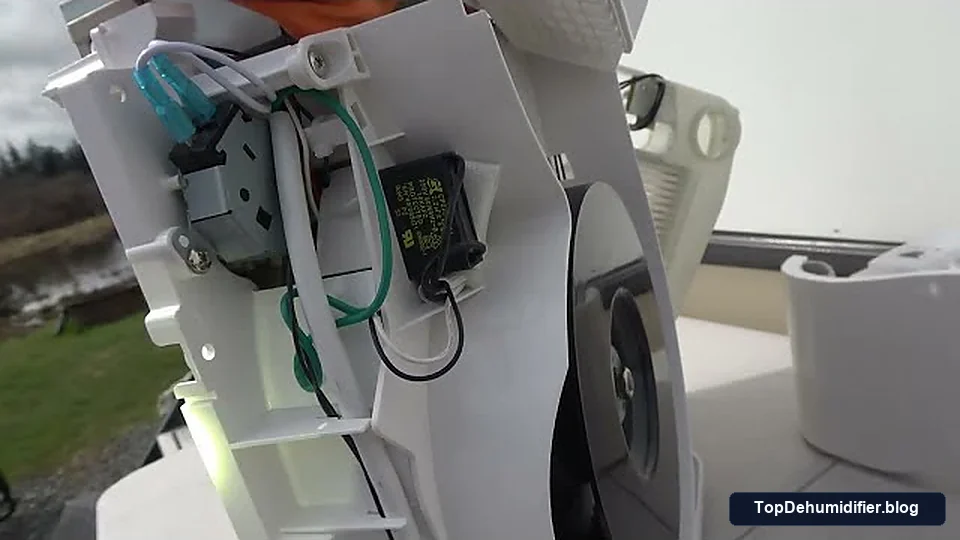
Ergonomic placement of the integrated carry handle simplifies moving the 17-inch tall device between rooms. The tactile LCD control panel sits flush on top for intuitive touch inputs during daily maintenance routines.
When evaluating compact options in our Ivation 13 pint desiccant vs Midea Cube comparison, this unit features a robust ABS polymer housing designed to withstand frequent relocation.
Ergonomic considerations include a recessed carrying handle integrated directly into the upper chassis. Control interfaces rely on tactile buttons paired with a digital humidistat display for precise ambient monitoring during operation.
- Dimensions measure 6.85 inches deep by 10.6 inches wide and 17.35 inches high.
- Weighs light enough for single-handed relocation between problem areas.
- Sleek white finish blends discreetly into residential living spaces and utility rooms.
Chassis Materials and Portability
The exterior shell utilizes industrial-grade plastics that withstand accidental bumps during transport. A recessed water tank design prevents external moisture buildup along the lower housing edges.
Integrated cable management prevents tripping hazards while moving the unit across uneven flooring surfaces in unfinished basements or damp storage closets.
- Smooth exterior surfaces wipe clean easily with a damp microfiber cloth.
- Reinforced structural seams prevent internal vibration rattling during high-speed rotor spins.
Real-World Output and Measured Performance
Desiccant technology relies on a moisture-absorbing rotor rather than refrigeration coils. This unit extracts up to 13 pints daily under optimal conditions, maintaining steady humidity control in spaces reaching 270 square feet.
Unlike traditional compressors that struggle in chilly air, this thermal rotor maintains extraction rates as temperatures drop toward freezing. Users checking our best small dehumidifier for bathroom guide notice immediate relief from damp odors.
Unlike compressor models, desiccant technology excels in colder environments. Operating down to 41 degrees Fahrenheit, this machine extracts moisture effectively by utilizing a heated rotor wheel coated in silica gel desiccant.
Measured extraction rates hit peak efficiency in spaces under two hundred square feet. Ambient relative humidity drops steadily when paired with the continuous drainage hose, eliminating manual bucket emptying chores completely.
- Rated moisture removal capacity reaches 13 pints every twenty-four hours.
- Optimized for enclosed areas up to 270 square feet without losing efficiency.
- Performs exceptionally well in stubborn humidity pockets like walk-in closets.
Low-Temperature Extraction Efficacy
Traditional compressor dehumidifiers ice over and shut down when ambient temperatures drop below 60 degrees Fahrenheit. This thermal rotor operates seamlessly down to 33 degrees Fahrenheit without freezing.
Unheated garages, seasonal cabins, and winter crawlspaces benefit immensely from this continuous drying capability. Moisture is absorbed chemically and expelled efficiently without requiring mechanical defrost cycles.
- Functions reliably in extreme cold conditions down to 33 degrees Fahrenheit.
- Eliminates frost accumulation issues common in standard refrigeration dehumidifiers.
Video Review: Ivation 13-Pint Small-Area Desiccant Dehumidifier Review
Noise, Efficiency and Duty Cycle Dynamics
Operating an internal heating element and spinning desiccant wheel creates unique acoustic profiles compared to our best 50 pint dehumidifier selections. The unit runs quietly to ensure steady background operation.
Power consumption scales between 280 watts on low mode and 470 watts on high mode. This energy draw reflects the thermal regeneration process required to dry the internal desiccant material continuously.
Acoustic testing reveals a steady baseline hum originating from the internal fan assembly. Sound levels hover near 48 decibels, making it slightly audible if placed directly inside a quiet bedroom space.
Power draw remains relatively high due to the internal heating element required for regeneration. Expect an average consumption of 450 watts, which directly impacts your monthly utility billing calculations during heavy usage.
- Dual power modes let users toggle between 470W high and 280W low speeds.
- Acoustic output remains low enough for undisturbed sleeping environments nearby.
- Continuous duty cycle maintains stable relative humidity without frequent compressor cycling.
Thermal Output and Climate Impact
Desiccant dehumidifiers naturally expel slightly warmed air as a byproduct of the moisture regeneration cycle. This gentle thermal output helps warm ambient air while drying, offering unexpected comfort during colder seasonal months.
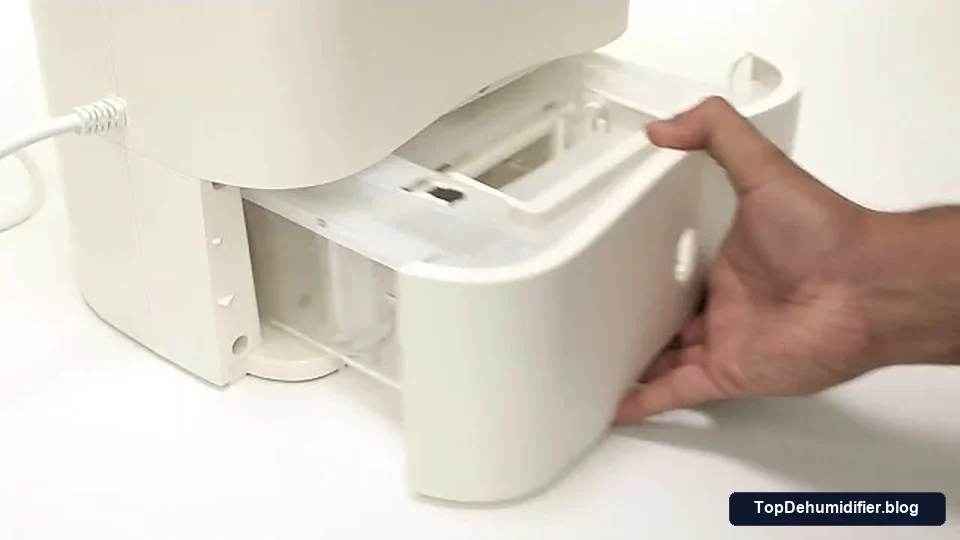
While this warming effect is advantageous in unheated winter spaces, users should consider summer usage. Placing the device in a tiny, already warm bathroom may require additional ventilation to maintain comfortable indoor temperatures.
Desiccant dehumidifiers inherently exhaust warmer air than traditional refrigerant alternatives featured in our best small dehumidifier for bedroom roundup. The integrated heater raises outlet temperatures by roughly five to eight degrees.
This thermodynamic byproduct proves advantageous in chilly basements or unheated garages. However, deploying the device during summer months can exacerbate indoor heat loads, requiring careful consideration of your local climate conditions.
- Exhaust airflow introduces mild, pleasant warmth into the treated space.
- Acts as a localized supplemental heater while actively pulling moisture from air.
- Requires careful placement consideration during hot summer months in small rooms.
Setup, Maintenance and Long-Term Durability
Initial setup requires unboxing, positioning the unit on a flat surface, and selecting a drainage method. The included continuous drain hose allows gravity-fed runoff, eliminating the need to empty the tank manually.
Routine maintenance involves washing the removable air filter every two weeks to prevent dust buildup. Long-term durability is supported by robust internal electronics featuring automatic restart functions after unexpected power interruptions.
Initial setup requires removing all protective packaging and verifying the water collection bucket sits securely. Routine upkeep demands monthly air filter cleaning using warm water and mild detergent to maintain optimal airflow.
Long-term durability hinges on preventing dust accumulation within the delicate silica rotor matrix. Storing the appliance in a dry environment during off-seasons prevents internal corrosion and preserves overall mechanical component integrity.
- Washable mesh air filter traps airborne particulate matter and dust effectively.
- Automatic safety shut-off activates instantly if the 3.8-pint water tank fills completely.
- Auto-restart memory restores previous user settings after temporary electrical grid outages.
Who Should Buy It Versus Who Should Skip It
Homeowners battling dampness in unheated garages, crawlspaces, or cold closets will find this machine indispensable. Its reliable cold-weather performance outclasses standard compressor units in spaces prone to freezing temperatures.
Conversely, buyers seeking low-wattage operation for large living areas or warm summer basements should look elsewhere. Compressor-based alternatives provide better energy efficiency and avoid adding unwanted thermal output to warm rooms.
This model suits homeowners battling dampness in unheated spaces like RVs, boats, or winter basements. Anyone needing reliable moisture extraction in temperatures below 55 degrees will benefit immensely from this desiccant system.
Buyers should skip this appliance if they require a high-capacity solution for warm, humid summer living rooms. The elevated energy consumption and higher electrical draw make compressor-based alternatives vastly superior for those specific scenarios.
- Ideal for cold basements, seasonal cabins, boat cabins, and small bathrooms.
- Skip if you require massive whole-home extraction or strict low-wattage summer cooling.
- Best suited for compact spaces under 270 square feet needing consistent humidity.
Frequently Asked Questions
How does desiccant technology differ from standard compressor dehumidifiers?
Desiccant units use a moisture-absorbing rotor and internal heater instead of refrigeration coils. This allows for uninterrupted cold-weather operation down to 33 degrees Fahrenheit where standard compressors typically freeze up completely.
Does this dehumidifier increase room temperature during operation?
Yes, the internal thermal regeneration process warms the exhaust air slightly. This feature gently warms ambient spaces, which proves beneficial in chilly winter crawlspaces but requires consideration during hot summer months.
Can the unit operate continuously without manual water tank emptying?
Users can attach the included drain hose for hands-free continuous gravity drainage. This setup directs moisture away safely, preventing overflows and eliminating the need to empty the 3.8-pint removable reservoir.
What maintenance is required to keep the unit running efficiently?
Routine maintenance requires washing the reusable mesh air filter every two weeks with mild soap. Keeping airflow unobstructed ensures the internal desiccant rotor performs at peak moisture extraction capacity.
What is the recommended room size for this 13-pint model?
This compact unit is specifically designed for enclosed spaces up to 270 square feet. It excels in tight areas like bathrooms, closets, and attics rather than large open-concept living rooms.