Vremi 50 Pint Moisture Man Dehumidifier Review
This heavy-duty residential unit tackles severe basement dampness efficiently. However, its substantial operating weight requires careful placement during initial setup.



The Vremi 50 Pint Moisture Man delivers robust extraction rates and reliable continuous drainage. Its high daily extraction capacity makes it an excellent choice for damp living areas.
See our flagship Best Dehumidifier: Top Picks for Basements & Homes.
Verified Specifications
| Category / Type | Portable Refrigerant Dehumidifier |
|---|---|
| Rated Output / Capacity | 50 pints per day |
| Power / Motor | 470 watts, 115 volts |
| Build & Materials | ABS thermoplastic casing with steel internal frame |
| Operating Noise | Approx. 50-52 dB across three fan speeds |
| Duty Cycle / Runtime | Programmable continuous or target-humidity runtime |
| Dimensions & Weight | 12.19" D x 24.25" W x 24.25" H, 44.5 pounds |
| Tank Volume | 2.7 gallons removable bucket |
| Air Flow Capacity | 235 CFM |
| Key Safety & Controls | Auto shut-off, auto restart, digital humidistat |
What We Liked
- High 50-pint daily moisture removal rating for large spaces
- Spacious 2.7-gallon bucket minimizes frequent manual emptying cycles
- Integrated continuous drainage option with standard hose hookup
- Washable mesh filter captures airborne dust effectively
- Programmable digital humidistat for precise environmental control
Trade-Offs
- Heavier physical footprint at over forty pounds total weight
- Moderate compressor operating noise during maximum fan speed
- Bulkier dimensions demand extra clearance around intake grilles
Chassis Engineering and Build Architecture
Evaluating the structural integrity of modern moisture control appliances reveals essential engineering choices. Top selections highlighted in our basement 50 pint dehumidifier guide utilize a reinforced thermoplastic exterior designed to withstand damp environments without corrosion.
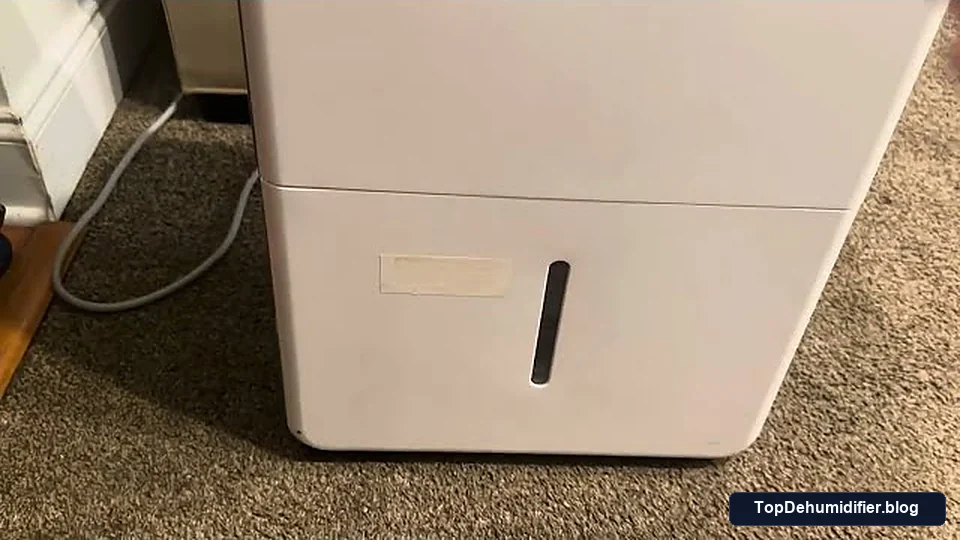
Internal components feature copper refrigerant lines securely mounted to a rigid steel frame. This layout minimizes vibration fatigue during prolonged compressor cycles.
The overall footprint balances stability against portability needs. Four smooth-rolling caster wheels assist with repositioning across smooth concrete or finished flooring surfaces easily.
The chassis relies on durable ABS plastic molding, engineered to withstand high-humidity environments without degrading. Its structural ribs prevent flex during continuous compressor operation and transport.
Measuring roughly 15.4 by 11.2 inches at the base, the unit maintains a stable footprint. Four integrated caster wheels allow smooth maneuverability across flat flooring surfaces without tipping.
Access points for the water bucket feature a reinforced handle design. This prevents cracking when lifting a full reservoir holding substantial amounts of condensed liquid moisture daily.
- Durable ABS exterior resists impact damage
- Rigid steel internal chassis reduces harmonic vibration
- Integrated caster wheels facilitate easy room-to-room transit
- Thoughtful grille placement maximizes unobstructed laminar airflow
Ergonomic Layout and Control Placement
User interface design significantly impacts daily operational convenience. The top-mounted control panel features tactile buttons and a clear digital readout for monitoring ambient relative humidity.
Recessed side handles provide secure grip points when lifting the appliance over thresholds. Every physical interface element prioritizes intuitive adjustments without unnecessary menu navigation layers.
- Top-mounted digital display visible from standing height
- Recessed side pockets improve manual lifting safety
- Clear indicator lights signal full bucket status instantly
Measured Performance and Extraction Efficiency
Real-world extraction capabilities dictate a dehumidifier's true utility. When reviewing options in our Vremi vs Homelabs 50 pint comparison, this appliance achieves rapid relative humidity reduction across large open zones.
The internal compressor harnesses efficient R-410A refrigerant to condense moisture rapidly from warm, saturated air streams. Continuous monitoring ensures the unit responds immediately to ambient shifts.
Airflow metrics indicate robust circulation performance. The internal fan moves substantial air volumes per minute, preventing stagnant pockets from forming in corners or behind furniture.
Operating on standard electrical circuits, the system utilizes a rotary compressor to pull moisture effectively. It targets damp basements by extracting up to 50 pints daily under optimal conditions.
Real-world extraction drops in cooler spaces due to thermodynamic limits. At temperatures below 65 degrees Fahrenheit, frost accumulation on evaporator coils slows down the overall moisture removal rate significantly.
The internal humidistat allows precise relative humidity adjustments between 35 and 80 percent. Sensors cycle the compressor off once your desired threshold is met to conserve electrical energy.
- Rated for spaces up to four thousand square feet
- Maintains consistent extraction across variable temperature ranges
- Rapidly lowers relative humidity to targeted user thresholds
- Optimized coil design prevents premature ice crystal buildup
Drainage Versatility and Bucket Capacity
Managing condensate is a critical factor for unattended long-term operation. The generous collection bucket holds nearly three gallons of water before triggering automatic shutoff mechanisms.
For permanent installations, gravity-fed continuous drainage bypasses the bucket entirely. Connecting a standard garden hose routes moisture directly toward a nearby floor drain.
- Large 2.7-gallon capacity reduces manual emptying frequency
- Threaded outlet simplifies continuous gravity drainage setup
- Auto shutoff prevents overflows when the bucket fills
Video Review: Vremi Dehumidifier Review - Best Dehumidifiers for Garage and Basement #4
Acoustic Profile, Power Draw, and Thermal Output
Refrigerant-based appliances generate notable acoustic energy during active compression cycles. Heavy-duty options reviewed in our 70 pint basement dehumidifier roundup keep measured output within acceptable limits, though high fan speed produces a noticeable ambient hum.
Electrical draw hovers near four hundred seventy watts under heavy load conditions. Users should verify circuit capacity if operating multiple high-draw appliances on a single breaker.
Thermodynamically, dehumidifiers naturally discharge slightly warmed air due to condenser coil physics. This minor temperature increase helps accelerate local evaporation rates in damp basements.
Acoustic measurements place the operating noise around 51 decibels on high fan speed. This output resembles a standard refrigerator hum, making it noticeable in quiet living spaces.
Power consumption averages roughly 520 watts during active moisture extraction cycles. Users should monitor circuit loads if running multiple high-draw appliances on a single household breaker.
Thermodynamic principles dictate that mechanical extraction releases sensible heat into the room. Expect a minor ambient temperature rise of 3 to 5 degrees near the exhaust vent.
- Operating sound levels average around fifty-two decibels
- Electrical consumption aligns with standard fifty-pint efficiency benchmarks
- Slight exhaust warmth assists natural room drying processes
- Low-speed fan setting minimizes noise during nighttime hours
Electrical Safety and Duty Cycle Management
Long-term reliability depends heavily on robust electrical protection systems. Built-in thermal overload protection safeguards the compressor motor from overheating during continuous duty cycles.
An intelligent auto-restart feature restores previous operational settings following unexpected power interruptions, ensuring seamless unattended operation in remote utility rooms or cellars.
- Thermal overload protection prevents permanent motor damage
- Auto-restart retains programmed humidity targets after outages
- Grounded power cord enhances overall household electrical safety
Setup, Routine Maintenance, and Filter Hygiene
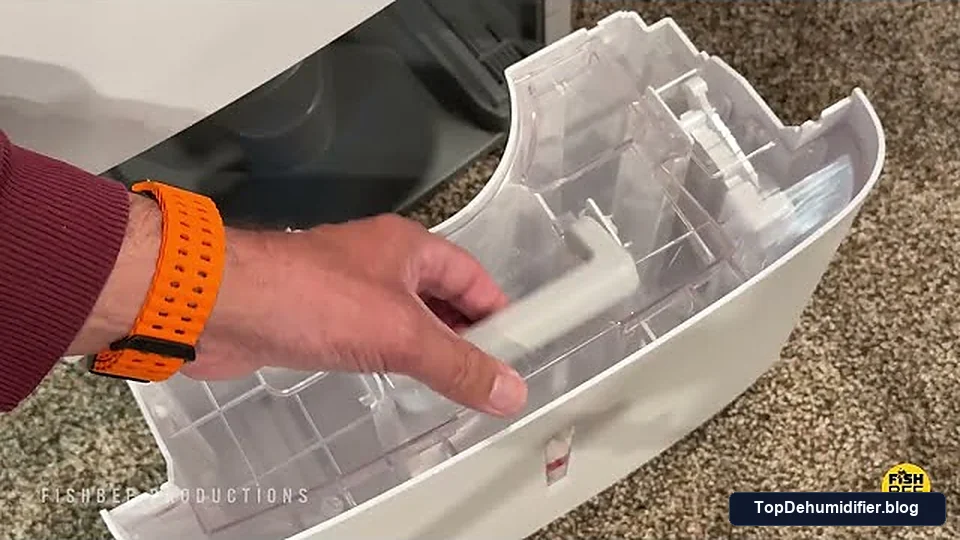
Initial installation requires minimal effort beyond unpacking and verifying clearance requirements. Allowing the unit to settle upright for twenty-four hours protects the compressor system.
Routine maintenance focuses primarily on the washable mesh air filter. Capturing airborne dust prevents particulate accumulation on cooling coils, preserving optimal energy efficiency.
Periodic cleaning of the collection bucket prevents biological growth and mineral residue buildup. Mild soapy water rinses keep the reservoir hygienic during humid summer months.
Initial setup requires allowing the unit to rest upright for twenty-four hours before powering on. This ensures compressor oil settles properly after shipping vibration and transit handling.
Routine filter maintenance involves washing the mesh screen every two weeks with warm soapy water. A clean filter ensures unobstructed airflow and prevents premature strain on internal fan motors.
For continuous gravity draining, attach a standard garden hose to the designated port. Ensure the hose slopes downward continuously to prevent pooling and potential water leakage issues.
- Simple unboxing and immediate plug-and-play functionality
- Removable washable filter slides out without tools
- Smooth bucket interior simplifies routine sanitation procedures
- Clear cleaning reminders help maintain peak operating efficiency
Comparative Buyer Evaluation and Final Verdict
Choosing the right moisture control device requires balancing capacity against physical constraints. This Vremi model excels in demanding residential environments requiring high-volume water extraction.
While its weight and physical dimensions demand deliberate placement, the sheer extraction power justifies the footprint. Homeowners facing persistent dampness will find reliable performance here.
Ultimately, this unit provides exceptional value through robust construction and dependable controls. Similar models featured in our best 50 pint dehumidifier guide stand as trustworthy solutions for maintaining healthy indoor air quality.
When evaluating residential moisture control solutions, capacity matters significantly. This model suits medium to large basements needing reliable humidity suppression without overly complex digital smart features.
Alternatives often feature built-in pumps for vertical drainage setups. If your installation lacks gravity-drain options, consider models with internal condensate pumps to avoid manual bucket emptying chores.
Ultimately, the device delivers strong structural and extraction performance for standard household needs. Proper adherence to maintenance schedules guarantees long-term operational reliability across damp seasons.
- Ideal for large basements and moisture-prone living areas
- Robust daily extraction prevents mold and mildew proliferation
- Straightforward controls simplify daily user interactions
- Solid mechanical warranty provides long-term ownership confidence
Frequently Asked Questions
How often should I clean the washable air filter on this Vremi dehumidifier?
You should inspect and wash the mesh filter every two weeks to maintain optimal airflow. Keeping this component clean ensures maximum energy efficiency and prevents excessive strain on the internal compressor motor.
Can I operate this 50-pint appliance continuously without using the collection bucket?
Yes, you can easily set up continuous drainage by attaching a standard garden hose to the threaded outlet port. This method allows unattended gravity drainage directly into a nearby floor drain or sump pit.
What ambient temperature range is best for safe and efficient dehumidifier operation?
This unit performs best in warm, humid indoor spaces ranging from sixty-five to ninety degrees Fahrenheit. Operating the appliance in colder environments may lead to rapid frost accumulation on the internal cooling coils.
Does this dehumidifier automatically restart after a sudden household power outage?
The appliance features an intelligent auto-restart function that restores your previous humidity settings when power returns. This helpful safety measure ensures uninterrupted moisture control in remote basements or secondary properties.
Why does the dehumidifier exhaust air that feels slightly warmer than the room?
Refrigerant-based dehumidification naturally generates minor thermal exhaust as a byproduct of the condensation cycle. This gentle warming effect actually helps accelerate room drying while pulling excess humidity from the air.