Optimal Humidity for House in Summer: Guide
Maintaining precise indoor moisture levels during warm months protects structural integrity and prevents microbial growth. Proper psychrometric balance ensures maximum human thermal comfort.


The optimal indoor humidity range for a house in summer is between 30% and 50% relative humidity. Exceeding this threshold accelerates mold proliferation and compromises indoor air quality.
Ready to compare models? Start with our Best Dehumidifier: Top Picks for Basements & Homes.
Practical Quick-Reference Table
| Scenario / Metric | Recommended Target | Why It Matters |
|---|---|---|
| Standard Summer Living | 30% to 50% RH | Prevents mold and dust mites. |
| Basement Spaces | Below 50% RH | Stops condensation on cold masonry. |
| High Occupancy Zones | 45% RH limit | Offsets moisture from human respiration. |
| Dew Point Target | 50°F to 55°F | Guarantees absolute atmospheric stability indoors. |
| Basement Dehumidifier | Pints per day matched | Ensures continuous condensation extraction. |
| Sensor Calibration | Plus or minus 2% | Maintains accurate hygrometer readings. |
Understanding Summer Atmospheric Moisture Dynamics
Warm summer air naturally holds significantly more moisture than cold winter air. This physical property increases latent cooling loads inside residential structures significantly.

Managing large living areas demands adequate extraction power. Checking our best dehumidifier for 3 bed house list guides homeowners toward equipment properly scaled for standard residential floor plans.
Building envelopes must manage both bulk water intrusion and vapor diffusion. Unchecked moisture leads to structural degradation and costly remediation projects.
HVAC systems alone cannot always extract sufficient latent heat during peak summer months. Dedicated mechanical extraction becomes necessary for balanced moisture control.
- Monitor outdoor dew points daily.
- Seal rim joists against vapor leaks.
- Inspect crawlspace encapsulation systems.
- Ensure clothes dryers exhaust outdoors.
Infiltration Pathways and Vapor Pressure
Vapor pressure differentials drive moisture through porous building materials constantly. Warm exterior air pushes water molecules toward cooler indoor surfaces.
Proper air sealing restricts convective airflow loops within wall cavities. This prevents interstitial condensation behind drywall and insulation layers.
- Install continuous vapor retarders.
- Caulk all penetrations thoroughly.
Defining the Optimal Summer Indoor Humidity Range
Maintaining indoor relative humidity between 30% and 50% protects health and property. Higher levels stimulate dust mite reproduction and fungal spore activation.
Lowering humidity too far creates uncomfortably dry skin and static electricity. Striking the right balance requires continuous monitoring using calibrated digital hygrometers.
ASHRAE standards recommend keeping indoor relative humidity below 60% maximum to prevent microbial growth. Aiming for 50% provides a safe operational buffer.
During prolonged heatwaves, maintaining this target range reduces sensible cooling loads. Drier air feels cooler at higher thermostat settings.
- Keep living areas near 45% relative humidity.
- Check hygrometer calibration twice annually.
- Avoid letting humidity exceed 55% persistently.
- Use continuous monitoring in damp zones.
Health Implications of Excessive Moisture
Elevated indoor humidity triggers asthma symptoms and allergic rhinitis flare-ups. Spores from Aspergillus and Penicillium thrive in unconditioned humid environments.
Controlling moisture levels eliminates the primary catalyst for biological pollutant growth. Clean air protects vulnerable occupants throughout the summer season.
- Wash bedding in hot water weekly.
- Ventilate bathrooms during showers.
Video Walkthrough: What's the Best Humidity Level for Your Home?
Technical Vocabulary for Residential Moisture Control
Mastering psychrometric terminology helps homeowners evaluate dehumidification equipment accurately. Terms like latent heat, sensible heat, and dew point define operational parameters.
Latent heat refers to thermal energy absorbed during phase changes like evaporation. Dehumidifiers remove latent heat by condensing water vapor out of the air.
Sensible heat changes dry-bulb air temperature directly without altering moisture content. Air conditioners manage both sensible and latent cooling simultaneously.
Grain-per-pound measurements quantify absolute humidity independently of air temperature changes. This metric offers precise data for industrial and residential sizing calculations.
- Learn dry-bulb versus wet-bulb temperatures.
- Track grain-per-pound humidity metrics.
- Understand latent versus sensible cooling.
- Calculate cubic footage accurately.
Psychrometric Chart Interpretation
A psychrometric chart maps thermodynamic properties of moist air graphically. Engineers use these charts to determine exact cooling and dehumidification requirements.
Locating intersection points for dry-bulb and relative humidity reveals dew point values instantly. This graphical analysis guides effective ventilation design.
- Identify saturation curves on charts.
- Plot room conditions for accuracy.
Comparing Relative Humidity Versus Dew Point Metrics
Relative humidity fluctuates wildly as indoor air temperatures rise and fall daily. Dew point provides a more reliable, absolute measure of atmospheric moisture.
A constant dew point means actual water vapor content remains completely unchanged. This metric helps homeowners evaluate true moisture load regardless of thermostat settings.
Indoor dew points above 60°F typically cause uncomfortable, clammy conditions inside houses. Keeping dew points below 55°F ensures crisp, comfortable air.
Controlling whole-house humidity requires robust equipment. Reviewing our best dehumidifier for whole house options helps you select a unit capable of stabilizing indoor dew points across multiple levels.
- Monitor dew point alongside relative humidity.
- Target indoor dew points near 50°F.
- Ignore fluctuating temperature-driven RH spikes.
- Install dual-metric digital monitors.
Practical Metric Applications
Use dew point calculations to prevent window condensation during humid spells. Cool glass surfaces drop local air temperatures below the dew point threshold.
Understanding these physical relationships prevents over-cooling and wasted electrical energy. Proper metrics ensure targeted equipment operation every single day.
- Insulate cold water pipes properly.
- Upgrade single-pane glass windows.
Physiological Explanation of Thermal Comfort
Human thermal comfort depends heavily on ambient air temperature and humidity. High humidity inhibits human sweat evaporation, making the body feel hotter.
Lowering indoor humidity allows sweat to evaporate efficiently from skin surfaces. This natural cooling mechanism makes a 78°F room feel remarkably refreshing.
Over-drying the air causes mucous membrane irritation and respiratory discomfort. Maintaining balanced humidity preserves optimal physiological hydration levels.
Balancing HVAC setpoints with dehumidification prevents thermal shock upon entering buildings. Consistent conditions reduce stress on human circulatory systems.
- Optimize airflow with oscillating fans.
- Maintain moderate indoor temperature baselines.
- Prevent stagnant air pockets indoors.
- Monitor occupant comfort feedback regularly.
Metabolic Heat and Moisture Load
Human occupants continuously release latent moisture through respiration and perspiration. Using our pint capacity calculator tool helps determine exact moisture removal requirements based on room square footage.
Calculating occupant load ensures mechanical systems handle internal moisture generation effectively. This prevents unexpected humidity spikes during family gatherings.
- Factor headcount into sizing equations.
- Run exhaust fans during cooking tasks.
Video Walkthrough: Introduction
Mechanical Systems and Dehumidifier Capacity Sizing
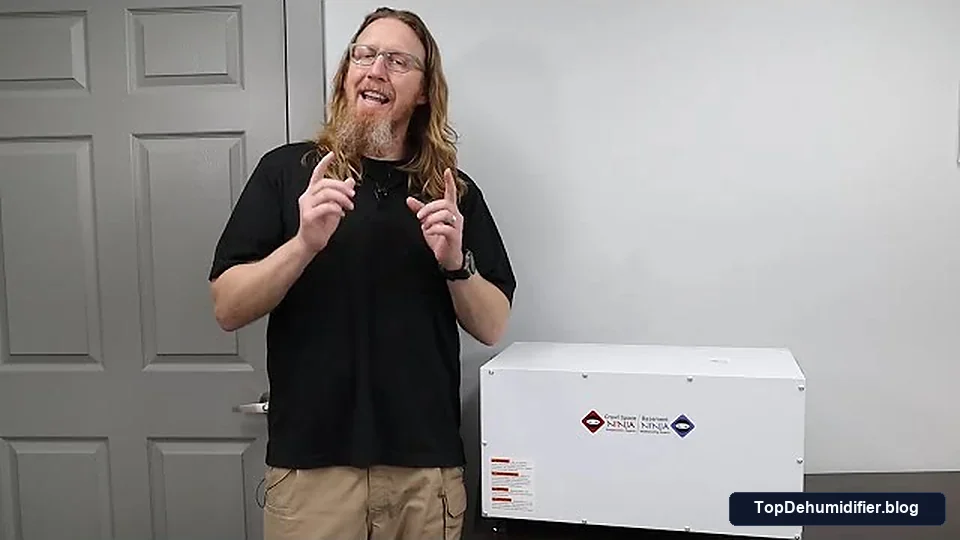
Selecting the correct capacity often starts below the living area. Evaluating our best dehumidifier for crawl space under house selections ensures proper sizing for chronically damp subterranean foundations.
Manufacturers rate dehumidifiers by pints of water extracted per twenty-four hours. Mildly damp spaces require modest capacity, while wet basements need heavy-duty extraction.
Proper placement maximizes airflow intake and discharge across cooling coils. Obstructions like furniture reduce extraction efficiency and strain internal compressors.
Drainage configuration impacts maintenance frequency and continuous operation reliability. Gravity draining outperforms manual bucket emptying in high-load scenarios.
- Match pint capacity to space size.
- Maintain two feet of clearance around units.
- Clean air filters every two weeks.
- Install continuous gravity drain hoses.
Refrigeration Cycle Mechanics
Refrigerant-based dehumidifiers draw humid air across cold evaporator coils using internal fans. Water vapor condenses into droplets and drips into collection reservoirs.
The air then passes over warm condenser coils before returning to the room. This process maintains stable room temperatures while drying the air.
- Inspect condenser coils for dust.
- Check refrigerant lines for leaks.
Practical Verification and Psychrometric Monitoring
Verifying indoor humidity requires placing calibrated hygrometers in key living zones. Central living areas and basements need separate monitoring devices for accuracy.

Compare hygrometer readings against professional sling psychrometers periodically. Calibration drift occurs naturally in inexpensive digital sensors over time.
Documenting daily humidity trends helps diagnose persistent moisture infiltration sources. Tracking data reveals seasonal patterns requiring mechanical intervention.
Proactive monitoring prevents structural damage long before visible mold develops. Consistent data collection is the cornerstone of effective residential maintenance.
- Place hygrometers at mid-wall height.
- Avoid direct sunlight on sensors.
- Log monthly humidity extremes.
- Replace failing sensor batteries annually.
Troubleshooting Humidity Anomalies
Sudden humidity spikes indicate plumbing leaks or failed foundation drainage systems. Investigate water intrusion sources immediately when readings rise unexpectedly.
Ensure crawlspace vapor barriers remain intact and sealed tightly. Fixing envelope defects resolves stubborn moisture problems permanently.
- Check for plumbing pipe condensation.
- Inspect sump pump operational status.
Frequently Asked Questions
What is the absolute best humidity level for a house in summer?
The ideal target is between 30% and 50% relative humidity. This range stops mold growth while keeping occupants comfortable.
Why does my house feel sticky even when the air conditioner runs?
Air conditioners cool air effectively but may lack sufficient latent extraction capacity. Adding a dedicated dehumidifier solves this persistent issue.
How do I calculate what size dehumidifier my basement needs?
Sizing depends on room square footage and moisture severity levels. Very damp spaces require units rated for higher daily pint extraction.
Is relative humidity or dew point more important to track?
Dew point offers a more reliable absolute moisture metric because it ignores indoor temperature fluctuations. Target dew points near 50°F.
How often should I clean my dehumidifier air filter?
Clean the mesh filter every two weeks during peak season. This maintains optimal airflow and prevents compressor strain.