How Does a Desiccant Dehumidifier Work?
Understanding how desiccant dehumidifiers extract airborne moisture using chemical adsorption rather than refrigeration. This technical breakdown explains rotor dynamics, thermal regeneration cycles, and operational efficiencies.

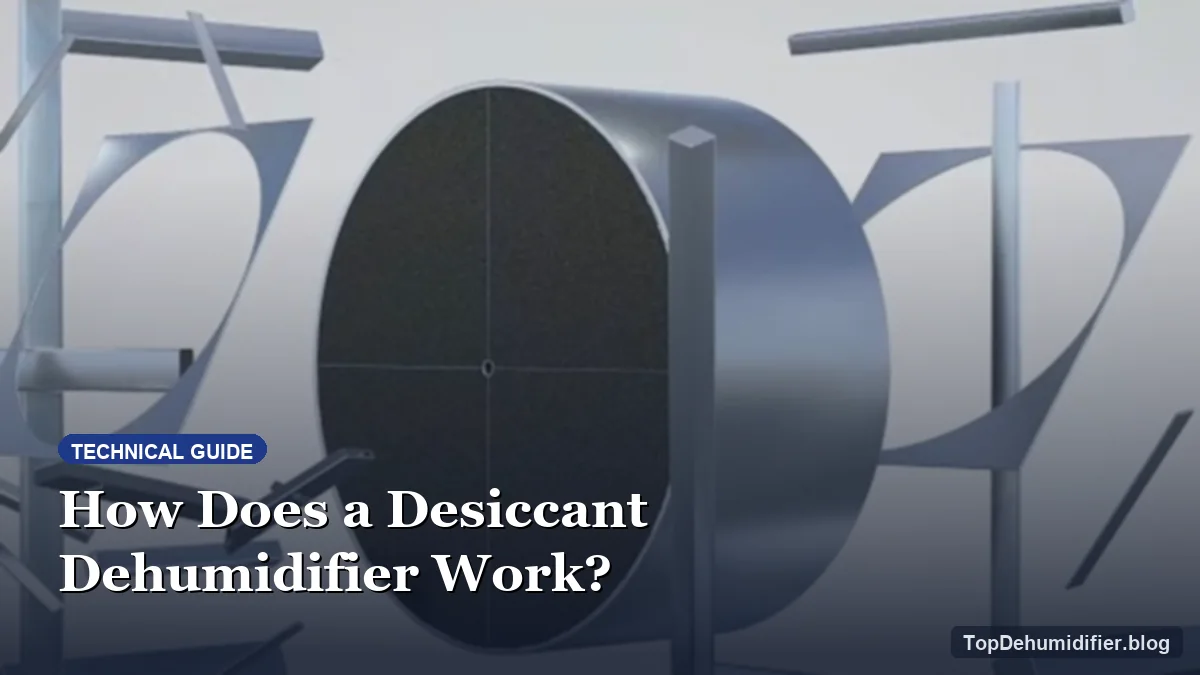
Desiccant systems rely on a rotating silica gel wheel that directly adsorbs water vapor, utilizing a separate heated reactivation sector to continuously drive captured moisture out through exhaust channels.
Ready to compare models? Start with our Best Dehumidifier: Top Picks for Basements & Homes.
Practical Quick-Reference Table
| Scenario / Metric | Recommended Target | Why It Matters |
|---|---|---|
| Rotor Speed | 1 to 3 RPM | Balances adsorption capacity against continuous thermal reactivation. |
| Process Airflow | 80% of total volume | Ensures high volumetric drying efficiency across the conditioned space. |
| Reactivation Temp | 110°C to 140°C | Provides necessary thermal energy for effective moisture desorption. |
| Entering Air Temp | Below 15°C ideal | Maximizes chemical adsorption advantage over compressor units. |
| Static Pressure | 0.2 to 0.5 in. wg | Prevents internal blower stall and maintains rated CFM performance. |
| Filter Inspection | Monthly schedule | Protects delicate honeycomb rotor matrix from particulate clogging. |
Core Operating Principles of Desiccant Rotors
Unlike traditional compressor units, desiccant dehumidifiers utilize a porous matrix embedded with silica gel or molecular sieves. This specialized chemical structure allows the material to attract and hold water vapor molecules directly from passing air streams.
The heart of the machine is a slowly rotating honeycomb wheel known as the desiccant rotor. When evaluating options like the best desiccant dehumidifiers for cold garages, this design maximizes surface area while maintaining open airflow.
Air is pulled into the unit via an internal fan and divided into two distinct airstreams. The primary process air stream passes through the active sector of the rotor, where moisture is stripped away before returning to the room.
Maintaining precise rotor velocity is critical for sustained moisture removal performance. Most industrial units rotate the matrix at one to three revolutions per hour to balance adsorption capacity against continuous thermal reactivation demands.
- Porous honeycomb matrix maximizes contact surface area for moisture capture.
- Chemical adsorption removes water vapor directly without liquid phase conversion.
- Internal split-airflow design separates treated air from reactivation exhaust.
- Slow rotational speed ensures continuous, uninterrupted drying cycles.
Rotor Matrix Materials and Chemical Composition
Silica gel remains the most common desiccant material due to its exceptional affinity for water vapor at low temperatures. Manufacturers bond the active compound to a ceramic or fiberglass substrate to ensure structural durability under constant mechanical stress.
Molecular sieve variants are deployed in specialized industrial environments requiring ultra-low dew points. These synthetic zeolites maintain high adsorption efficiencies even when operating in extreme ambient conditions featuring elevated temperatures and fluctuating moisture loads.
- Silica gel coatings offer optimal performance in standard unheated spaces.
- Synthetic zeolites achieve extreme dew point depression in industrial settings.
- Ceramic substrates provide superior resistance to high thermal regeneration loads.
Internal Airflows and Moisture Adsorption Mechanics
Effective moisture capture depends on maintaining a strict separation between the process air and the reactivation air circuits. Internal rubber seals prevent cross-contamination, ensuring dry air is delivered without picking up humidity from the exhaust stream.
The process air stream typically accounts for roughly eighty percent of the total airflow handled by the fan system. As this air traverses the cold sector of the rotor, relative humidity drops sharply while air temperature rises slightly.
This temperature increase is a thermodynamic byproduct of the adsorption process itself, known as the heat of sorption. Energy released when water molecules transition from vapor to liquid state within the pores warms the treated air.
Designing proper ductwork connections is essential for preventing external static pressure drops that can stall the internal blowers. Technicians must calculate equivalent duct lengths carefully to maintain rated cubic feet per minute performance across all operating phases.
- Internal wiping seals eliminate cross-leakage between process and reactivation circuits.
- Adsorption heat release causes a predictable temperature rise in processed air.
- Accurate static pressure calculations protect internal blowers from stalling.
- Optimized duct geometry ensures stable volumetric airflow under load.
Video Walkthrough: How Does a Desiccant Dehumidifier Work?
Thermal Regeneration and Reactivation Cycles
Because adsorption is a continuous chemical process, the desiccant material eventually reaches saturation. Before utilizing our pint capacity calculator to size equipment, note how the saturated segment rotates into a separate reactivation compartment.
An electric heating element or gas burner heats a smaller secondary airflow before it passes through this reactivation sector. This hot air stream typically occupies twenty percent of the rotor face area and operates at elevated temperatures.
As the heated air forces its way through the silica gel matrix, it supplies the latent heat required to break molecular bonds. Water molecules trapped inside the pores evaporate into the hot air stream and form humid exhaust vapor.
This moisture-laden reactivation air is then vented outdoors through dedicated ducting to prevent indoor humidity spikes. Proper outdoor termination is mandatory to ensure the extracted moisture does not immediately re-enter the building envelope through open windows.
- Reactivation sector applies thermal energy to regenerate saturated desiccant material.
- Secondary heating element operates on a smaller, dedicated airflow circuit.
- Evaporated moisture forms a humid vapor stream directed toward outdoor vents.
- Rigid exterior ducting prevents exhausted humidity from drifting back indoors.
Sizing Parameters and Environmental Conditions
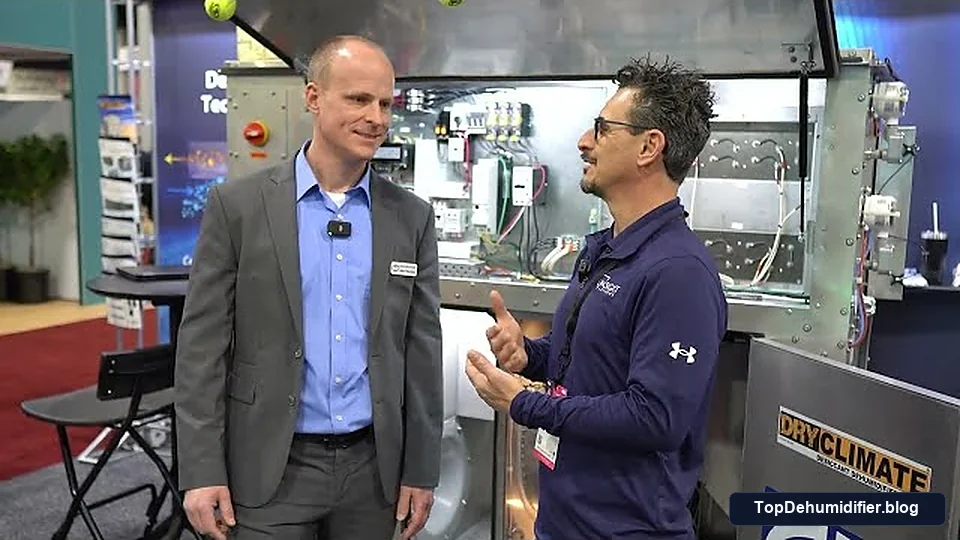
Sizing a desiccant dehumidifier requires evaluating space dimensions and baseline conditions. Reviewing our desiccant vs compressor models helps clarify why these units excel in unheated warehouses and cold crawlspaces where standard equipment fails.
Calculating required moisture removal capacity involves determining pounds of water per day generated by occupants, processes, and infiltration. Engineers must factor in safety margins of twenty to thirty percent to handle peak seasonal humidity loads reliably.
Dew point depression is a core performance metric when evaluating desiccant drying capabilities in demanding industrial applications. These systems can achieve exceptionally low dew points, making them indispensable for pharmaceutical packaging and lithium-ion battery production cleanrooms.
Ambient air temperature directly influences the electrical energy consumption required by the reactivation heating elements. Higher entering air temperatures reduce the thermal load needed to achieve effective moisture desorption during the regeneration cycle.
- Desiccant systems outperform compressor units in cold or unheated environments.
- Capacity calculations require factoring in internal moisture loads and infiltration.
- Exceptional dew point depression suits sensitive pharmaceutical and battery cleanrooms.
- Entering air temperature directly affects reactivation heater energy consumption.
Step-by-Step Installation and Calibration Protocols
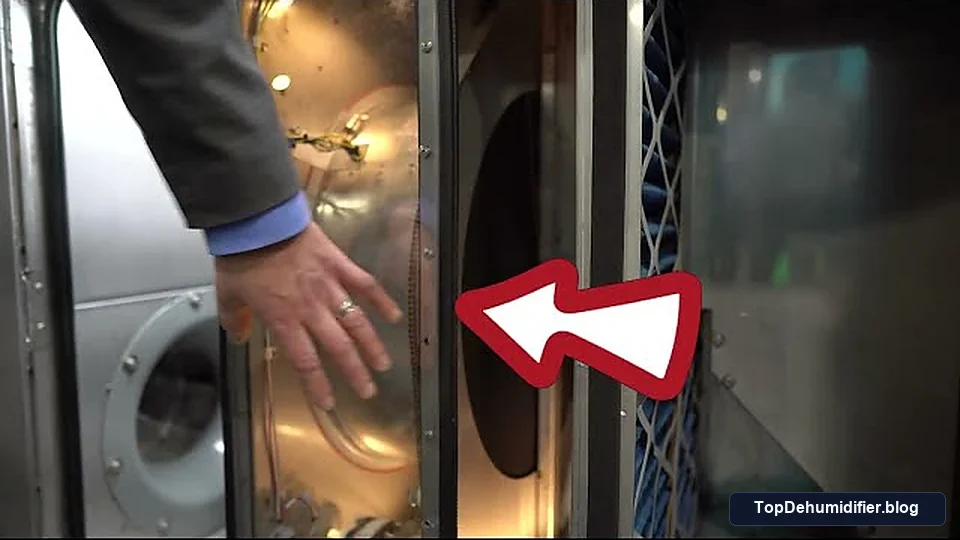
Proper physical installation begins with leveling the chassis on a rigid surface to prevent rotor binding. Technicians must verify that all rubber internal seals seat correctly against the spinning drum to eliminate internal air bypass leaks.
Electrical supply lines must match the exact voltage and amperage specifications listed on the data plate. Reviewing our running cost comparisons highlights why using inadequate extension cords creates voltage drops that damage internal heater relays.
Connecting the wet air exhaust ducting requires using smooth metal pipe rather than flexible plastic tubing. Smooth walls reduce friction losses and prevent condensation pooling inside the exhaust run during cold weather operating conditions.
Initial calibration involves measuring process air volume using an anemometer and adjusting damper positions. Operators should verify that reactivation airflow matches manufacturer specifications to prevent overheating and premature thermal fuse failure inside the heating chamber.
- Level the unit chassis securely to prevent mechanical binding of the rotor.
- Match power supply voltage exactly to prevent electrical relay and motor damage.
- Install rigid metal exhaust ducting to minimize internal friction and condensation.
- Measure airflow velocities with an anemometer during initial system startup.
Commissioning Checklist and Functional Testing
Execute a complete electrical continuity check on all safety thermostats before energizing the heating elements. Verify that the drive belt tensioner allows the desiccant rotor to turn smoothly without slipping or generating excessive noise.
Monitor temperature differentials across the reactivation sector to confirm the heating assembly functions within normal parameters. Record baseline amperage draws for the blower motors and heater banks to establish a reliable benchmark for future preventive maintenance inspections.
- Test all safety thermostats and thermal cutouts prior to system startup.
- Inspect drive belt tension to ensure smooth, non-slip rotor rotation.
- Record baseline electrical amperage draws for ongoing maintenance tracking.
Video Walkthrough: Munters desiccant dehumidifier - how does it work?
Preventive Maintenance and Safety Standards
Routine maintenance protects the delicate desiccant rotor from particulate contamination that clogs active adsorption pores. Operators must inspect and clean the primary air filters every month, replacing them immediately when airflow restrictions begin to develop.
The desiccant rotor itself can sometimes accumulate dust or grease films that severely degrade moisture removal efficiency. Certified technicians can wash specific matrix formulations using mild detergent solutions followed by thorough controlled drying before reinstallation.
Electrical safety inspections should focus on high-temperature limit switches and solid-state relay connections. Faulty thermal cutouts can cause runaway heating conditions, resulting in severe damage to the rotor matrix and potential fire hazards.
Drive motor belts require periodic inspection for wear, cracking, and proper tensioning. A slipping belt stops rotor rotation, instantly halting the continuous regeneration cycle and causing the process air output humidity to spike upward.
- Inspect and clean inlet air filters monthly to protect adsorption pores.
- Washable rotor matrices require mild detergents and complete drying before use.
- Test high-temperature limit switches regularly to prevent thermal runaway.
- Check drive belts frequently for tension loss, wear, and cracking.
Troubleshooting Low Extraction Rates and Thermal Faults
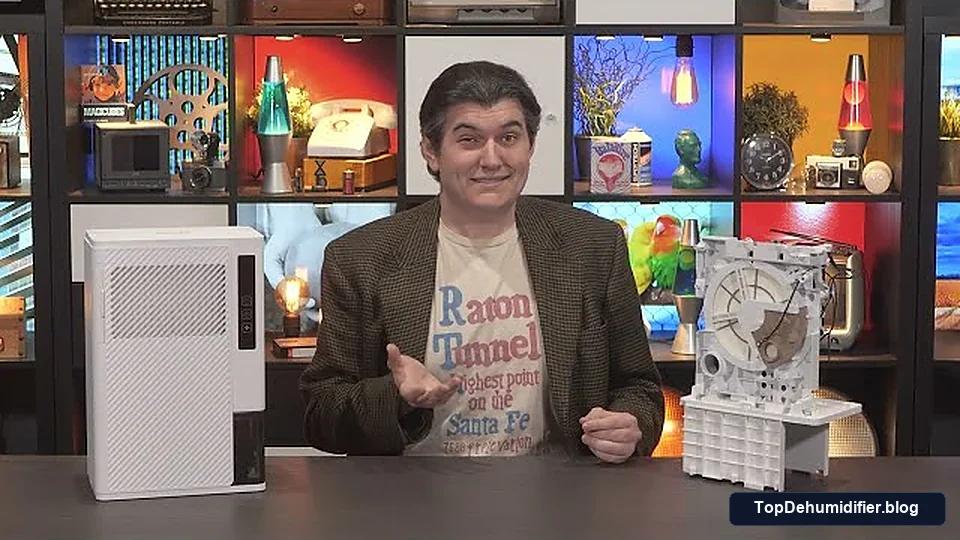
When a desiccant unit fails to deliver dry air, the first component to inspect is the reactivation heater. A failed heating element or tripped high-limit switch stops moisture desorption, leaving the rotor permanently saturated and inactive.
Restricted airflow caused by dirty filters or crushed exhaust ducting will also degrade overall extraction performance. Technicians should measure static pressure across the unit to determine if airflow resistance exceeds the designed fan curve limitations.
Internal seal degradation allows wet process air to mix directly with dry outlet air, reducing net efficiency. Inspecting the Teflon or rubber wiping seals for gaps ensures that air separation remains tight across all operational cycles.
Unusual mechanical noises usually indicate worn rotor bearings or misaligned drive systems requiring immediate correction. Addressing minor alignment issues early prevents catastrophic damage to the fragile ceramic or fiberglass honeycomb rotor structure.
- Verify reactivation heater continuity if moisture extraction drops suddenly.
- Measure static pressure to identify airflow restrictions and filter blockages.
- Inspect internal wiping seals for gaps causing process air bypass leaks.
- Address unusual mechanical noises promptly to prevent permanent rotor damage.
Frequently Asked Questions
How do desiccant dehumidifiers differ from compressor models?
Traditional compressor units rely on cold refrigeration coils to condense airborne moisture from warm ambient air, rendering them highly ineffective in unheated environments like crawlspaces.
In sharp contrast, industrial desiccant systems utilize continuous chemical adsorption wheels that excel in freezing spaces and achieve exceptionally low humidity dew point targets.
What happens during the thermal reactivation cycle?
The reactivation cycle uses a dedicated secondary electric heating element to force hot air backward through a saturated portion of the rotating desiccant matrix.
This intense thermal energy continuously drives out trapped moisture molecules, converting them into humid vapor that is safely exhausted outdoors through specialized ductwork.
When should you choose a desiccant unit over a refrigerant model?
Desiccant dehumidifiers excel in demanding environments where ambient temperatures drop below sixty degrees Fahrenheit, such as unheated warehouses, winter cabins, and cold storage facilities.
They are also deployed in specialized industrial cleanrooms where ultra-low dew points are strictly required for sensitive electronic manufacturing processes.
What maintenance does a desiccant dehumidifier require?
Primary maintenance tasks involve inspecting and cleaning the inlet air filters on a monthly basis to prevent particulate accumulation on the rotor face.
Technicians should also verify drive belt tension, inspect electrical heater relays, and ensure that the reactivation exhaust ducting remains completely unobstructed.
How is water disposed of in a desiccant system?
Water disposal in a desiccant dehumidifier occurs entirely via the vapor phase rather than the liquid condensation drainage common in standard compressor units.
The extracted moisture is converted into humid air during thermal regeneration and vented directly outdoors through rigid metal exhaust ducts.