Optimal Humidity in Winter: What Is Best?
Maintain optimal indoor moisture levels during cold weather. Protect building materials and structural integrity.


Keep indoor relative humidity between 30% and 40% during winter. This prevents condensation while avoiding overly dry air.
Ready to compare models? Start with our Best Dehumidifier: Top Picks for Basements & Homes.
Practical Quick-Reference Table
| Scenario / Metric | Recommended Target | Why It Matters |
|---|---|---|
| Outdoor Temp Below Freezing | 30% to 35% RH | Prevents window frost and deep wall condensation. |
| Mild Winter Conditions | 35% to 40% RH | Maintains occupant comfort without triggering mold. |
| Basement Storage Areas | 30% to 35% RH | Stops frost accumulation and material warping. |
| Crawl Space Vapor Control | Under 50% RH | Protects floor joists from fungal decay. |
| Dehumidifier Fan Speed | Medium to High | Ensures consistent airflow across cold evaporator coils. |
| Surface Temperature Drop | Continuous Monitoring | Identifies thermal bridging before mold colonies form. |
Understanding Winter Indoor Humidity Dynamics

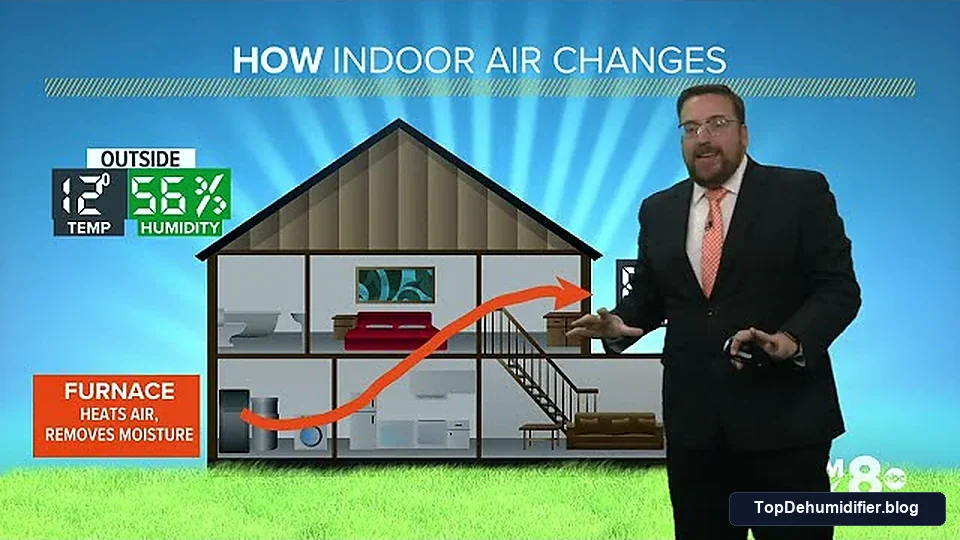
During cold weather, outdoor air holds very little moisture. When this cold air enters a heated building, its relative humidity drops significantly, creating specific indoor environmental challenges.
Addressing trapped vapor effectively requires specialized equipment. Check our best dehumidifier for winter use roundup to find models engineered for low-temperature operation without freezing up.
Understanding the psychrometric relationship between temperature and moisture is essential for proper climate control. Warm air supports higher vapor pressure, while cold surfaces force moisture out of suspension.
Effective winter humidity management requires balancing mechanical ventilation with targeted moisture removal. Ignoring these thermodynamic principles results in structural degradation, mold growth, and poor indoor air quality.
- Monitor outdoor temperature drops to predict indoor condensation risks.
- Track daily internal moisture generation from routine household activities.
- Evaluate existing thermal insulation values across exterior building envelopes.
- Maintain consistent interior temperatures to stabilize local vapor pressure.
Psychrometric Shifts in Cold Weather
Cold outdoor air possesses a very low dew point. Once introduced indoors, heating systems elevate air temperature, which artificially crashes the percentage of water vapor relative to saturation capacity.
This dynamic explains why winter air often feels excessively dry, even when indoor vapor generation remains high in localized zones like bathrooms and unventilated kitchens.
- Calculate dew point variations across exterior walls.
- Assess absolute humidity metrics alongside relative readings.
Technical Impacts of Low Versus High Vapor Pressure
Excessively low humidity causes wood components to shrink, creating gaps in flooring and furniture joints. It also dries out human mucous membranes, increasing susceptibility to airborne pathogens.
High humidity, conversely, drives water vapor through porous drywall and insulation. When this vapor meets cold framing members, it condenses into liquid water, promoting rot and fungal growth.
Maintaining a balanced vapor pressure protects both building occupants and structural assemblies. Engineers recommend strict adherence to seasonal target ranges to prevent these compounding physical damages.
Building materials react poorly to rapid humidity swings during seasonal transitions. Gradual adjustments using automated controls help stabilize indoor vapor pressures year-round.
- Inspect wooden structural framing for winter splitting and shrinkage.
- Check window seals for signs of frost-induced seal failure.
- Measure moisture content inside drywall using pinless meters.
- Maintain balanced vapor gradients across exterior wall assemblies.
Vapor Migration Mechanics
Warm indoor air exerts higher vapor pressure, pushing moisture outward through building materials. During winter, this vapor travels toward the coldest exterior layers.
Installing proper vapor retarders on the warm side of walls stops this destructive migration before it reaches freezing structural cavities.
- Identify correct placement for interior vapor barriers.
- Seal penetrations where warm air escapes into attics.
Video Walkthrough: How To Keep Humidity During Winter #shorts
Measuring and Monitoring Relative Humidity Levels
Accurate measurement forms the foundation of climate control. Read our dehumidifier vs air conditioner for humidity control guide to select the right appliance for precise moisture management.

Calibrate mechanical hygrometers annually using the salt test method to ensure long-term sensor accuracy. Inaccurate sensors lead to improper dehumidifier operation and wasted energy.
Place monitoring devices in critical zones prone to high moisture, such as basements, crawl spaces, and north-facing bedrooms where thermal bridging is most severe.
Data-logging hygrometers provide historical trends, helping technicians identify exact times when humidity spikes occur due to specific household routines or weather shifts.
- Position hygrometers at mid-wall height for representative room data.
- Avoid placing sensors near exterior doors or heating vents.
- Perform annual salt-slurry calibrations on analog sensors.
- Use multi-room monitoring setups for complex floor plans.
Sensor Placement Best Practices
Placing sensors too close to exterior walls exposes them to cold surface temperatures, skewing relative humidity readings upward and causing false alarms.
Ensure free airflow around the sensor housing by keeping units away from curtains, furniture backs, and enclosed shelving units.
- Keep sensors at least two feet away from external corners.
- Mount devices firmly on interior partition walls.
Selecting Dehumidification Capacity for Cold Months
Operating dehumidifiers in cold environments presents unique thermodynamic challenges. Low ambient temperatures reduce coil efficiency and risk frost accumulation on internal refrigeration lines.
Standard compressor dehumidifiers struggle when indoor temperatures drop below a certain threshold. Low-temperature units feature automatic defrost cycles to maintain performance in cooler spaces.
Always use our pint capacity calculator to accurately determine the exact appliance size needed based on square footage and specific moisture load requirements.
Energy efficiency matters when running equipment through extended heating seasons. Choose units with high energy factor ratings to minimize electricity consumption over long operational periods.
- Verify low-temperature operational ratings before purchasing equipment.
- Match pint capacity to total cubic footage of the target space.
- Select models featuring automatic defrost capabilities for cold basements.
- Prioritize units with continuous drainage options for unattended operation.
Low-Temperature Defrost Cycles
When evaporator coils drop below freezing, moisture turns to ice instead of condensate. Internal sensors trigger hot-gas defrost cycles to melt accumulated frost quickly.
This automated cycle ensures continuous water extraction without damaging the compressor motor during extended cold-weather deployments.
- Inspect defrost control boards for fault codes.
- Ensure ambient room temperature stays above manufacturer minimums.
Ventilation Strategies and Heat Recovery Cores
Proper ventilation removes stale, humid indoor air while supplying fresh outdoor air. Heat recovery ventilators transfer thermal energy from outgoing air to incoming supply air.
Balancing airflow rates prevents negative pressure inside the building envelope, which can pull unconditioned air and moisture through cracks and crawl spaces.
Inspect ventilation ducts annually for dust accumulation and blockages that reduce system efficiency and compromise indoor air quality standards during winter.
Integrating dehumidification systems with mechanical ventilation provides comprehensive moisture control without sacrificing indoor thermal comfort or wasting heating energy.
- Calculate required fresh air exchange rates for home occupancy.
- Clean heat recovery cores at the start of each heating season.
- Check intake and exhaust hoods for snow or ice blockages.
- Balance supply and exhaust fan speeds using magnehelic gauges.
Balancing Airflow Pressures
Negative indoor pressure draws unconditioned outdoor air through tiny building cracks, chilling wall cavities and introducing unmanaged moisture.
Adjust system dampers to maintain neutral or slight positive pressure, protecting structural assemblies from condensation risks.
- Measure static pressure across ductwork connections.
- Seal envelope leaks before commissioning ventilation systems.
Video Walkthrough: Lumping Plants
Preventing Condensation on Thermal Bridges and Windows
Thermal bridges are structural elements with higher thermal conductivity than surrounding materials. These cold spots cause localized cooling of indoor air, triggering heavy window condensation.
Double or triple-pane windows reduce heat loss, keeping interior glass surfaces above the local dew point during freezing weather conditions.
Applying secondary insulating film or updating window seals minimizes convective drafts and prevents water pooling on wooden sills and framing members.
Inspect corners where exterior walls meet ceilings for hidden thermal bridging, utilizing infrared cameras to detect temperature differentials accurately.
- Upgrade single-pane windows to energy-efficient insulated glazing.
- Install thermal break strips behind exterior metal framing elements.
- Wipe down window sills daily during extreme cold snaps.
- Use thermal imaging cameras to locate uninsulated cold spots.
Infrared Thermal Imaging
Infrared cameras reveal hidden temperature variations across interior walls and ceilings, highlighting uninsulated studs and structural thermal bridges.
Perform scans during peak winter heating periods for maximum contrast between conditioned indoor surfaces and cold outdoor elements.
- Ensure a significant temperature differential during scans.
- Analyze framing layouts against thermal anomaly patterns.
Maintenance Protocols for Winter Dehumidifier Operation
Winter humidity management requires balancing moisture levels properly. Review our dehumidifier vs humidifier for winter guide to determine if your cold space requires moisture extraction or humidification.
Inspect condensate hoses and internal drain pans for clogs or freezing risks if units operate in unheated spaces like garages or uninsulated crawl spaces.
Test humidistat accuracy periodically by comparing unit readouts against a calibrated standalone digital hygrometer placed nearby.
Vacuum dust from condenser coils and compressor compartments to maintain optimal heat transfer efficiency and prevent overheating during long cycles.
- Wash mesh air filters with warm soapy water every month.
- Insulate drain lines running through unheated perimeter zones.
- Test safety float switches to prevent accidental water overflows.
- Check power cords for cracking caused by low ambient temperatures.
Preventing Hose Freezing in Cold Zones
Dehumidifier drainage hoses routed through cold perimeters or unheated crawl spaces are vulnerable to freezing, causing internal reservoir backups.
Wrap exposed drainage tubing in pipe insulation or heat tape to maintain continuous flow during severe winter freezes.
- Slope drainage lines downward at least one quarter inch per foot.
- Avoid running drain lines near uninsulated exterior foundation walls.
Advanced Building Envelope Sealing and Vapor Barriers
Sealing air leaks in the building envelope stops warm, moist indoor air from escaping into cold attic spaces where it condenses on roof sheathing.
Install continuous polyethylene vapor barriers in crawl spaces over exposed earth to block massive moisture drives from entering the living area.
Use expanding foam and caulk around electrical penetrations, plumbing stacks, and ductwork to eliminate localized drafts and moisture bypasses.
Consult local building codes regarding perm ratings for insulation and vapor retarders to ensure correct material compatibility for your specific climate zone.
- Seal top plate penetrations in attic floors thoroughly.
- Cover crawl space dirt floors with heavy-duty vapor sheeting.
- Caulk baseboards and window frames to stop air infiltration.
- Verify perm ratings of all installed insulation materials.
Crawl Space Encapsulation Standards
Encapsulating damp crawl spaces with heavy vapor liners prevents ground moisture from migrating upward into floor joists and living spaces.
Combine ground liners with sealed vents and dehumidification to maintain stable relative humidity levels throughout the entire sub-floor assembly.
- Seal foundation vents tightly before operating dehumidifiers.
- Secure overlap seams in vapor liners with specialized tape.
Frequently Asked Questions
What is the ideal indoor humidity level during winter months?
Keep indoor relative humidity between 30% and 40% during winter. This range prevents window condensation while avoiding excessively dry air.
Why do my windows fog up when it is freezing outside?
Warm indoor air holds moisture that condenses upon touching cold glass surfaces. Lowering your indoor humidity or upgrading window insulation solves this issue.
Do standard dehumidifiers work in cold winter basements?
Standard units struggle and freeze up in temperatures below sixty degrees. Use specialized low-temperature dehumidifiers equipped with automated hot-gas defrost cycles.
How can I prevent my dehumidifier drain hose from freezing?
Insulate any drainage tubing running through unheated spaces using foam wrap. Ensure continuous downward sloping to prevent standing water accumulation.
Should I run a dehumidifier and an air exchanger simultaneously?
Yes, running both balances fresh air intake with targeted moisture removal. This combination maintains healthy indoor air quality and structural integrity.