Perfect Indoor Humidity Winter: Target Ranges
Discover how to balance indoor moisture during cold months. Maintain optimal air quality without risking structural damage.


Aim for a 30% to 40% relative humidity range during winter months. This prevents window condensation while avoiding dry, irritated skin.
Ready to compare models? Start with our Best Dehumidifier: Top Picks for Basements & Homes.
Practical Quick-Reference Table
| Scenario / Metric | Recommended Target | Why It Matters |
|---|---|---|
| Outdoor Temp Below 20F | 30% Maximum RH | Prevents severe frost and ice buildup on glass panes. |
| Living Areas | 35% to 40% RH | Balances human respiratory comfort with mold prevention. |
| Basements in Winter | 30% to 35% RH | Stops dampness migration into upper wooden subfloors. |
| Hygrometer Accuracy | Plus or Minus 2% | Ensures reliable mechanical control and tracking. |
| Indoor Surface Temp | Above Dew Point | Eliminates localized liquid water formation on walls. |
| Ventilation Rate | 0.35 ACH Minimum | Dilutes trapped indoor pollutants and excess moisture. |
Understanding Winter Humidity Dynamics

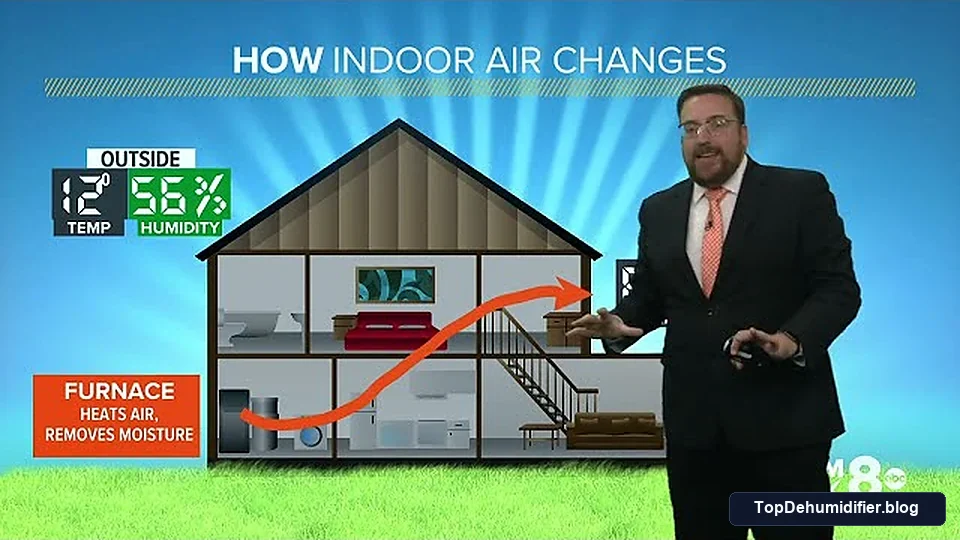
Cold outdoor air holds significantly less moisture than warm indoor air. When outside temperatures drop, your indoor heating system dries out the living space rapidly.
As relative humidity falls below healthy thresholds, mucous membranes dry out. Review our dehumidifier vs humidifier for winter guide to balance indoor moisture levels and protect household health properly.
Conversely, airtight modern construction traps internal moisture from cooking and showers. This creates localized condensation on cold exterior walls and window assemblies.
Balancing these competing forces requires precise measurement tools and deliberate ventilation strategies. You must understand how thermal bridging affects localized dew point temperatures daily.
- Monitor baseline indoor relative humidity daily using a digital hygrometer.
- Recognize that cold outdoor air introduces very low absolute moisture levels.
- Seal major air leaks to reduce uncontrolled infiltration of frigid dry air.
- Account for internal moisture generation from everyday domestic routines and living.
The Physics of Absolute Versus Relative Moisture
Relative humidity changes inversely with indoor air temperature fluctuations. Heating cold air drops its relative percentage dramatically without removing actual water vapor molecules.
Understanding this thermodynamic principle helps technicians select appropriate humidification or dehumidification strategies. Always evaluate absolute humidity metrics when diagnosing chronic indoor climate imbalances.
- Warm air expands its capacity to hold invisible water vapor.
- Heating dry winter air lowers measured relative humidity percentages.
- Absolute humidity measures the actual mass of water per volume.
Calculating Moisture Loads in Cold Weather
Every occupant releases moisture through normal breathing and perspiration daily. Cooking, dishwashing, and laundry operations add significant latent heat loads to your home.
Calculating total latent loads helps determine equipment needs. Consult our best dehumidifier for winter use roundup to manage unmitigated indoor activities that push humidity past safe winter thresholds.
Exhaust fans in bathrooms and kitchens must vent directly outdoors. Never vent moist air into unconditioned attics or crawlspaces during freezing weather conditions.
Neglecting these localized moisture sources leads to hidden mold growth inside wall cavities. Proper calculation ensures your mechanical interventions match actual household vapor production.
- Quantify daily occupant respiration and baseline domestic water usage.
- Ensure kitchen range hoods vent directly to the exterior.
- Run bathroom exhaust fans for at least twenty minutes post-shower.
- Calculate total latent load before sizing any supplemental dehumidification equipment.
Assessing Specific Room Latent Loads
Bathrooms and kitchens contribute the highest temporary moisture spikes in residential structures. Localized extraction prevents this vapor from migrating into living spaces.
Basements also require careful evaluation due to earth-coupled thermal transfer and dampness. Keep foundation walls insulated to minimize surface condensation risks.
- Target high-output exhaust fans in primary moisture zones.
- Inspect basement walls for signs of seasonal capillary seepage.
- Maintain positive pressure balance to discourage back-drafting appliances.
Video Walkthrough: What is the best humidity level in your home?
Identifying Structural Condensation Risks
Condensation occurs when warm indoor air contacts cold structural surfaces. Use our pint capacity calculator to determine the exact extraction rate needed for excessive vapor pressure.
Uninsulated metal window frames act as thermal bridges, chilling surrounding air rapidly. This causes water droplets to pool on sills, rotting wood and drywall.
Inside wall assemblies, condensing vapor can ruin insulation values and foster mold. Vapor retarders installed on the warm side of walls mitigate this hazard.
Perform regular thermal imaging inspections during peak winter cold snaps. Identifying cold spots allows you to upgrade insulation before structural damage occurs.
- Inspect window glass and frames daily for pooling water droplets.
- Evaluate thermal bridging around exterior doors and window headers.
- Verify proper installation of interior vapor retarder membranes.
- Use infrared thermometers to detect uninsulated cold spots on walls.
Mitigating Window and Frame Frosting
Double or triple-pane glass units raise interior surface temperatures significantly. This simple upgrade prevents frost accumulation during severe sub-zero weather events.
Avoid blocking windows with heavy draperies that trap cold air. Allow adequate room air circulation across all glass surfaces to maintain warmth.
- Upgrade single-pane windows to energy-efficient insulated glazing units.
- Keep window treatments open slightly to encourage warm airflow.
- Apply clear plastic insulation kits as a temporary seasonal fix.
Operating Mechanical Dehumidification Systems
While humidifiers are common in winter, tight homes sometimes trap excess moisture. Dehumidifiers remain essential in specific high-moisture winter environments like crawlspaces.
Refrigerant dehumidifiers lose efficiency when operating in ambient temperatures below sixty degrees. Select low-temp desiccant models for unheated basements or detached garages.
Set your humidistat to maintain the recommended winter target range precisely. Avoid continuous operation to prevent over-drying your indoor living environment entirely.
Clean air filters bi-weekly to maintain optimal airflow across internal coils. Proper maintenance ensures efficient moisture extraction without freezing the evaporator core.
- Choose desiccant technology for unheated spaces below sixty degrees.
- Set target humidistat controls between thirty and forty percent.
- Clean washable mesh filters every two weeks during heavy use.
- Ensure continuous gravity drainage hoses remain kink-free and clear.
Managing Low-Temperature Extraction Challenges
Standard compressor coils ice over quickly in cold basement environments. Automated defrost cycles activate periodically to melt accumulated frost on refrigeration coils.
Monitor frost buildup during extended operations in chilly weather. If icing persists, switch to a desiccant rotor unit designed for cold spaces.
- Check for ice accumulation on refrigeration coils weekly.
- Verify proper function of internal automatic defrost sensors.
- Maintain ambient temperatures above freezing where possible.
Integrating Ventilation and Heat Recovery

Controlled mechanical ventilation dilutes indoor pollutants while managing moisture. Review our dehumidifier vs air conditioner comparison to understand how thermal energy transfers from outgoing stale air.
This balanced exchange prevents the extreme dryness associated with raw outdoor air infiltration. HRV systems maintain comfortable indoor humidity without wasting expensive heating energy.
Calibrate your ventilation system to meet local building code air change rates. Operating these systems continuously prevents moisture stagnation in tightly sealed homes.
Inspect core filters and intake hoods seasonally to ensure unobstructed airflow. Regular cleaning prevents biological growth inside the ventilation ducts and core.
- Install a balanced Heat Recovery Ventilator in tight modern homes.
- Adjust core airflow speeds to match seasonal occupancy levels.
- Clean HRV intake and exhaust screens prior to winter freezing.
- Monitor fresh air delivery to ensure indoor air quality remains high.
Balancing Air Pressure and Exhaust Rates
Negative indoor air pressure draws unconditioned outside air through cracks. This drafts cold, dry air into living spaces, dropping humidity too low.
Ensure exhaust fans do not overpower your fresh air supply systems. Maintaining neutral pressure preserves indoor comfort and humidity balance effectively.
- Test for pressure differentials across exterior building envelopes.
- Seal combustion appliance zones to prevent dangerous back-drafting.
- Coordinate bathroom and kitchen fan use with HRV operation.
Video Walkthrough: The surprising fact about humidity and sleep
Monitoring and Hygrometer Calibration
Accurate humidity tracking requires reliable digital hygrometer placement. Position sensors away from direct heat sources, exterior doors, and humidifying equipment.
Inexpensive sensors often drift out of calibration over extended periods of time. Test your hygrometer using a standard salt slurry calibration method annually.
Place multiple sensors in different zones to identify micro-climates. Basements and upper floors often exhibit drastically different moisture readings during winter.
Record daily measurements in a log to track long-term seasonal trends. This data helps you adjust heating and ventilation controls before problems occur.
- Use digital hygrometers for reliable relative humidity tracking.
- Perform salt test calibrations on sensors once every year.
- Position monitoring tools away from direct sunlight and drafts.
- Track humidity readings across multiple rooms for accurate mapping.
Performing the Salt Slurry Calibration Test
Mix table salt with distilled water until it forms a slushy consistency. Place this mixture inside a sealed plastic bag with your digital hygrometer.
After six hours, the reading should stabilize near seventy-five percent. Adjust your device calibration offset according to the final measured result.
- Use pure table salt and clean distilled water.
- Seal the testing container completely with a zip-lock bag.
- Wait at least six hours for ambient stabilization inside.
Preventing Over-Drying and Static Hazards
Excessive winter dryness causes wood furniture to shrink and crack severely. Hardwood flooring can develop unsightly gaps between planks due to low humidity.
Static electricity discharges become frequent and annoying in overly dry indoor air. Protect sensitive electronic equipment by maintaining minimum humidity thresholds safely.
Use evaporative console humidifiers if indoor humidity drops below thirty percent. Fill tanks with clean water daily to prevent mineral dust distribution.
Incorporate house plants to provide natural, gentle moisture release indoors. Choose resilient tropical species that tolerate lower winter light and moisture levels.
- Maintain thirty percent minimum humidity to protect wooden furniture.
- Ground electronic work areas to prevent static discharge damage.
- Clean humidifier reservoirs weekly to eliminate mineral scale buildup.
- Add potted indoor plants to boost natural localized vapor release.
Selecting Safe Supplemental Humidification
Evaporative humidifiers naturally self-regulate moisture output based on room temperature. Warm mist units sterilize water before release but consume more electrical power.
Always use filtered or distilled water in portable humidifiers to prevent white dust. Mineral accumulation on nearby surfaces can damage delicate electronics over time.
- Choose evaporative models for safe, self-regulating moisture output.
- Clean water basins regularly to prevent microbial growth spread.
- Use distilled water to eliminate airborne mineral dust residue.
Frequently Asked Questions
What is the absolute best humidity level for winter?
Aim for a 30% to 40% relative humidity range during cold winter months. This specific target prevents window condensation while protecting your respiratory health.
Why do my windows fog up when it is freezing outside?
Warm indoor air carries moisture that cools rapidly upon hitting cold glass. Lowering your indoor relative humidity and improving window insulation stops this condensation.
Do I need a dehumidifier during the winter season?
Most homes require humidification in winter, but tightly sealed houses need dehumidification. Unheated basements and crawlspaces often trap excess moisture requiring mechanical drying.
How do I accurately check my home humidity levels?
Use a digital hygrometer placed in central living areas away from drafts. Perform an annual salt calibration test to ensure your measurement device remains accurate.
Can low winter humidity damage my home structure?
Extremely dry air causes wood furniture and structural framing elements to shrink. This drying process leads to cracked flooring planks, loose joints, and annoying static shocks.